


There's no strong evidence that Head & Shoulders shampoo directly causes hair loss when used as directed. Scalp irritation or an allergic reaction could contribute indirectly to temporary shedding, but that is different from permanent damage to hair follicles.
Could the hair you notice in the shower be shedding that was already under way, breakage from dry or tangled hair, or a scalp condition rather than a direct effect of the shampoo? The distinction matters: shampoo can affect the scalp and hair fibre, but it isn't a treatment for the follicle-level causes of common patterned hair loss. The available evidence is reassuring, though it doesn't show that every formula suits everyone.
Table of Contents
- Can Head and Shoulders Cause Hair Loss
- What the Evidence Says About Shampoo and Hair Loss
- Common Myths About Head and Shoulders and Hair Loss
- How to Tell the Difference Between Shedding, Breakage, and Hair Loss
- Scalp Irritation and Allergic Reactions Explained
- When to Seek Professional Assessment
- Safer Alternatives and Clinical Treatment Options
- Practical Steps to Take Now
Can Head and Shoulders Cause Hair Loss
Could a shampoo that sits on the scalp for a few minutes really damage the follicle beneath it? Pharmacologically, that is unlikely. Realistic concerns sit closer to the surface: irritation that loosens hairs before their time, or breakage along the fibre that thins the appearance without touching the root.
The most relevant evidence is a six-month clinical trial in men with thinning hair who used a shampoo containing 1% zinc pyrithione, an anti-dandruff ingredient historically used in some Head & Shoulders formulas. According to the manufacturer's summary, the trial reported sustained improvement in hair growth and hair count after 26 weeks, although the improvement was less than half that observed with minoxidil (trial summary from Head & Shoulders UK).
That account comes from the company itself rather than an independently published paper, so it merits cautious reading. Even at face value it describes a modest effect on hair count, not a treatment for male-pattern loss, and nothing in it suggests a rinse-off product destroys follicles.
Formulations matter here: zinc pyrithione featured in older UK products, while current bottles may list different actives, so the ingredient panel on your own bottle is a better guide than the brand name on the front.
Where problems do arise, they usually involve the scalp rather than the follicle. Persistent itching, redness, soreness or a rash can signal irritant or allergic contact dermatitis, and the resulting inflammation can loosen hairs or encourage breakage. Shedding of this kind typically settles once the trigger is removed, which sets it apart from progressive loss in both cause and outlook.
What the Evidence Says About Shampoo and Hair Loss
The Head & Shoulders UK page cited earlier also describes a separate six-month trial in which the company reports that most participants using its shampoo showed no increase in hair fall compared with a placebo group. That figure is manufacturer-reported, drawn from the company's own summary rather than an independently published paper, so it deserves cautious reading. At face value it suggests an absence of harm in the studied group.
That distinction matters more than it might appear. Shedding noticed during washing and true follicle-level loss are routinely conflated in online accounts, and a trial measuring hair fall says little about whether a product protects, damages or leaves the follicle alone.
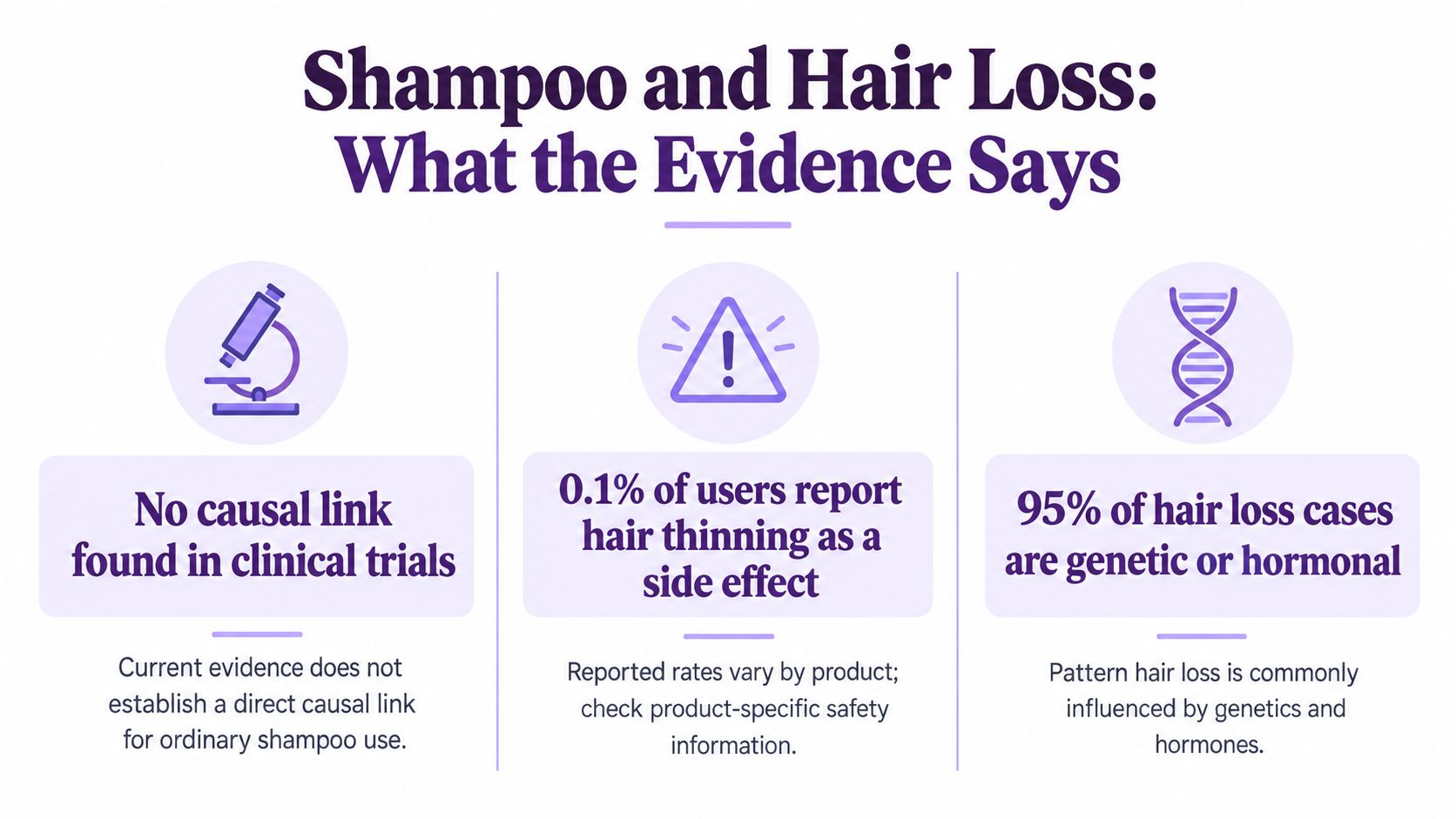
In practice, I would weigh three questions. Is the hair coming out from the root, or snapping mid-shaft? Is there itching or inflammation alongside it? And has anything changed, such as a different active ingredient or a new formula? The answers point towards breakage, temporary shedding or a genuine loss process, each with a different outlook and a different response.
Water quality is a separate variable some readers raise. If you suspect hard water is affecting your hair, this shower filter guide for worried homeowners covers that angle, though it is no substitute for assessment where shedding persists or the scalp is inflamed.
Common Myths About Head and Shoulders and Hair Loss
Myth: the shampoo directly destroys hair follicles. There's no strong evidence for this when Head & Shoulders is used as directed. The more plausible shampoo-related route to temporary shedding is irritation or allergic contact dermatitis, rather than a proven toxic effect on follicles (UK pharmacy guidance on Head & Shoulders and hair loss).
Myth: every strand in the shower means the shampoo is making hair fall out. Washing can bring already-detached hairs into view. If hair appears shorter, uneven or frayed, breakage may be more likely than shedding from the root. Dryness, tangling and styling can affect the hair fibre without damaging the follicle.
Myth: Head & Shoulders commonly causes widespread hair loss. UK clinical guidance and pharmacy evidence don't provide a population percentage showing that this is common. A reaction to fragrance, preservatives or another ingredient is possible, and may cause itching, redness, soreness, flaking or a rash. Persistent inflammation can then contribute to breakage or temporary shedding, but that is not the same as a general, established effect of the brand.
A single shower is not a reliable test of whether a shampoo is responsible. Look instead for a pattern: did scalp symptoms begin after starting the product, do they recur with use, and does the hair change look like breakage, diffuse shedding or distinct patches?
How to Tell the Difference Between Shedding, Breakage, and Hair Loss
Start by looking at what the loose hair looks like and where the change is happening. Hair coming away during washing may be normal shedding, but short, snapped pieces suggest breakage. A thinning area, sharply defined bald patch or scaly patch needs a different assessment.
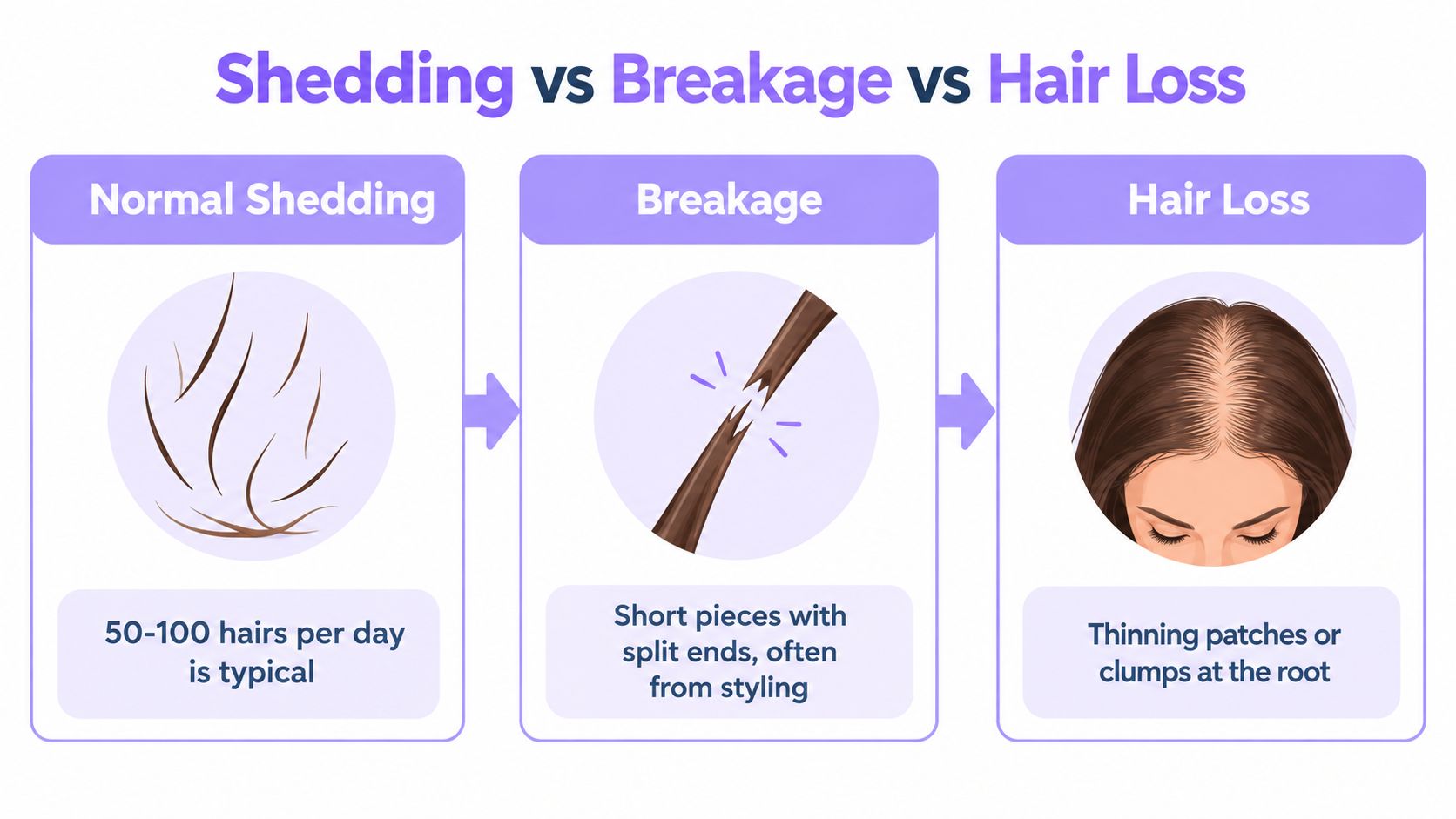
A simple way to assess what you're seeing
- Diffuse loose strands: Hair may have detached before you noticed it during washing. If shedding continues or the overall density changes, ask a pharmacist or GP for advice.
- Short or uneven pieces: Dryness, tangling or styling may have weakened the hair fibre. A shampoo can make hair feel drier or harder to detangle without causing follicle-level loss.
- A distinct bald or scaly patch: Don't assume this is a shampoo reaction. Dandruff-like symptoms can sometimes accompany conditions such as tinea capitis (ringworm), which can cause patchy loss.
- An inflamed scalp: Redness, swelling or marked itch calls for assessment, particularly if symptoms persist despite anti-dandruff treatment.
The NHS Wales guidance advises medical assessment when the scalp is red or swollen, very itchy, or symptoms persist after a month of anti-dandruff shampoo (NHS Wales guidance on dandruff). Anti-dandruff treatments aren't all interchangeable: UK guidance includes options such as selenium sulfide and ketoconazole, but the appropriate choice depends on the symptoms and product.
The practical question isn't whether a brand causes hair loss. It's whether you're seeing shedding, fibre breakage, irritation or a scalp condition that needs treatment. A short video on understanding hair thinning can provide general context, but it can't diagnose the cause of your symptoms.
Scalp Irritation and Allergic Reactions Explained
A shampoo reaction can be irritant or allergic. Irritation can occur when an ingredient aggravates the skin; allergic contact dermatitis involves a sensitivity reaction. Both may cause itching, redness, soreness, flaking or a rash, and symptoms can make washing or brushing uncomfortable.
UK hospital guidance notes that shampoos and styling products can worsen scalp eczema. Scalp eczema may cause patchy hair loss, thinning and poorer hair quality, and this loss is usually reversible when inflammation is controlled (Gloucestershire Hospitals guidance on hair care for eczema). People with eczema, psoriasis, a damaged skin barrier or sensitivities to fragrance, preservatives or detergents may be more vulnerable to irritation.
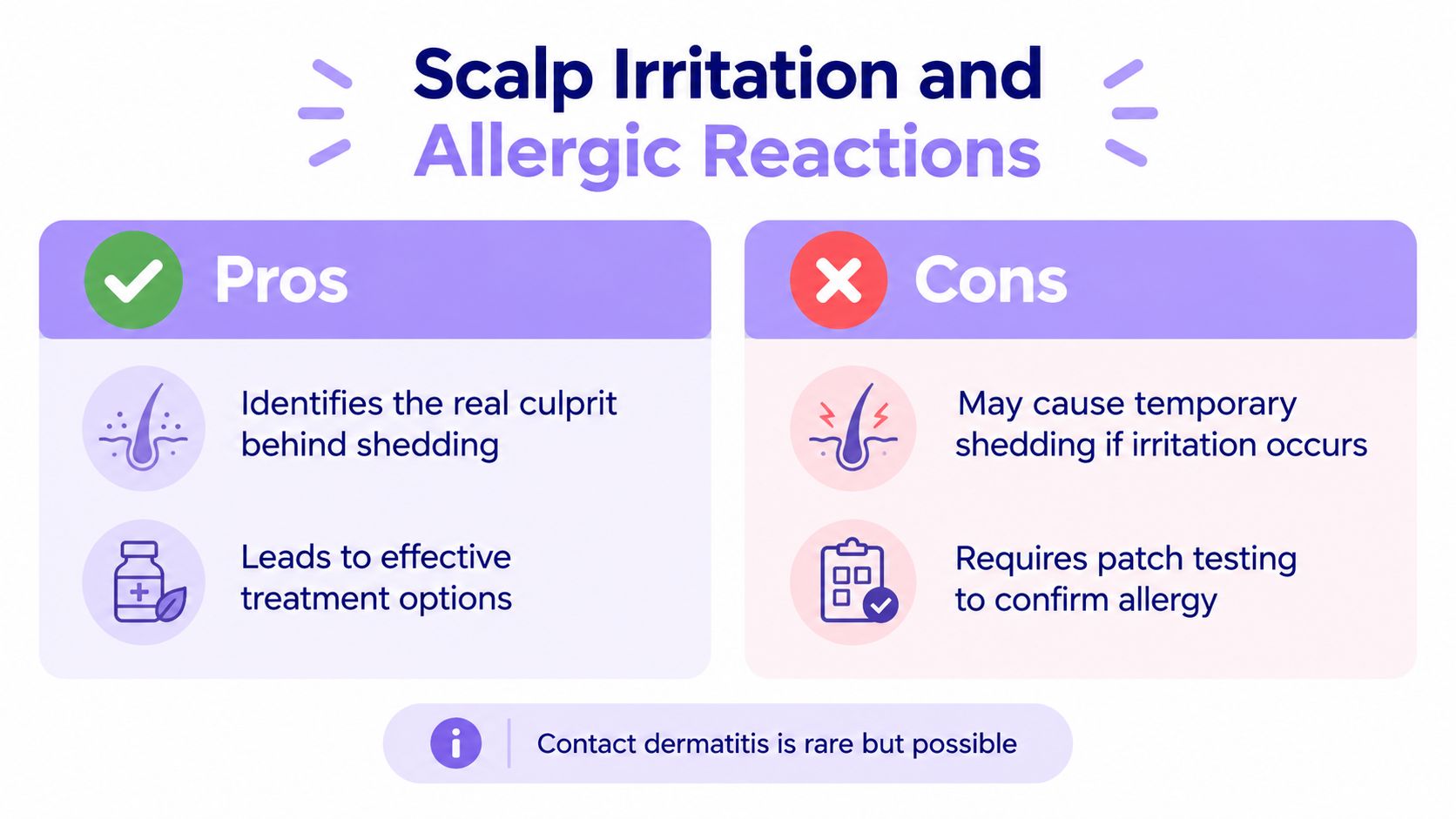
If burning, redness, swelling or worsening itch starts after using a product, stop using it and rinse your scalp thoroughly. A gentle, fragrance-free shampoo may help you avoid the suspected ingredients while you arrange advice if symptoms continue. Don't add several new products at once, as that makes it harder to work out what may have triggered the reaction.
Practical rule: A shampoo that controls flakes isn't automatically the right option for an irritated scalp. If you're comparing products, this guide to medicated shampoo for an itchy scalp explains why the active ingredient and the cause of the symptoms matter.
For curls, dryness and tangling may also complicate the picture. This resource on how to fix dry scalp on curls may help with general hair-care considerations, but persistent inflammation still merits clinical advice.
When to Seek Professional Assessment
Ask a pharmacist or GP to assess hair loss that is sudden, patchy, scarring or persistent. Possible causes include androgenetic alopecia, stress-related telogen effluvium, psoriasis, seborrhoeic dermatitis, alopecia areata, nutritional deficiency or medication effects. A different shampoo won't identify or treat all of these.
For dandruff, NHS guidance recommends anti-dandruff shampoo and reassessment after up to four weeks. If symptoms persist, or the scalp is markedly itchy, red or swollen, seek a pharmacist or GP review (NHS guidance on dandruff). Follow the directions for the product you use, and don't keep rotating shampoos if the scalp is becoming more inflamed.
Scarring, sharply defined bald patches or persistent inflammation shouldn't be managed solely by changing hair products. Some inflammatory or autoimmune scalp conditions need timely diagnosis, and delaying assessment may affect regrowth. If a product appears to trigger symptoms, note when you started using it and what changed; those details can help a clinician consider the likely cause.
A UK-registered pharmacy can advise on suitable non-prescription options and help you decide whether a GP review is appropriate. Hair-loss treatment may require diagnosis and, where relevant, prescriber oversight. You can read more about specialist assessment for hair loss, but online information can't replace an individual clinical assessment.
Safer Alternatives and Clinical Treatment Options
If irritation began after starting a particular shampoo, stop it temporarily, rinse your scalp well and try a bland, fragrance-free shampoo. Compare symptoms rather than judging by one wash. If the irritation settles but returns when you restart the product, tell a pharmacist or GP.
Shampoos mainly address scalp concerns such as dandruff and scaling. They don't treat the follicle-level mechanisms involved in common male-pattern hair loss. Treatments such as minoxidil or finasteride may be considered for hair loss, but suitability depends on the person and product. Prescription-only treatment requires clinical assessment by a prescriber and must be supplied through a regulated pathway, such as a UK-registered pharmacy. A consultation doesn't mean medication will be appropriate or prescribed.
Ingredient-specific advice matters. The UK patient leaflet for ketoconazole 2% shampoo lists uncommon reactions, occurring in fewer than 1 in 100 users, including local irritation, dryness, burning, follicle swelling, hair loss and changes in hair texture (ketoconazole 2% shampoo patient leaflet). That information applies to that medicated product; it doesn't establish that standard Head & Shoulders formulas cause follicular hair loss.
| Option | Primary purpose | Prescription required |
|---|---|---|
| Bland, fragrance-free shampoo | Reduce exposure to potential irritants | No |
| Anti-dandruff shampoo | Manage dandruff, according to its ingredients and directions | Usually no, depending on product |
| Ketoconazole 2% shampoo | Medicated treatment for certain scalp conditions | Check the product and supply route |
| Minoxidil or finasteride | Treat selected causes of hair loss | Requirements depend on the specific product; finasteride is prescription-only |
For an overview of medically supervised approaches, see this guide to treatments for thinning hair. An online pharmacy should assess clinical suitability before supplying prescribed medication.
Practical Steps to Take Now
If you suspect your shampoo is irritating your scalp, make a clear, measured change rather than adding more products.
- Pause the suspected shampoo. Rinse your hair and scalp thoroughly. If burning, redness, swelling or worsening itch began after use, don't keep applying the product to test the reaction.
- Use a simple alternative. Choose a gentle, fragrance-free shampoo while symptoms settle. Keep the rest of your scalp routine unchanged if possible, so you can better identify what may be causing the problem.
- Record what you notice. Photograph visible scalp changes in consistent lighting. Note when you started the product, when symptoms appeared and whether they improve after stopping it. Avoid repeatedly inspecting or pulling at the hair, which can make it harder to judge change.
- Look at the pattern. Diffuse strands noticed during washing, short broken pieces and a distinct bald patch are different signs. If you're unsure, a pharmacist or GP can help decide whether the scalp or hair loss needs examination.
- Seek review if symptoms continue. Persistent itch, redness, swelling or shedding deserves professional advice. Sudden, patchy or scarring loss should be assessed rather than managed by changing shampoo alone.
A brief increase in visible hair during washing doesn't by itself prove permanent damage. If the hairline is progressively receding, the crown is thinning or shedding is diffuse and persistent, ask a healthcare professional to consider causes such as androgenetic alopecia, telogen effluvium or inflammatory scalp disease. Changing shampoo may help if irritation or breakage is involved, but it won't reverse patterned hair loss.
Common questions
Can Head & Shoulders cause permanent baldness? It isn't generally expected to cause permanent hair loss when used as directed. If irritation contributes to temporary shedding, addressing the inflammation may help, but persistent or patchy loss needs assessment.
Why do I see hair in the shower after shampooing? Washing can make hairs that had already detached easier to notice. The timing alone doesn't show that the shampoo caused the shedding.
Will switching shampoo stop my hair loss? It may help if the problem is irritation or hair-fibre breakage. It won't treat an underlying cause such as androgenetic alopecia, so ongoing loss should be assessed.
This article provides general information, not a personal diagnosis or treatment plan. “This content is for informational purposes only and does not constitute medical advice. Always consult a qualified healthcare professional before starting or changing any treatment.”
Reviewed by: Pharmacist review required before publication.
Review date: 19 October 2026.
XO Medical provides clinician-reviewed online consultations for hair-loss concerns through a UK-registered pharmacy, with prescribed medication considered only when a prescriber judges it clinically appropriate. Visit XO to learn about the pharmacy service and its assessment process.
For advice about persistent or concerning hair loss, speak with a pharmacist or GP. XO also offers an in-person aesthetics clinic with treatments including Botox, dermal fillers, skin boosters and polynucleotides; these are separate from hair-loss assessment and treatment.


0 comments