


Whether it is possible to regrow hair depends on the underlying cause and the stage of hair loss. For many individuals experiencing common types of hair thinning, a combination of clinically proven treatments, consistent application, and patience may lead to noticeable improvements in hair density over several months.
First, Understand the Cause of Hair Thinning

Before commencing any treatment, it is essential to understand the reason for the hair loss. Obtaining an accurate diagnosis from a qualified healthcare professional is the most important first step, as different types of hair loss require different management strategies.
Hair loss is a common condition in the UK, affecting a significant portion of the population. Research indicates that up to 80% of men and approximately 50% of women will experience some degree of noticeable hair loss during their lifetime.
While the causes are varied, a few specific conditions account for the majority of cases.
Androgenetic Alopecia (Pattern Hair Loss)
This is the most frequent cause of hair loss in both men and women. It is a genetic condition influenced by hormones, specifically a derivative of testosterone known as dihydrotestosterone (DHT).
- In men (Male Pattern Baldness): This typically presents as a receding hairline or a thinning area on the crown of the head. At a microscopic level, DHT causes hair follicles to shrink (miniaturise), shortening their growth cycle until they eventually cease to produce hair.
- In women (Female Pattern Hair Loss): The thinning is usually more diffuse across the top of the scalp. A common initial sign is a widening of the hair parting, although the frontal hairline is often preserved.
It is important to note that androgenetic alopecia is a progressive condition. While there is no definitive cure, approved treatments can be effective at slowing its progression and, in many cases, stimulating regrowth. Early intervention generally leads to better outcomes.
For a more detailed explanation of the mechanisms behind this condition in men, our guide on what causes male pattern baldness provides further information.
Telogen Effluvium
This condition is characterised by a sudden, diffuse shedding of hair. It is triggered when a significant physiological or psychological stressor—such as a major illness, surgery, a stressful life event, or rapid weight loss—causes a large number of hair follicles to enter the shedding (telogen) phase simultaneously.
Telogen effluvium is almost always temporary. Once the underlying trigger is resolved, the hair growth cycle typically normalises, although full recovery can take several months.
Alopecia Areata
Alopecia areata is an autoimmune condition in which the body's immune system mistakenly attacks its own hair follicles. This commonly results in smooth, circular patches of complete hair loss on the scalp or elsewhere on the body.
The course of alopecia areata is often unpredictable. Hair may regrow without intervention, or the patches may persist. Management of this condition usually involves consultation with a dermatologist who can advise on specialised treatments.
Determining the specific cause of your hair loss is fundamental to creating an effective management plan. A clinician can review your symptoms and medical history to provide a diagnosis. This is a crucial step for accessing safe and appropriate prescribed medication through a regulated service, such as a UK-registered pharmacy.
This content is for informational purposes only and does not constitute medical advice. Always consult a qualified healthcare professional before starting or changing any treatment.
Clinically Proven Treatments to Regrow Hair
For individuals seeking to address hair loss, the most reliable starting point is with treatments supported by robust clinical evidence. Following a formal diagnosis, a clinician can discuss the available options. In the UK, the standard of care for medical hair regrowth centres on medications that have been rigorously evaluated and authorised by the Medicines and Healthcare products Regulatory Agency (MHRA).
It is important to understand that these treatments are not available over the counter. They are prescription-only, requiring a clinical assessment to ensure they are a safe and suitable option for the individual. This professional oversight is a critical component of patient safety. Sourcing treatment through a regulated service, such as a UK-registered pharmacy, is the only way to ensure the medication is genuine.
Topical Treatments: Minoxidil
Minoxidil is one of the most widely used treatments for hair regrowth and is available as a topical foam or solution applied directly to the scalp. It is one of the few MHRA-approved treatments indicated for both male and female pattern hair loss.
Minoxidil is a vasodilator. It works by helping to widen the blood vessels in the scalp, thereby increasing blood flow to the hair follicles. This enhanced delivery of oxygen and nutrients may help to reactivate dormant follicles and extend the anagen (growth) phase of the hair cycle. Over time, this can result in thicker, healthier-looking hair and improved scalp coverage.
Successful use depends on consistent application:
- It is typically applied once or twice daily to a completely dry scalp.
- Continuous use is required to maintain results. If treatment is stopped, any hair that has regrown is likely to be lost.
- Patience is necessary. Visible results generally begin to appear after three to six months of consistent use.
Oral Prescription-Only Treatments: Finasteride
For men experiencing male pattern baldness, oral finasteride is a primary therapeutic option. It is a prescription-only treatment that addresses the hormonal cause of androgenetic alopecia by targeting DHT.
Finasteride works by inhibiting an enzyme called Type II 5-alpha reductase. This enzyme is responsible for converting testosterone into DHT, the hormone that causes hair follicle miniaturisation. By significantly reducing DHT levels in the scalp, finasteride can effectively slow the progression of hair loss and, for many men, stimulate new growth.
Important Note: Finasteride is a prescribed medication and is licensed for use in men only. It is not suitable for everyone and requires a full clinical assessment to determine if it is a safe and appropriate option.
The demand for effective hair loss solutions is significant. While proven medical treatments form the foundation of care, the growing market means a wide variety of products are available.
Comparing the Main Treatment Options
This table provides a summary of the two principal MHRA-approved medications, their mechanisms of action, and their availability in the UK.
| Treatment | Type | How It Works | Availability in UK |
|---|---|---|---|
| Minoxidil | Topical (Foam/Solution) | A vasodilator that improves blood flow to hair follicles, extending the growth phase. | Available over-the-counter and via prescription through an online pharmacy. |
| Finasteride | Oral (Pill) | An enzyme inhibitor that reduces DHT levels in the scalp to prevent follicle shrinkage. | Prescription-only medication following a clinical consultation. |
Both of these treatments tend to yield the best results when initiated at the early signs of hair loss, although they can still be beneficial for individuals with more established thinning. As you explore options, you may encounter a range of products, and items like Kenz Shampoo for Hair Growth are often part of the wider conversation about hair care.
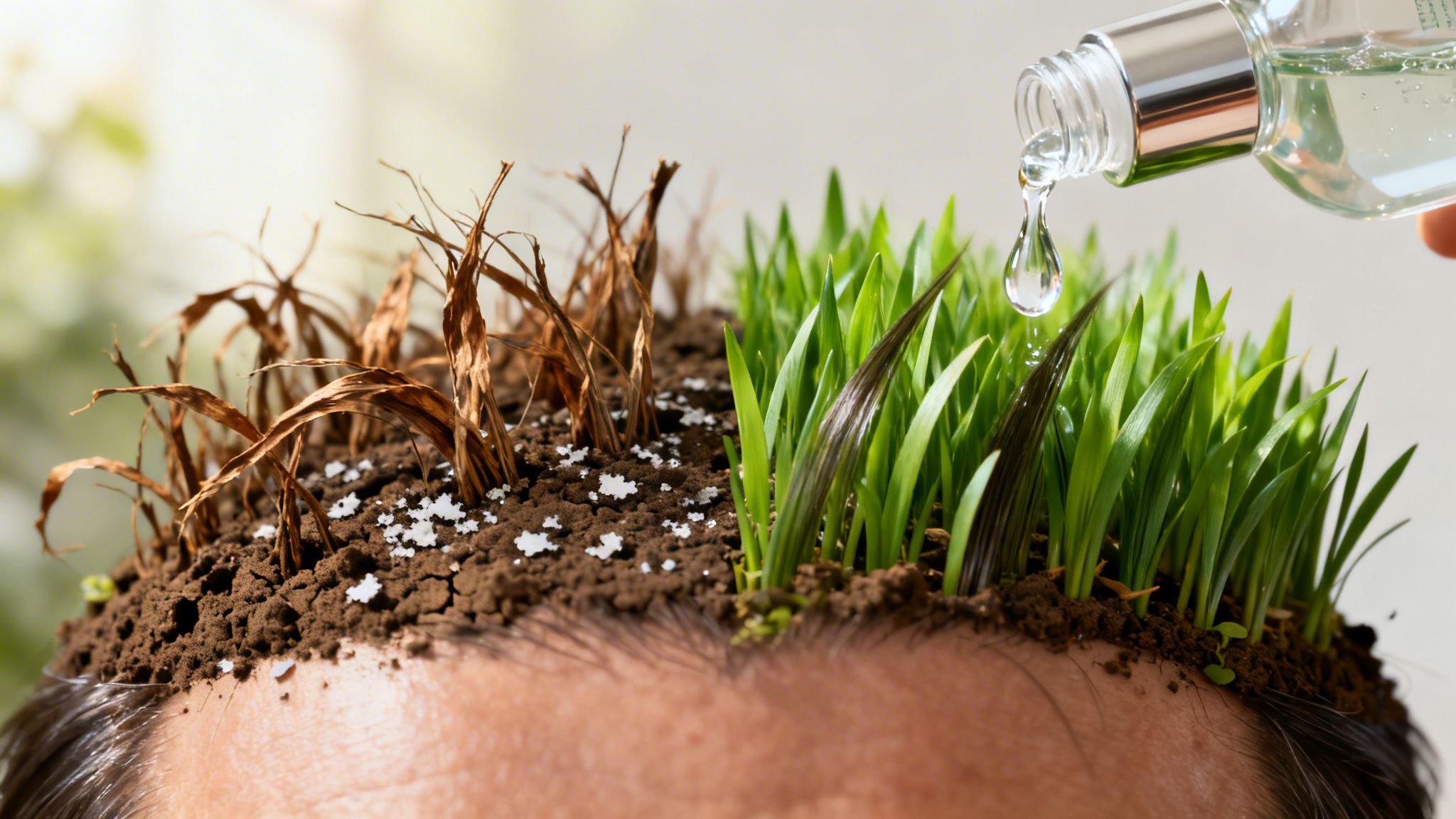
Ultimately, the choice of treatment should be made in consultation with a healthcare professional. A clinician can assess your type of hair loss, explain the benefits and risks of each option, and provide a prescription if it is clinically appropriate. This ensures your treatment journey is safe, effective, and guided by medical expertise from a service that is regulated by the GPhC.
This content is for informational purposes only and does not constitute medical advice. Always consult a qualified healthcare professional before starting or changing any treatment.
Setting Realistic Timelines for Hair Regrowth
When starting a treatment to regrow hair, it is important to understand that it is a long-term process. Patience is a clinical necessity. Medical treatments do not produce immediate results because they must work in harmony with the body's natural hair growth cycle, a process that cannot be accelerated.
Each hair on the scalp cycles through three phases: growth (anagen), transition (catagen), and resting/shedding (telogen). Proven treatments like minoxidil and finasteride work by encouraging more follicles to enter the anagen phase and helping them to remain there for longer. As hair grows at an average rate of approximately 1.25cm (half an inch) per month, it takes time for these microscopic changes to become visible.
Consistency is therefore paramount. Inconsistent application or missed doses can interrupt progress and delay results. Adhering to the guidance provided by your clinician or a trusted online pharmacy is the most important factor in achieving the desired outcome.
The Initial Shedding Phase
An initial increase in hair shedding may occur, often within the first two to eight weeks of starting treatment. While this can be concerning, it is a recognised and often positive sign that the medication is working.
This phenomenon can be understood as the treatment "rebooting" the hair cycle. It stimulates dormant follicles, pushing out older, weaker hairs to make way for new, healthier ones to grow in their place. Not everyone experiences this, but it is a common and well-documented part of the process.
Access to professional support during this phase can provide crucial reassurance that this is a normal and expected step toward regrowth.
This infographic illustrates the evolution of hair loss treatments, from historical remedies to modern, targeted medications and future investigational therapies.

This visual highlights the progress made in developing evidence-based treatments that deliver measurable results.
Your Regrowth Timeline: What to Expect
While individual results will vary depending on factors such as age, genetics, and the extent of hair loss at the start of treatment, clinical studies provide a general timeline. Here is what you might expect when adhering to a prescription-only treatment.
- Months 1–3: Visible changes are unlikely during this period. The focus is on establishing a consistent routine. An initial shedding phase may occur. Under the surface, the treatment is beginning to work by reducing DHT levels (finasteride) or improving blood flow to the follicles (minoxidil).
- Months 3–6: The first signs of progress may become apparent. A reduction in hair shedding is often noticeable, and fine, soft "vellus" hairs may start to appear in thinning areas. These hairs are a positive indicator that follicles are becoming active again.
- Months 6–9: Progress should become more visible. The new vellus hairs may start to mature, becoming thicker and more pigmented, blending with existing hair. A tangible improvement in hair density may be seen, particularly at the crown or parting.
- Month 12 and Beyond: After one year of consistent use, the cosmetic effect of the prescribed medication will be clearer. This is an appropriate time to review progress with your clinician. It is important to understand that these treatments require a long-term commitment; they are effective only as long as they are used.
These timelines are averages. Some individuals may see results more quickly, while for others, it may take longer. Perseverance with the prescribed treatment is key. A healthcare provider from a service regulated by the GPhC can monitor your progress.
This content is for informational purposes only and does not constitute medical advice. Always consult a qualified healthcare professional before starting or changing any treatment.
Weighing Up Potential Side Effects and Safety
When considering any medical treatment for hair loss, safety is the primary concern. All effective, clinically proven medications have potential side effects. It is essential to have a clear and factual understanding of these risks, which is why professional clinical guidance is non-negotiable.
Utilising a regulated service, such as a UK-registered pharmacy, ensures you receive care from a clinical team that is legally and ethically obligated to assess your suitability for treatment, monitor your progress, and prioritise your health at all times.
What to Expect with Topical Minoxidil
Minoxidil is generally well-tolerated. As it is applied directly to the scalp, any side effects are typically localised and mild, often resolving as your body adapts to the treatment.
Some individuals may experience:
- Scalp Irritation: Redness, dryness, itching, or flaking may occur at the application site. This can often be managed by ensuring the scalp is completely dry before application and using a gentle, moisturising shampoo.
- Initial Shedding: As previously mentioned, an increase in hair shedding at the beginning of treatment is a common occurrence. It is often a positive indication that the treatment is stimulating the hair follicles.
Adhering to the manufacturer's and clinician's instructions is vital. Using more than the recommended dose will not improve results and will increase the likelihood of experiencing side effects.
A Closer Look at Oral Finasteride Side Effects
Oral finasteride is an effective prescription-only treatment for male pattern baldness. Because it works systemically by reducing DHT levels throughout the body, it has potential side effects that require careful consideration.
The majority of men who take finasteride do so without experiencing significant side effects. Clinical trial data indicate that side effects are uncommon. However, it is a legal and ethical requirement for patients to be fully informed of all potential risks before starting treatment.
The most frequently discussed side effects are sexual in nature. According to the data submitted for its UK marketing authorisation, these may include:
- Decreased libido (sex drive)
- Erectile dysfunction
- A reduction in ejaculate volume
Clinical data show these side effects affect a small percentage of men (between 1% and 10%). For most who do experience them, the issues resolve after stopping the medication.
Less common side effects can include mood changes, breast tenderness, or rash. The MHRA has also received very rare reports of sexual side effects and low mood persisting after discontinuation of the drug.
The Essential Role of Clinical Oversight
This is precisely why prescribed medication cannot and should not be obtained without a formal clinical consultation. During an online assessment, a UK-registered prescriber will conduct a thorough review of your medical history to identify any contraindications or risk factors.
This is not a single event. Reputable telehealth services provide ongoing clinical support, allowing patients to easily report any side effects. A clinician can then provide advice, adjust the treatment plan, or recommend discontinuing the medication. Patient safety is always the highest priority.
By working with a pharmacy that is regulated by the GPhC, you are protected by a robust system of safety and accountability. This confirms that the assessing clinician is qualified, the medicine received is genuine and MHRA-approved, and professional support is available throughout your treatment.
This content is for informational purposes only and does not constitute medical advice. Always consult a qualified healthcare professional before starting or changing any treatment.
How Lifestyle and Nutrition Support Hair Health

While MHRA-approved medical treatments are the most effective interventions for regrowing hair, your overall health creates the foundation for their success. A balanced lifestyle and nutrient-rich diet can support the efficacy of a clinical treatment plan.
It is crucial to maintain realistic expectations. Lifestyle modifications alone are not sufficient to reverse androgenetic alopecia. They are supportive measures, not a substitute for prescribed medication. The objective is to ensure your body has all the necessary resources to support healthy hair follicles, allowing prescribed treatments to function optimally.
The Role of a Balanced Diet in Hair Growth
Hair follicles are metabolically active and require a consistent supply of specific vitamins and minerals to function. Deficiencies in certain nutrients can contribute to increased shedding or brittle hair, which may be confused with or exacerbate other forms of hair loss.
The NHS recommends a healthy, varied diet as the best way to obtain essential nutrients. For hair health, several key micronutrients are particularly important:
- Iron: This mineral is vital for producing haemoglobin, which carries oxygen in red blood cells. Inadequate oxygen supply can impair the growth and repair of cells, including those responsible for hair growth. Iron-deficiency anaemia is a known cause of hair loss.
- Zinc: Zinc plays a direct role in hair tissue growth and repair. It also helps the oil glands around the follicles to function correctly.
- Biotin (Vitamin B7): Although severe biotin deficiency is rare, it is known to cause hair loss. Biotin is essential for the production of keratin, the protein that constitutes hair.
Self-prescribing high-dose supplements is not recommended without first confirming a deficiency via a blood test. A balanced diet rich in lean proteins, leafy green vegetables, nuts, and seeds is the safest and most effective starting point.
Managing Stress and Its Impact on Hair
Stress can have a direct physical impact on hair. A specific type of hair loss, telogen effluvium, occurs when a significant physical or emotional stressor causes a large number of hair follicles to enter the shedding phase at once. This often results in a sudden, noticeable increase in hair fall a few months after the triggering event.
Therefore, stress management is an important part of any comprehensive approach to hair health. Adopting consistent stress-reduction techniques can help mitigate the risk of this type of shedding.
Consider incorporating these practices into your daily life:
- Regular Physical Activity: Gentle exercise, such as walking, yoga, or swimming, can be beneficial.
- Mindfulness and Meditation: Even 10 minutes per day can help regulate the nervous system.
- Adequate Sleep: Aim for 7-9 hours of quality sleep per night to support the body's natural repair processes.
In addition to these lifestyle factors, adopting a gentle routine specifically designed for thinning hair can help maintain scalp health and protect existing hair. When these supportive measures are combined with a formal treatment plan from a regulated service like a UK-registered pharmacy, you create the optimal environment for achieving your hair regrowth goals.
This content is for informational purposes only and does not constitute medical advice. Always consult a qualified healthcare professional before starting or changing any treatment.
Obtaining Hair Loss Treatment Safely in the UK
For those considering starting a hair loss treatment, the volume of information available can be overwhelming. However, in the UK, accessing safe and effective care follows a well-defined, regulated pathway that always begins with a formal diagnosis.
Your first step should be to consult a qualified healthcare professional, such as your GP or a clinician via a reputable telehealth service. This is essential for determining the cause of your hair loss, as different conditions require different treatments. A professional consultation is the only way to ensure that any prescribed medication is appropriate for your condition and safe for you to use.
How an Online Pharmacy Can Help
In recent years, regulated online pharmacy services have become a convenient and accessible option for many. These services provide a secure and structured method for obtaining a clinical assessment and, where suitable, treatment for hair loss without requiring a face-to-face appointment.
The process is designed around patient safety and is closely monitored by UK healthcare regulatory bodies. With a legitimate service, the patient journey is as follows:
- Online Consultation: You begin by completing a thorough and confidential health questionnaire, detailing your medical history, symptoms, and any current medications.
- Clinician's Review: Your information is then carefully reviewed by a UK-registered clinician. This is a mandatory step to verify that the requested treatment is clinically appropriate for you.
- Dispensing Your Treatment: If the clinician determines that a prescription-only treatment is a suitable option, a prescription is issued. A pharmacy regulated by the GPhC then dispenses and dispatches the medication.
This strict framework ensures you receive genuine, MHRA-approved medication under professional medical supervision. To understand more about this process, our guide on obtaining a UK online doctor prescription provides additional detail.
It is crucial to understand that there is no automatic access to prescription medication. A clinician will only issue a prescription after making an independent professional judgment that the treatment is both safe and appropriate for your individual circumstances.
Who Is Seeking Treatment?
For many people in the UK, hair loss can have a significant psychological impact. Concern often begins at a young age, with recent data showing a growing number of individuals seeking information and treatment.
The patient demographic is also evolving. While male pattern baldness affects a large proportion of men in the UK, a growing number of women are now seeking treatment for hair loss. Stress is considered a major contributing factor in some cases. These trends, highlighted in reports like the UK hair loss trends on Elithair.co.uk, underscore the importance of accessible and properly regulated healthcare services.
Ultimately, choosing a service that is regulated by the GPhC (General Pharmaceutical Council) provides the best assurance of quality and safety. This indicates that a provider adheres to the high standards of care and ethics required in the United Kingdom, ensuring your journey to manage hair loss is in safe hands.
This content is for informational purposes only and does not constitute medical advice. Always consult a qualified healthcare professional before starting or changing any treatment.
Frequently Asked Questions About Hair Regrowth
When researching hair loss treatments, it is normal to have questions. To provide clarity, here are answers to some of the most common queries our clinicians receive.
Can Minoxidil and Finasteride Be Used Together?
Yes, for many men, a combination of topical minoxidil and oral finasteride can be a highly effective approach. This strategy addresses the problem via two different mechanisms.
Minoxidil works topically to improve blood flow to hair follicles, supporting growth. Simultaneously, oral finasteride works systemically to lower levels of DHT, the hormone that causes follicle miniaturisation in androgenetic alopecia. Clinical experience suggests this dual approach can produce superior results compared to using either treatment alone.
However, this combination therapy is not suitable for everyone. It requires a formal assessment by a UK-registered prescriber to ensure it is a safe and appropriate choice based on your specific health profile and pattern of hair loss.
What Happens if I Stop My Hair Loss Treatment?
It is important to understand that clinically proven treatments like minoxidil and finasteride are not a cure. They work to support the hair's growth cycle, but their effect is dependent on continuous, consistent use.
If you stop treatment, the supportive mechanism is withdrawn. The follicles will likely revert to their previous state, and any hair that was maintained or regrown as a result of the prescribed medication will likely be shed. This process typically occurs over several months.
These treatments should be viewed similarly to the management of other long-term conditions. Consistency is required to maintain the results, so you must be prepared for an ongoing commitment.
Are Hair Loss Shampoos Effective for Regrowth?
While many specialist shampoos contain ingredients like caffeine or ketoconazole, which may help to promote a healthy scalp environment and potentially reduce shedding, they are not considered a primary treatment for regrowing hair.
There is limited high-quality clinical evidence to show that these shampoos can stimulate new hair growth to the same extent as MHRA-approved medications. They are best viewed as a supportive component of your hair care routine, to be used alongside a proven treatment plan prescribed by a healthcare professional from a service regulated by the GPhC.
At XO Medical, our UK-registered clinicians provide discreet, professional assessments to help you find a hair loss treatment plan that is right for you. To begin your confidential online consultation, please visit our website. https://xo-co.uk
This content is for informational purposes only and does not constitute medical advice. Always consult a qualified healthcare professional before starting or changing any treatment.
0 comments