


A man in his forties or fifties might find himself searching his symptoms on his phone late at night, wondering whether an erection problem is a passing concern or a sign of something more serious. Erectile dysfunction (ED) is common, and it isn't a personal failing: the British Association of Urological Surgeons (BAUS) estimates that around 41.5% of UK men experience ED (BAUS patient guidance).
For many men, erectile function can improve when underlying vascular, metabolic, medication-related or psychological causes are addressed. But a tablet alone doesn't necessarily reverse the cause. A safe approach starts with a medical assessment, followed by realistic lifestyle changes and, when appropriate, prescribed treatment or specialist care. NHS guidance on erection problems also recognises that ED can have physical and psychological causes, while NICE notes that it may be a sign of cardiovascular or diabetic disease.
Table of Contents
- Why Erection Problems Deserve a Closer Look
- What Actually Causes Erectile Dysfunction
- Medical Checks to Request Before Starting Treatment
- Lifestyle Changes That Actually Move the Needle
- Prescription Treatments and Specialist Options
- The Psychological and Relationship Layer
- Red Flags, Follow-up and Safe UK Routes to Care
Why Erection Problems Deserve a Closer Look
An erection depends on healthy blood flow, functioning nerves, hormone signals and the right mental conditions. A change in any of these can affect sexual function. Because some of the same factors also affect heart and metabolic health, new or worsening ED deserves attention as a health symptom, not just a sexual concern.
UK clinical guidance identifies inactivity, obesity, smoking, high cholesterol and metabolic syndrome as shared risk factors for ED and cardiovascular disease. A University of Manchester review concluded that ED can predict cardiovascular events as well as, or better than, traditional risk factors, particularly in younger men and men with diabetes (NICE evidence summary on ED and cardiovascular risk). In some cases, erection problems appear before cardiovascular disease has been recognised.
That doesn't mean ED proves someone has heart disease. It does mean that a GP assessment can be useful, especially when symptoms are new, persistent or changing quickly. A clinician can consider blood pressure, diabetes risk, cardiovascular health, medicines, mental health and lifestyle before discussing treatment.
What improvement can mean
“Reversing” ED doesn't always mean a permanent cure. For some men, addressing a reversible contributor improves erections substantially. Others may gain more reliable erections with treatment while an underlying condition still needs ongoing care. Nerve injury, hormonal disorders, pelvic surgery and advanced vascular disease can limit how much erectile function returns.
NICE recommends assessing contributory factors, explaining treatment choices and offering a phosphodiesterase-5 inhibitor (PDE5 inhibitor) when there are no contraindications. The most useful starting point is therefore not an unregulated supplement or an online product bought without assessment. It's finding out what may be contributing and choosing a safe plan with a qualified healthcare professional.
What Actually Causes Erectile Dysfunction
ED can arise from several overlapping causes. Identifying the likely contributors matters because a treatment that helps blood flow may not address nerve damage, low sexual desire or anxiety on its own.
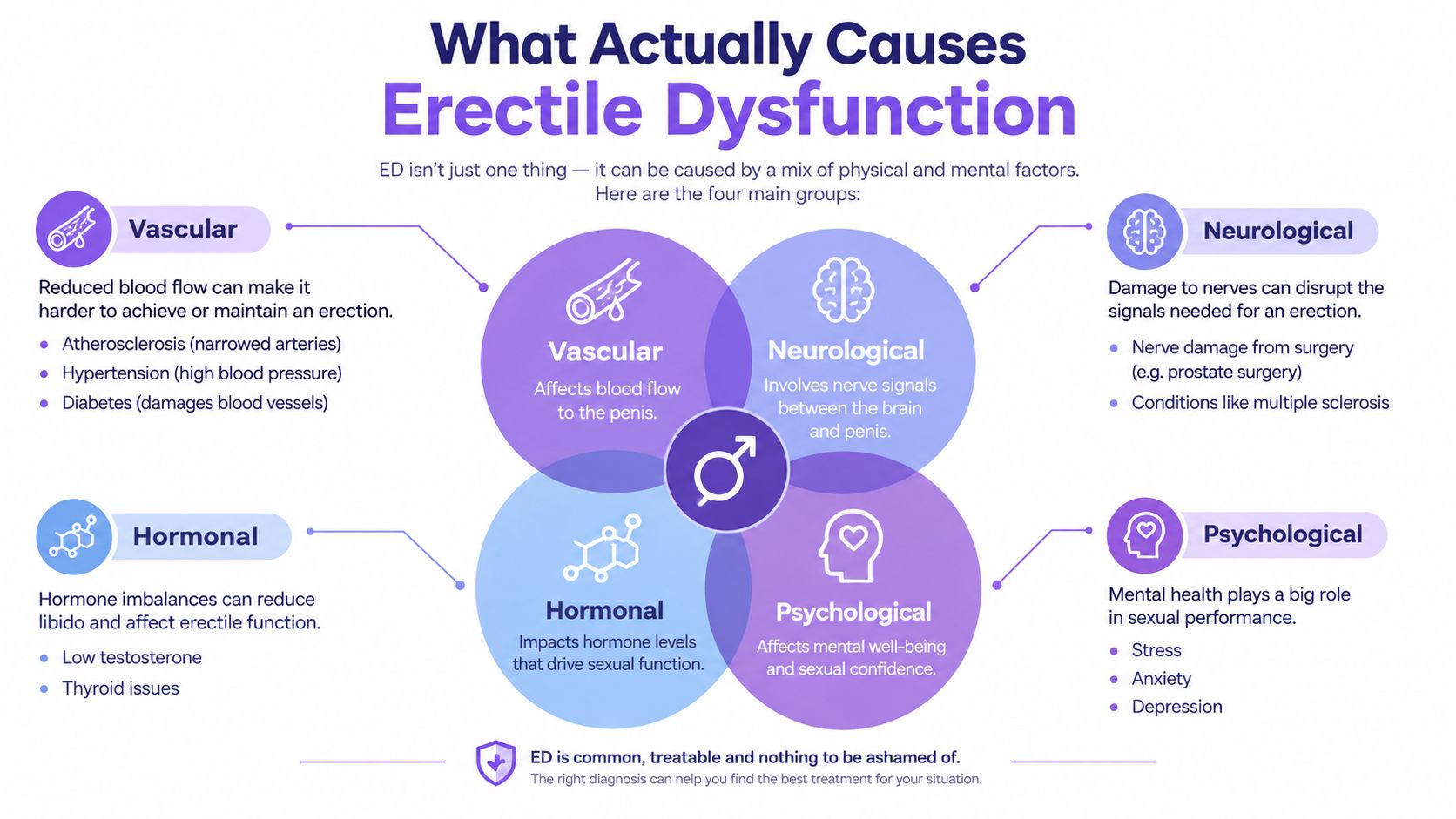
Four cause groups that often overlap
- Vascular: High blood pressure, atherosclerosis and diabetes can impair the blood supply needed for an erection. These causes are especially important to investigate because ED may precede clinically recognised cardiovascular disease.
- Hormonal: Low testosterone can affect sexual desire and function. Thyroid disorders and prolactin changes may also be relevant; a GP can decide whether hormone testing is appropriate.
- Neurological: Diabetes-related nerve damage, spinal injury and nerve damage after pelvic or prostate surgery can interfere with the signals required for an erection.
- Psychological and relational: Anxiety, depression, stress and relationship strain can contribute. They can coexist with physical causes, so finding a psychological factor doesn't rule out a medical one.
Diabetes has a strong association with ED. NICE material reports that the estimated prevalence among men with diabetes ranges from 35% to 90%, reflecting differences between studies in age, diabetes duration, complications and methods (NICE diabetes indicator supporting documentation). Diabetes can affect blood vessels and nerves, and managing glucose and cardiovascular risk is an important part of care.
Symptoms alone can't reliably identify which cause is responsible. A sudden or rapidly worsening change warrants medical review, as it may point to an unrecognised cardiovascular, hormonal or neurological issue. For a plain-language overview of possible contributors, see XO's guide to erectile dysfunction causes.
Medical Checks to Request Before Starting Treatment
A GP appointment is a practical first step before trying to fix ED with tablets, injections or devices. The right checks depend on someone's symptoms and history, so this is a conversation guide rather than a checklist for self-diagnosis.
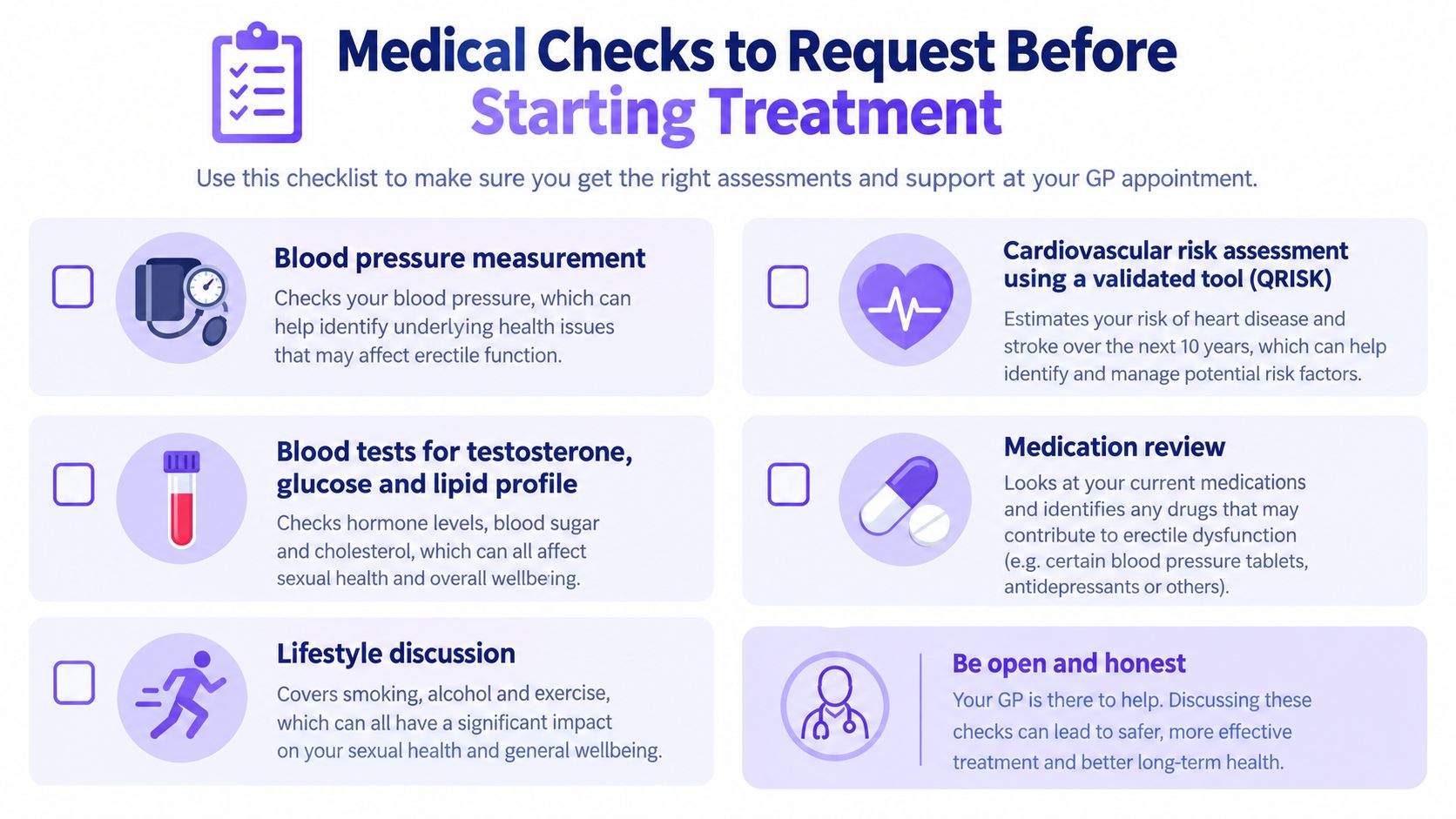
A primary-care checklist
Ask your GP whether it's appropriate to review:
- Blood pressure and cardiovascular risk: A blood-pressure check and an overall risk assessment can help identify issues that need attention alongside ED. Your clinician can decide whether a validated tool such as QRISK is suitable.
- Diabetes and cholesterol: HbA1c or glucose testing can assess for diabetes, while a lipid profile checks cholesterol. These results help guide prevention and treatment of vascular risk.
- Weight and waist: These can help the clinician assess metabolic risk and discuss whether weight management may be useful.
- Medicines: Some medicines can contribute to erection problems. Bring an up-to-date list, including medicines for blood pressure, depression and prostate or hair conditions. Don't stop prescribed treatment without speaking to the prescriber.
- Hormones, when indicated: A clinician may consider an early-morning testosterone test if symptoms and history point towards deficiency. The GP can advise on appropriate timing and whether further testing is needed.
PDE5 inhibitors such as sildenafil and tadalafil are prescription-only medicines in the UK. They must not be taken with nitrate medicines because the combination can cause a dangerous drop in blood pressure. A prescriber should also review other medicines, health conditions and whether sexual activity is medically appropriate.
A tablet may improve erections without treating diabetes, high blood pressure or another underlying condition. The assessment isn't an optional extra. It helps distinguish symptom relief from a broader plan to improve the factors contributing to ED.
Lifestyle Changes That Actually Move the Needle
Lifestyle changes can support erectile function, particularly when ED is linked to cardiovascular or metabolic risk. They're not a substitute for assessment or necessary prescribed treatment, and improvement may take time. Changes to blood flow and general health can develop over weeks or months; weight and metabolic changes often take longer.
Start with the changes you can sustain
Increase physical activity. Regular aerobic activity, such as brisk walking, cycling or swimming, supports cardiovascular health. If you've been inactive or have a health condition, discuss a suitable starting point with a clinician rather than abruptly taking on intense exercise.
Stop smoking. Smoking contributes to vascular damage, so stopping is a direct way to address one modifiable risk. A GP or local stop-smoking service can help you choose support that fits your circumstances.
Work towards a healthier weight if needed. For people carrying excess weight, gradual weight reduction can support blood pressure, glucose and cholesterol management. Avoid crash diets and products that promise rapid changes.
Review alcohol and food habits. Consider whether alcohol is affecting sexual function or making lifestyle goals harder. A balanced diet can help with overall cardiometabolic health; readers interested in food choices can explore this guide to dietary ways to support testosterone.
Practical rule: Treat lifestyle changes as part of the plan, not a test you must pass before asking for medical help.
Track changes over several weeks rather than judging progress after one sexual encounter. Morning erections, libido, erection reliability, activity, smoking and alcohol patterns can help you and your clinician discuss whether the plan is helping. If ED persists, don't assume you've failed at lifestyle change; a mixed cause may require medical or psychological treatment as well.
Prescription Treatments and Specialist Options
When ED persists, a clinician may offer a PDE5 inhibitor after checking suitability, contraindications and interactions. These medicines help improve the erectile response to sexual stimulation. They don't automatically resolve an underlying vascular, hormonal or psychological cause.
Sildenafil, tadalafil, vardenafil and avanafil are prescription-only treatment options. Their timing, duration and interactions differ, and individual response varies. The table gives a broad basis for discussion, not a self-prescribing guide. A prescriber or pharmacist should confirm the current product information and advise on food, alcohol and other medicines.
First-line PDE5 inhibitor options prescribed in the UK
| Medicine | Typical onset | Duration of action | Food and alcohol notes | Clinical notes |
|---|---|---|---|---|
| Sildenafil | Often taken before sexual activity; follow the prescriber's instructions | Varies by person and dose | Food can affect timing; ask the prescriber about alcohol and your other medicines | A commonly prescribed option. For a general explanation of Viagra and generic sildenafil, use a reliable health resource and discuss suitability with a prescriber. |
| Tadalafil | Follow the prescribed instructions | Can last longer than some alternatives | Ask the prescriber about food, alcohol and interactions | May be prescribed for use around planned sexual activity or on a regular schedule, depending on clinical assessment. |
| Vardenafil | Follow the prescribed instructions | Varies by person and dose | Food can affect some formulations; check the product advice | A prescriber can explain whether it's appropriate and how to use it. |
| Avanafil | Follow the prescribed instructions | Varies by person and dose | Check the product information and discuss alcohol and interactions | Its suitability depends on the person's health and medicines. |
If a PDE5 inhibitor seems ineffective, don't increase the dose or switch products independently. UK urology guidance advises giving a properly prescribed treatment a fair trial, as incorrect timing, lack of sexual stimulation or stopping too soon can lead someone to judge it ineffective. A UK pathway describes trying around eight doses, spaced reasonably closely at about two or three occasions weekly (NICE evidence summary on treatments for ED). Follow your own prescriber's directions, which may differ.
When tablets aren't suitable or haven't helped
A specialist may discuss a vacuum erection device, intraurethral or intracavernosal alprostadil, or penile prosthesis surgery for selected refractory cases. These options need appropriate clinical assessment and instruction. BAUS/GIRFT guidance describes referral after at least eight attempts across two or three PDE5 inhibitors have failed; seek specialist assessment rather than repeatedly escalating treatment yourself.
PDE5 medicines must not be combined with nitrate medicines. A prescriber should check for this and other risks before treatment begins. NICE also emphasises that medication should sit alongside investigation and management of the causes, and that treatment may help without permanently curing ED.
The Psychological and Relationship Layer
ED can become a cycle: concern about losing an erection increases anxiety, and anxiety can make it harder to become or stay erect. That doesn't make the problem imaginary. Stress and anxiety can affect sexual function while physical factors are also present.

A pattern that varies by situation may suggest anxiety or relationship pressures are contributing, while erection problems across situations can make physical causes important to assess. Neither pattern is diagnostic on its own. Depression, anxiety, relationship strain and physical conditions can overlap, so it's reasonable to consider both medical assessment and psychological support.
For a further explanation of the relationship between stress and ED, see XO's article on whether stress can cause erectile dysfunction.
Support can run alongside medical care
Counselling, psychosexual therapy or relationship support may help when anxiety, depression or relationship difficulties are part of the picture. NHS access can involve waiting, so some people explore private practitioners; check that the professional has suitable qualifications and registration with an appropriate UK body. Psychological support should complement, not replace, a medical assessment when symptoms could have a physical cause.
It can help to note morning erections, libido, anxiety, relationship context and how reliably erections occur over several weeks. Share those observations with a clinician rather than drawing a diagnosis from them. The pattern can help guide a conversation about whether the next step is medical investigation, psychological support or both.
A short discussion can be easier to begin with a shared, practical resource. The guide to counselling in Vernon offers information about talking support, though local availability and suitability will vary.
If you're considering a conversation about ED with a partner, this video may offer a starting point.
Red Flags, Follow-up and Safe UK Routes to Care
Seek medical advice promptly for sudden or rapidly worsening ED, or if symptoms occur with chest pain or breathlessness on exertion. New neurological symptoms also need assessment. If you suspect priapism, seek urgent medical help.
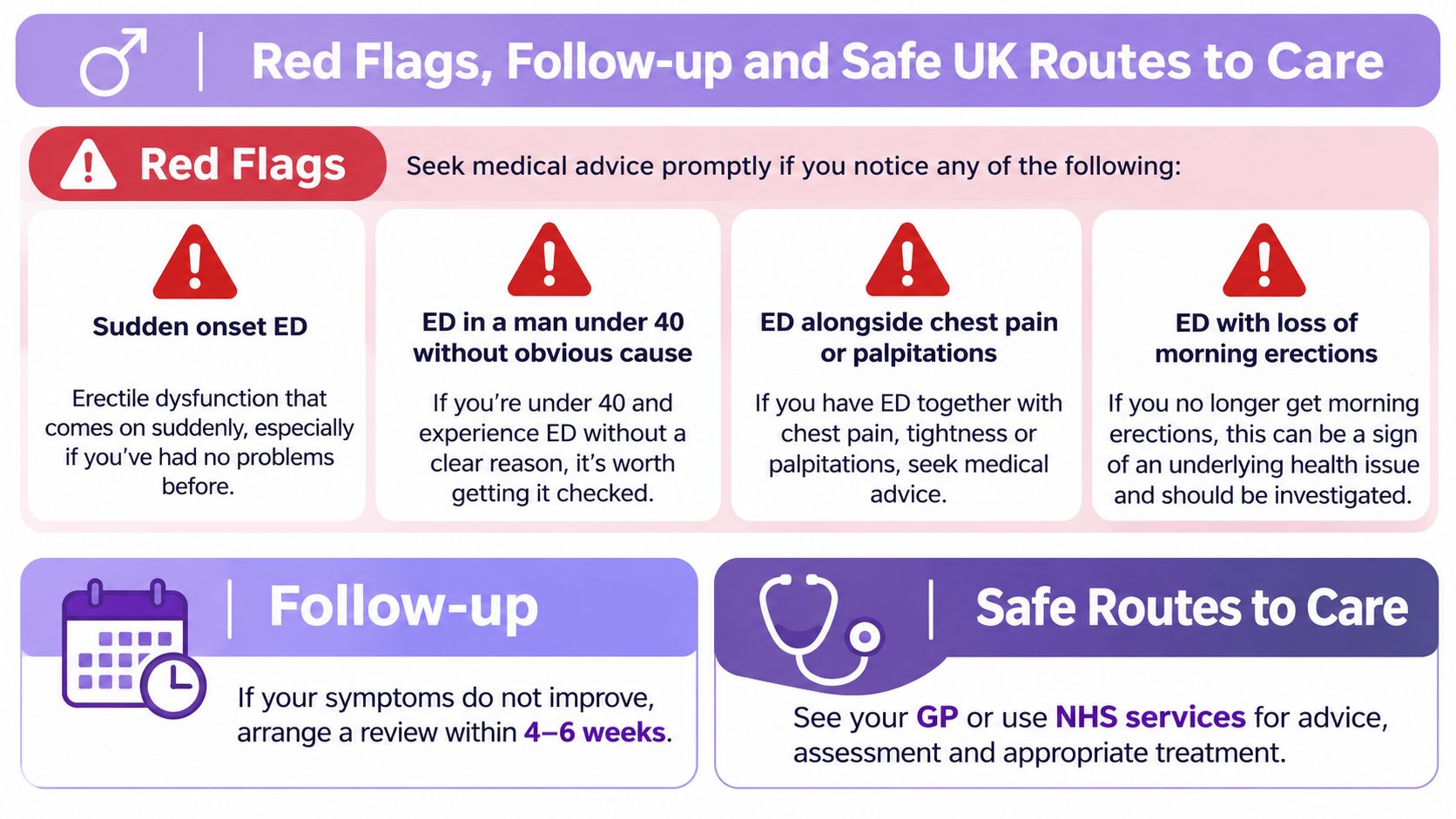
Arrange follow-up with your GP or prescriber to review symptoms, health risks, medicines and response to treatment. If several properly used PDE5 inhibitors haven't helped, ask about specialist referral rather than self-escalating. NHS care can begin with a GP; a regulated private telehealth service or online pharmacy may also assess suitability, but medication isn't automatic and should only follow an appropriate clinical review.
If you're looking into talking support alongside medical care, Interactive Counselling's Vernon guide provides information about counselling services. Check that any provider is appropriate for your needs.
This content is for informational purposes only and does not constitute medical advice. Always consult a qualified healthcare professional before starting or changing any treatment.
Reviewed by: Medical review should be completed and attributed by a qualified healthcare professional before publication.
Review date: To be confirmed by the publisher.
XO Medical is a UK-registered online pharmacy and telehealth service that offers clinician-assessed options for erectile dysfunction, including prescribed sildenafil and tadalafil when appropriate. To discuss a regulated assessment and follow-up, visit XO.


0 comments