


You're on day eight of a period that was expected to last four or five days. You're changing tampons at work, checking for leaks, and wondering whether this is perimenopause or something that needs medical attention. Long periods in perimenopause can be unsettling, especially when one cycle is light and brief while the next is prolonged and heavy.
Perimenopause commonly brings unpredictable bleeding, but “common” doesn't mean every pattern should be ignored. This guide explains what may be happening, what counts as heavy or prolonged bleeding, what to record, when to contact a GP or NHS 111, and which treatments UK clinicians may consider. It's information to support a safer conversation with a qualified healthcare professional, not a personal diagnosis.
Table of Contents
- When a Period Refuses to End
- Why Cycles Lengthen Before They Stop
- Normal Changes Versus Red-Flag Bleeding
- How UK Clinicians Diagnose the Cause
- Treatment Options Available in the UK
- Tracking and Self-Care Between Appointments
- Common Questions and Where to Get Help
When a Period Refuses to End
A woman in her mid-forties notices that her period has carried on well beyond its usual finish. The first few days seemed familiar, but by day eight she's still reaching for sanitary products and feeling tired. She may also be asking the question many patients ask in a GP consultation: “Is this the menopause starting?”
The answer may be perimenopause, the transition before periods stop completely. In the UK, this transition is commonly described as lasting around four years on average, although it can continue for up to ten years. The average age of natural menopause is 51, so the years before the final period are clinically important for understanding changing cycles and identifying bleeding that needs investigation. These figures are outlined in UK NHS guidance on menopause.
During perimenopause, periods can become lighter, heavier, more irregular, or more frequent. Some people bleed every two to three weeks for a time, while others have longer gaps. A period may also be longer than usual because ovulation becomes less predictable and the womb lining responds differently to changing hormone levels.
Practical rule: A change in timing or flow can fit perimenopause, but heavy, recurrent, or disruptive bleeding still deserves a proper clinical assessment.
The useful questions are straightforward:
- What counts as long? Look at the number of bleeding days, how often bleeding returns, and whether it interferes with daily life.
- Why does it happen? Hormonal changes affect ovulation and the build-up and release of the womb lining.
- What should prompt help? Very heavy flow, bleeding between periods, bleeding after sex, symptoms of anaemia, or bleeding after menopause should not be attributed to perimenopause alone.
- What can UK clinicians offer? They can assess the pattern, check for anaemia or other causes, and discuss prescription-only treatments where suitable.
Why Cycles Lengthen Before They Stop
A menstrual cycle works a little like a planned handover. The ovary prepares an egg, ovulation releases it, oestrogen helps build the womb lining, and progesterone helps organise what happens after ovulation. When ovulation doesn't occur, that usual sequence becomes less reliable.
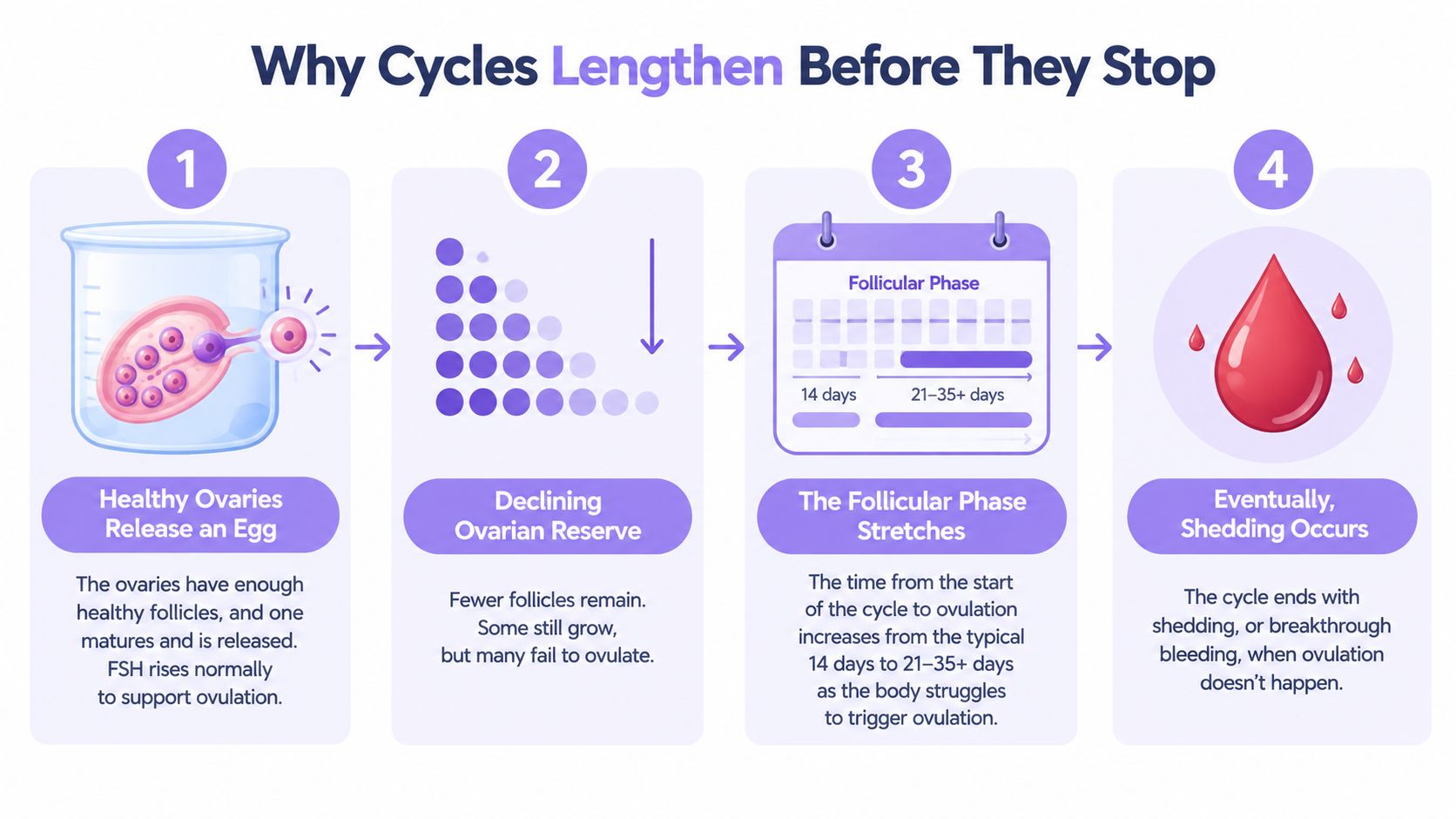
As ovarian reserve declines, the brain sends changing signals, including follicle-stimulating hormone, or FSH. In some cycles, the ovary responds and releases an egg. In others, a follicle begins developing but doesn't complete ovulation. The body can then spend longer preparing the womb lining before bleeding occurs.
The result isn't always a long period. Some cycles become shorter because ovulation happens earlier, while other cycles stretch out or are missed. That's why perimenopause can produce a mixture of longer, shorter, heavier, lighter, more frequent, or skipped periods rather than one predictable pattern.
Oestrogen and progesterone in plain English
Oestrogen helps the womb lining grow during the first part of the cycle. Progesterone usually rises after ovulation and helps stabilise that lining. If ovulation is delayed or absent, progesterone may not rise in the usual way, while oestrogen may continue stimulating the lining.
That can make the eventual bleed heavier or less predictable. It's a physiological explanation, not a guarantee that every long period is harmless. Fibroids, polyps, thyroid conditions, pregnancy, medication effects, and other causes can produce similar symptoms and need separate consideration.
The final phase before menopause often brings the longest gaps between periods and some of the heaviest flows, because the lining may remain under the influence of oestrogen for longer before it sheds. For a clearer explanation of changing patterns, see this guide to perimenopause cycle changes.
Normal Changes Versus Red-Flag Bleeding
Perimenopause can change the rules of a cycle, but it doesn't remove the need to assess bleeding that is unusually heavy, prolonged, or occurring at the wrong time. A simple record helps you describe the pattern accurately rather than relying on memory during an appointment.
UK guidance recognises a change towards heavier or more frequent bleeding as an early perimenopause pattern. However, bleeding that requires changing pads or tampons every one to two hours, using two period products together, or causes bleeding between periods shouldn't be put down to perimenopause alone. This warning appears in NHS information about menopause and perimenopause symptoms.
| Pattern | Likely normal in perimenopause | See a GP or call NHS 111 |
|---|---|---|
| Timing | Cycles may become irregular, shorter, longer, or occasionally absent | Bleeding between periods or after sex needs assessment |
| Flow | A period may be lighter or heavier than your previous pattern | Flow requiring pad or tampon changes every one to two hours should be assessed |
| Duration | A longer bleed can occur during hormonal changes | Persistent or very prolonged bleeding shouldn't be managed by waiting indefinitely |
| Symptoms | Mild cramps or familiar premenstrual symptoms may continue | Dizziness, breathlessness, marked fatigue, or weakness may indicate significant blood loss or anaemia |
| Menopause status | Bleeding can fluctuate before the final period | Any new bleeding after menopause requires medical review |
When the amount matters
NHS England's decision aid describes heavy periods as affecting 30 in every 100 women, with around half of those cases having no medical cause. It also explains that heavy bleeding around the menopause transition is common enough to influence UK care pathways. The same guidance notes that 8 in every 10 women experience menopausal symptoms, which typically last around four years after the last period and can continue for up to 12 years in about 10% of women. These figures are included in the NICE-based UK menopause guidance.
The figures don't tell you whether your bleeding is safe. Your experience matters more than fitting a neat category. Record the start and end date, the heaviest days, how often you change products, clots, pain, dizziness, and whether bleeding is affecting work, sleep, exercise, or sex.
How UK Clinicians Diagnose the Cause
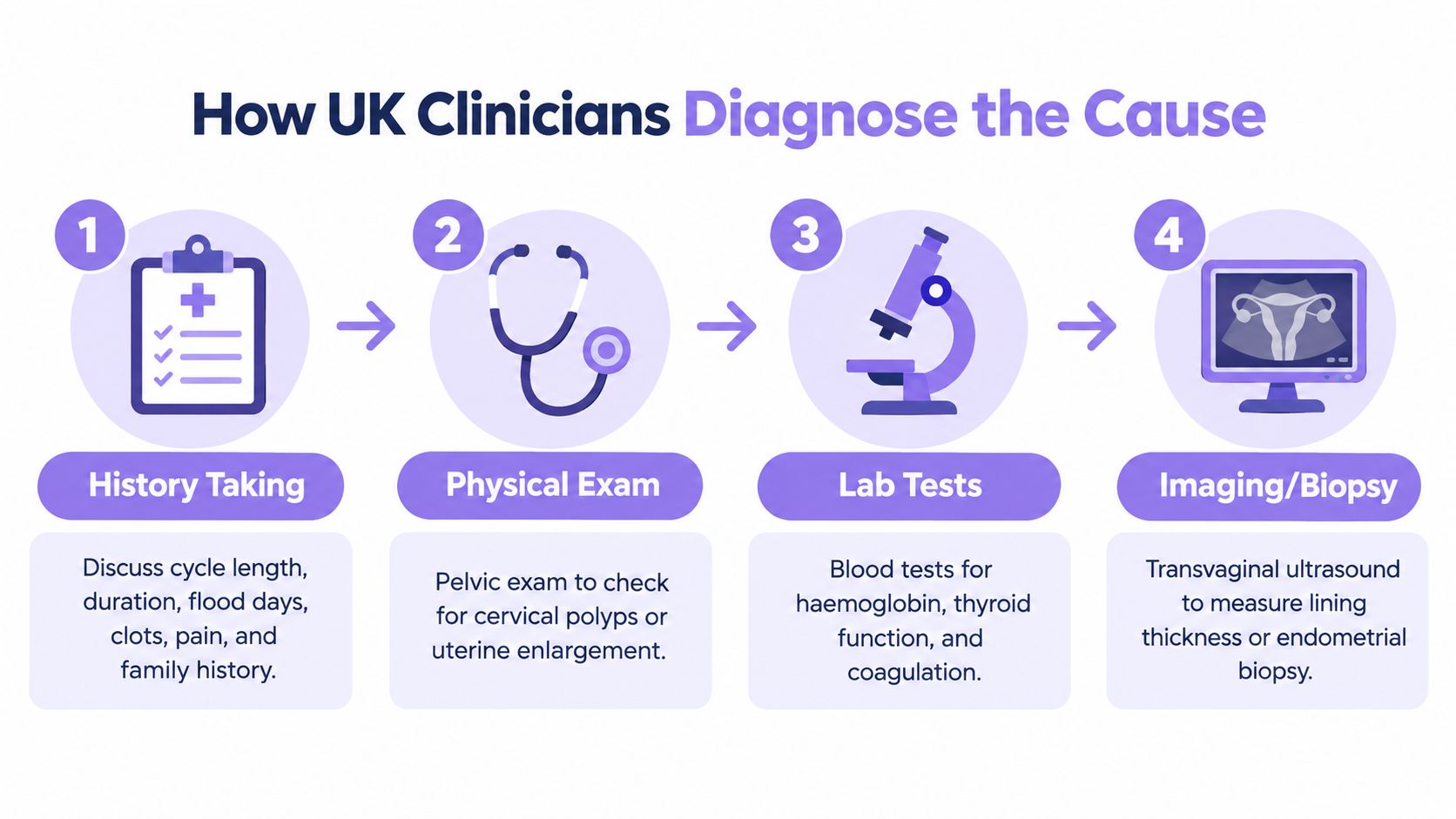
A GP will usually start by listening carefully to the bleeding pattern. Useful questions include when the change began, how long each bleed lasts, whether cycles are returning unusually quickly, how often you're changing products, whether clots are present, and whether you have pelvic pain or bleeding after sex.
Your clinician may also ask about pregnancy possibility, prescribed medication, contraception, anticoagulants, family history of fibroids, and any personal or family history suggesting a bleeding disorder. A physical examination may be offered, including an abdominal or pelvic examination, depending on the symptoms and your preferences.
Tests are chosen for a reason
A full blood count can look for anaemia, while ferritin can help assess iron stores. Thyroid testing may be appropriate when symptoms suggest a thyroid problem. Other tests depend on the history, examination, medication, contraception, pregnancy possibility, and the type of bleeding.
For women over 45 with typical perimenopausal symptoms and irregular periods, NICE guidance says diagnosis can usually be made clinically. Routine hormone blood tests often aren't useful because hormone levels fluctuate during the transition. A single result can therefore provide a misleading snapshot rather than a dependable explanation.
When imaging or referral is needed
A pelvic ultrasound may be arranged if the examination or symptoms suggest fibroids, polyps, an enlarged uterus, or another structural cause. The exact scan and follow-up depend on the clinical picture. Persistent unexplained bleeding may lead to further assessment by gynaecology, which can include examination of the womb lining.
Bleeding after sex, bleeding between periods, and unexpected bleeding after periods have stopped for 12 months require assessment rather than reassurance based only on age. Some presentations may enter an urgent referral pathway, including a two-week-wait route, but the correct pathway is decided by the clinician and local NHS service.
For a visual overview of the process, this short educational video may help:
Treatment Options Available in the UK
Treatment depends on the cause, the severity of bleeding, other perimenopause symptoms, contraception needs, pregnancy plans, migraine history, blood pressure, clotting risk, and personal preferences. A medicine suitable for one person may be unsafe or unsuitable for another, so prescription-only treatment requires assessment by an authorised prescriber.
| Option | How It Works | Prescription Required | Notes |
|---|---|---|---|
| Tranexamic acid | Helps reduce menstrual blood loss by supporting clot stability | Yes | Not suitable for everyone, particularly where clotting risk is a concern |
| Mefenamic acid | An anti-inflammatory medicine that can reduce bleeding and period pain | Yes | Medical review is needed if you have stomach, kidney, asthma, or other relevant conditions |
| Combined oral contraceptive pill | Regulates bleeding and suppresses ovulation | Yes | Suitability depends on health history, blood pressure, migraine, smoking, and clotting risk |
| Levonorgestrel-releasing intrauterine system, such as Mirena | Releases progestogen inside the womb and can reduce heavy menstrual bleeding | Yes, with fitting by a trained clinician | Often considered a first-line option for heavy menstrual bleeding under NICE guidance when appropriate |
| Norethisterone or other progestogens | Stabilises or temporarily pauses the womb lining | Yes | The schedule and duration must be prescribed for the individual situation |
| HRT | Replaces hormones to treat menopause symptoms | Yes | If you have a womb, progestogen is needed with oestrogen to protect the lining |
| Iron supplementation | Replaces iron when bleeding has caused deficiency or anaemia | Some products are available without a prescription | Testing and professional advice help avoid treating the wrong cause or taking an unsuitable dose |
| Endometrial ablation or hysterectomy | Procedural or surgical options for selected cases | Specialist assessment required | These may be considered when other treatment hasn't worked and future pregnancy isn't wanted |
Tranexamic acid, mefenamic acid, combined contraception, Mirena, norethisterone, and HRT are prescription-only treatments in the UK. An online pharmacy may provide prescribed medication only after a clinical consultation confirms that it's appropriate. A UK-registered pharmacy regulated by the GPhC should make the prescriber, pharmacy registration, safety checks, and follow-up process clear.
HRT can be relevant when prolonged bleeding occurs alongside hot flushes, sleep problems, or other menopausal symptoms, but it isn't a universal treatment for heavy bleeding. If you're considering HRT, read an educational guide to the best HRT options for perimenopause and discuss the risks and benefits with a clinician.
Non-prescription support can include suitable iron replacement, rest, hydration, and practical period protection. For broader lifestyle ideas, practical perimenopause strategies can complement, but not replace, medical assessment.
Tracking and Self-Care Between Appointments
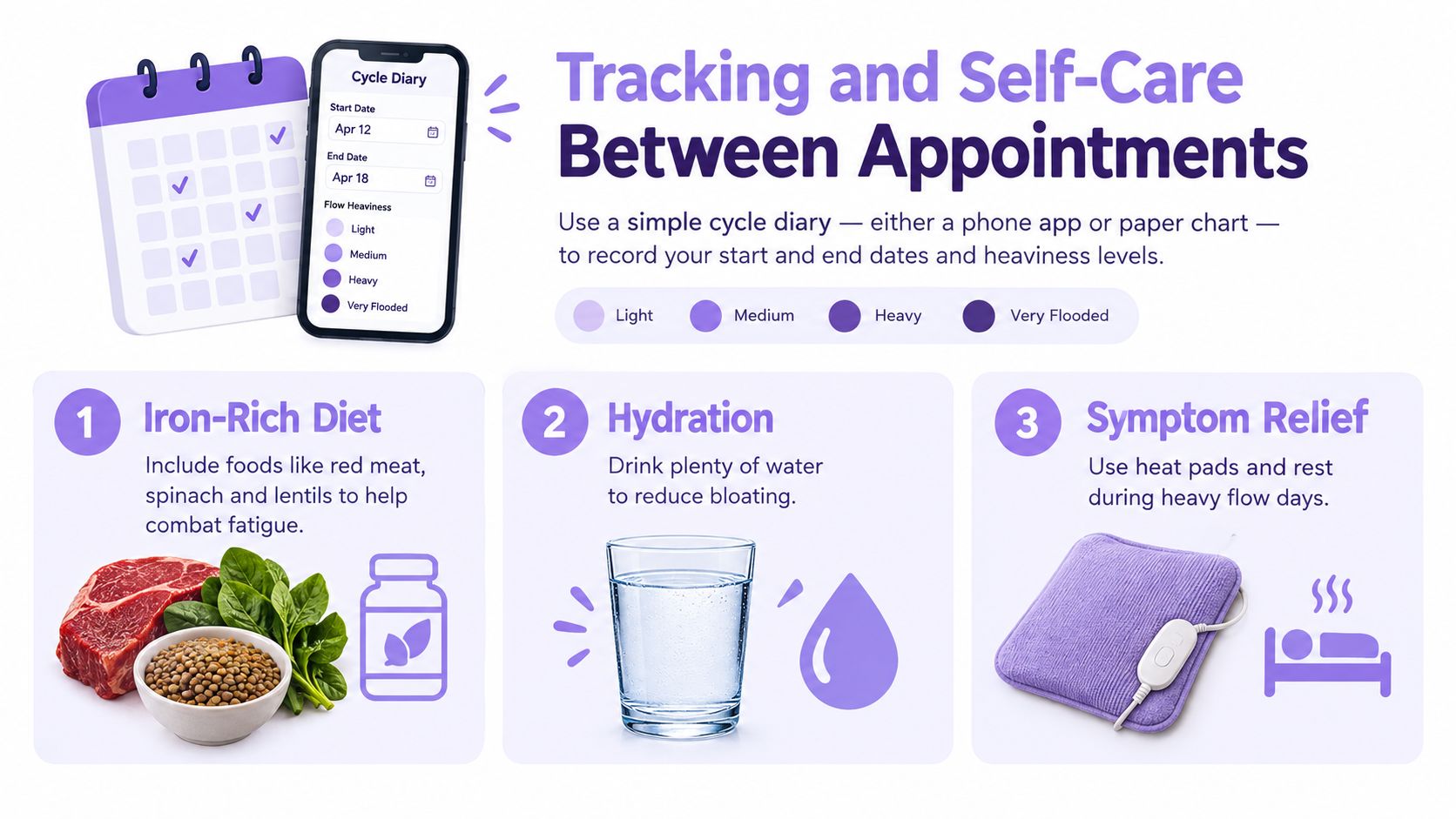
A cycle diary can turn a vague concern into useful clinical information. Use a phone app or paper chart and record the first day of bleeding, the final day, the heaviest days, pain, clots, and symptoms such as fatigue, dizziness, palpitations, or breathlessness.
Try to describe flow consistently. “Light”, “medium”, “heavy”, and “very flooded” are more useful when you also record how often you changed pads or tampons on the heaviest day. Note whether you woke at night to change products, leaked through clothing or bedding, or had to alter work and travel plans.
Supporting iron status
Long or heavy bleeding can reduce iron stores and contribute to anaemia. UK period guidance notes that some women with heavy bleeding are diagnosed with anaemia and improve after iron treatment, but tiredness alone doesn't prove that iron deficiency is the cause. Ask a GP or practice nurse whether a full blood count and ferritin test are appropriate.
Food can support iron intake. Useful options include red meat, lentils, and dark leafy greens. Vitamin C can help iron absorption, while tea or coffee with meals can reduce absorption, so consider separating them from iron-rich meals. An over-the-counter iron supplement may be appropriate for some people, but check the product and dose with a pharmacist or clinician, particularly if you take other medicines or have a health condition.
Practical products can reduce disruption while you're arranging care. For example, women's leak proof underwear 3 pack may provide an additional period-management option, but it won't address the cause of heavy bleeding.
Supporting your wider health
Regular weight-bearing exercise supports bone and muscle health during the hormonal transition. Consistent sleep routines, moderating alcohol, not smoking, and stress-management techniques may help overall wellbeing, although they won't reliably stop a prolonged bleed.
Seek same-day or urgent advice if you're soaking through pads hourly for several hours, feel faint or dizzy, become breathless, or feel unusually weak. Don't rely on self-care alone if bleeding is rapid or your symptoms suggest significant blood loss.
A structured record can make appointments more productive, as explained in this resource about menstrual cycle tracking.
Common Questions and Where to Get Help
Do long periods always mean something serious?
No. Hormonal changes can cause longer, heavier, or irregular periods during perimenopause. But bleeding between periods, bleeding after sex, very heavy flow, or symptoms of anaemia needs assessment because conditions other than perimenopause can produce the same pattern.
Does a hysterectomy inevitably follow?
No. Many people manage heavy bleeding with medication, hormonal contraception, a levonorgestrel-releasing intrauterine system, or other suitable options. Specialist procedures are considered when appropriate, particularly if medical treatment hasn't helped and future pregnancy isn't wanted.
Do I have to wait until periods stop?
No. Clinicians can assess and treat disruptive bleeding during perimenopause. Treatment may target bleeding, pain, anaemia, contraception, hot flushes, or several concerns at once.
Where should I seek help?
Your GP or practice nurse can assess persistent or changing bleeding. NHS 111 is appropriate for sudden heavy bleeding or uncertainty about urgency. Sexual health clinics can help with some bleeding concerns, contraception, and sexual-health symptoms, although persistent unexplained bleeding may still require GP or gynaecology assessment.
Take your cycle diary, medication list, contraception details, and questions about HRT or the Mirena coil to an appointment. Trusted information includes the NHS menopause pages, the NICE menopause guideline, and the British Menopause Society. A regulated service such as XO Medical's perimenopause consultation can provide clinician-led review, prescribe where appropriate, and arrange onward referral when needed. Any online pharmacy service should be transparent about its UK-registered clinicians, prescription process, and GPhC regulation.
The key point is simple: prolonged bleeding may be part of perimenopause, but you don't have to wait it out without support. Once the pattern and cause are clearer, effective management options can be discussed safely.
If long periods are becoming disruptive, XO offers clinician-led online consultations for perimenopause and menopause concerns, with prescribed medication considered only when clinically appropriate. Visit XO to review the available support and decide whether an online assessment is suitable for you. This content is for informational purposes only and does not constitute medical advice. Always consult a qualified healthcare professional before starting or changing any treatment.


0 comments