


The most popular advice for acne with PCOS is often to “balance your hormones” with supplements, restrictive diets or a single contraceptive pill. That advice is too simple. In the UK, there isn't one proven PCOS-specific acne treatment that works for everyone. The practical approach is usually stepwise, beginning with standard acne treatment and moving towards hormonal options only when the likely benefit justifies the risks.
PCOS-related acne often needs treatment for both the skin and the underlying hormonal pattern. A clinician may need to consider your acne severity, other signs of androgen excess, contraception needs, pregnancy plans, medical history and risk of blood clots before recommending prescribed medication. Treatments discussed here may be prescription-only, and online assessment should never mean automatic access to medication.
Reviewed by: UK-registered healthcare professional
Review date: 5 October 2026
This content is for informational purposes only and does not constitute medical advice. Always consult a qualified healthcare professional before starting or changing any treatment.
Table of Contents
- Why PCOS Triggers Persistent Hormonal Acne
- First-Line Medical Treatments and Topical Therapies
- Hormonal Therapies and Anti-Androgen Medications
- Non-Pharmacological Measures and Clinical Skincare
- Safety Considerations and UK Prescribing Guidelines
- Accessing Regulated Care and Next Steps
Why PCOS Triggers Persistent Hormonal Acne
PCOS can make acne persistent because the condition may increase the effect of androgens, including testosterone, on the skin. Androgens stimulate sebaceous glands to produce more sebum, the oily substance that helps protect the skin. In acne-prone skin, excess sebum can combine with dead skin cells and inflammatory processes, making pores more likely to become blocked.
A useful way to understand this is to think of the pore as a narrow channel. Hormonal signals can turn up oil production, while changes in how skin cells shed can make the channel less efficient at clearing itself. Once the pore is blocked, inflammation can develop beneath the surface. Washing the skin removes surface oil, but it doesn't switch off the hormonal signal driving production further down.
This explains why a cleanser or spot treatment may improve the appearance of individual lesions without controlling recurring breakouts. Acne around the jawline, chin and lower face is often described as hormonal, although the location alone can't diagnose PCOS or prove that androgens are responsible. Persistent, painful or scarring acne deserves a clinical assessment rather than repeated changes to cosmetic products.
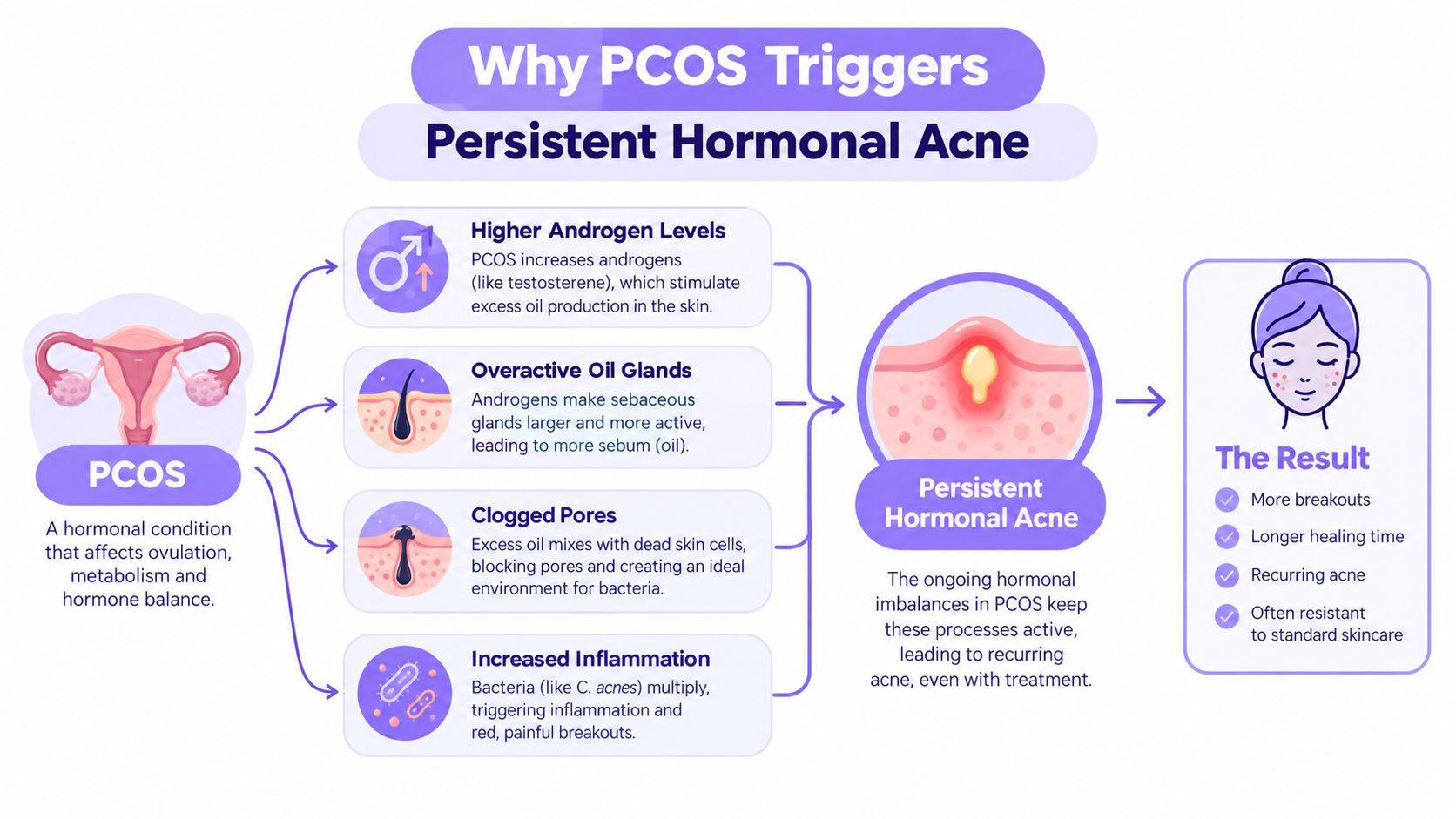
Why face washes often fall short
Standard skincare still has a role. Gentle cleansing can remove sunscreen, makeup and excess surface oil, while an appropriate acne active can help reduce blocked pores or inflammation. What it can't do is correct an endocrine driver by itself.
PCOS also doesn't always present in the same way. Some people have acne alongside irregular periods, unwanted facial hair or scalp hair thinning. Others mainly notice skin symptoms. NICE advises considering specialist referral, such as to a reproductive endocrinologist, when acne occurs alongside additional signs of hyperandrogenism. That makes the wider symptom pattern clinically important.
Tracking the timing of breakouts may help you describe your symptoms accurately, particularly if they appear to vary with your menstrual cycle. A menstrual cycle tracking resource can help you record patterns for discussion with a clinician. For broader background reading, you can also browse acne hormone imbalance advice, while remembering that online information can't replace an assessment.
Clinical perspective: Persistent acne with other androgen-related symptoms should prompt a discussion about PCOS management, not just a stronger facial cleanser.
The key point is that treatment for acne with PCOS isn't automatically different from ordinary acne treatment. UK guidance uses the standard acne pathway first, then considers hormonal treatment where the pattern and the person's risk profile make that appropriate.
First-Line Medical Treatments and Topical Therapies
Having PCOS doesn't mean you should skip the ordinary acne pathway. NICE-linked UK guidance recommends managing acne vulgaris in people aged ten and over with PCOS in line with standard acne guidance. In practice, that usually means starting with a suitable topical treatment, sometimes alongside another topical medicine, before considering systemic hormonal treatment.
The choice depends on the type and severity of acne, previous treatment, skin sensitivity, pregnancy plans and whether scarring is developing. Common prescription or pharmacy-supported options include topical retinoids, benzoyl peroxide and azelaic acid. The NHS acne treatment guidance describes acne medicines as including topical treatments, oral antibiotics, oral contraceptive pills and isotretinoin, with isotretinoin reserved for more severe cases.
What first-line treatment is trying to achieve
Topical retinoids, such as adapalene, help reduce the tendency for pores to become blocked. Benzoyl peroxide targets acne-associated bacteria and inflammation, while azelaic acid can be useful when acne and post-inflammatory discolouration occur together. These treatments act locally, so they can manage the skin even while a clinician investigates whether androgen excess is contributing to recurrence.
A sensible routine is usually introduced gradually rather than applying several irritating products at once:
- Start with one active treatment: Apply a thin layer as directed, often to the acne-prone area rather than only to visible spots.
- Protect the skin barrier: Use a gentle cleanser and a non-comedogenic moisturiser. Irritation can make it harder to continue treatment consistently.
- Use sun protection: This is particularly relevant when irritation or pigmentation is a concern.
- Allow a proper trial: Frequent switching makes it difficult to tell whether a treatment is helping and can leave the skin inflamed.
Adapalene and other retinoids aren't suitable during pregnancy, and prescription treatment should be selected with this in mind. You can read more about adapalene gel and how it is used, but a product page isn't a substitute for a prescriber's assessment.
When oral antibiotics enter the discussion
A clinician may consider an oral antibiotic for inflammatory acne when topical treatment hasn't controlled it or when the acne is more widespread. Antibiotics don't correct the hormonal component of PCOS, so they are generally part of a planned acne regimen rather than a long-term answer to androgen-driven recurrence. They also need appropriate prescribing and review.
Topical and oral treatments may be combined, but more medication isn't automatically better. A prescriber should assess irritation, interactions, pregnancy risk and whether the presentation warrants dermatology referral. NICE's evidence review found insufficient evidence to recommend one treatment specifically for acne in people with PCOS, which is why UK practice starts with the established acne algorithm rather than a single PCOS formula.
Hormonal Therapies and Anti-Androgen Medications
Hormonal treatment becomes relevant when standard acne treatment hasn't been enough and the clinical picture suggests that androgen activity is contributing. The aim isn't to cure PCOS. It is to reduce symptoms by changing hormonal exposure or limiting the effect of androgens on the skin.
A combined oral contraceptive pill can be useful when contraception is wanted and there are no contraindications. Combined pills may help testosterone-driven symptoms, including acne, but different formulations have different risk profiles. Co-cyprindiol, commonly known by the brand name Dianette, combines ethinylestradiol with cyproterone acetate and is generally considered a second-line option in relevant UK pathways rather than an automatic first choice.
Spironolactone is an anti-androgen sometimes considered for androgen-related symptoms. Its use for acne may be outside the product's licensed indication, depending on the circumstances, so it requires a clinician who can assess suitability, interactions, pregnancy risk and monitoring needs. It isn't a universal substitute for the combined pill or standard topical treatment.
Comparing the main options
| Medication Type | Primary Mechanism | UK Prescribing Context | Monitoring Requirement |
|---|---|---|---|
| Combined oral contraceptive pill | Provides combined hormonal contraception and may reduce testosterone-driven symptoms | Considered where contraception and symptom control are appropriate, after checking contraindications | Medical history, blood pressure and clot-risk assessment |
| Co-cyprindiol, including Dianette | Combines ethinylestradiol with cyproterone acetate to address androgen-related symptoms | A second-line hormonal option for persistent acne in some UK pathways | Review at six months, with ongoing assessment of benefit and risk |
| Spironolactone | Anti-androgen activity may reduce androgen-related skin symptoms | May be prescribed in selected cases, sometimes outside the licensed indication | Clinician-led review, including suitability, interactions and pregnancy considerations |
NICE's recommendations describe standard first-line acne treatment followed, if necessary, by co-cyprindiol or another combined oral contraceptive pill. The guidance also sets a six-month review point for co-cyprindiol. This is important because continuation should depend on a clear balance between benefit and risk, not on having started the medicine alone. The NICE acne management recommendations provide the UK framework.
The right hormonal treatment depends on more than acne severity. Contraception needs, fertility plans, migraine history, blood pressure, smoking, previous clots and family history can all affect the decision.
Results from hormonal treatment aren't immediate, and the response varies. Acne may improve as androgen activity is reduced, but treatment still needs consistent skincare and clinical follow-up. For a broader discussion of potential benefits and risks, see this guide to hormone therapy risks. For general contraceptive information, a guide to choosing a contraceptive pill should be used as background reading, not as a basis for self-selection.
Non-Pharmacological Measures and Clinical Skincare
Lifestyle measures can support PCOS care, but they shouldn't be presented as a guaranteed cure for acne. PCOS can involve metabolic factors, including insulin resistance, and these may interact with androgen-related symptoms. Improving general metabolic health may support wider symptom management, but it doesn't mean that acne is caused by poor discipline or that a particular diet will reliably clear the skin.
A practical approach is more sustainable than a restrictive one. Regular physical activity, balanced meals and attention to overall health can be discussed with a GP, endocrinology team or dietitian. The NHS explains that PCOS has no cure but that symptoms can be managed, and lists acne creams or tablets among symptom treatments, alongside options such as metformin and spironolactone for particular PCOS-related needs. The NHS information on PCOS symptoms and treatment offers a useful starting point.
A routine that supports treatment
Use a gentle cleanser, apply prescribed treatment as directed and choose moisturisers and cosmetics labelled non-comedogenic where possible. Avoid abrasive scrubs, aggressive extraction and repeated product changes. These approaches can damage the skin barrier and make prescribed treatment harder to tolerate.
Dietary changes should also be proportionate. Some people notice that particular foods coincide with flare-ups, but individual triggers vary and there isn't a single proven acne diet for PCOS. A food and symptom record may help identify a pattern, provided it doesn't lead to unnecessary restriction or missed nutritional needs. Supplement claims deserve particular caution, as “natural” doesn't mean effective, suitable or free from interactions. A general guide to women's health and herbal supplements can provide background, but discuss supplements with a qualified professional before starting them.
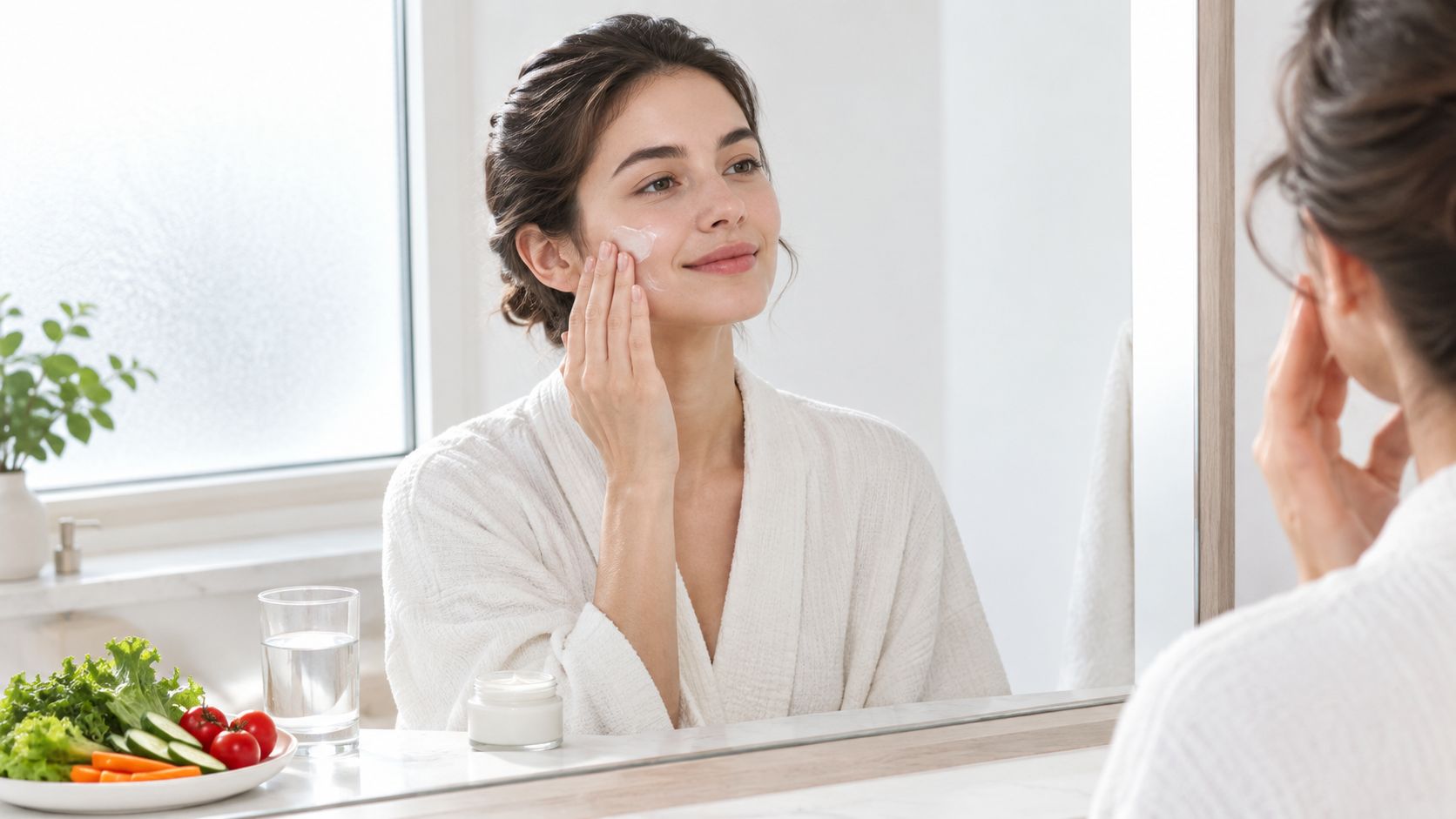
Treating marks and scars separately
Active acne and the marks it leaves behind are related but different treatment problems. First, clinicians usually aim to control new inflammation. Once the acne is stable, an in-person aesthetics clinic may discuss options for post-acne redness, pigmentation or texture, such as carefully selected chemical peels or other medically led procedures.
An in-person aesthetics clinic offering botox, dermal fillers, skin boosters and polynucleotides (salmon DNA) may also provide skin health consultations, but these treatments don't replace endocrine assessment or prescription acne care. Procedures should be considered only after a qualified clinician has assessed the skin, the active acne and the suitability of the proposed treatment.
Safety Considerations and UK Prescribing Guidelines
The combined pill isn't a risk-free cure for PCOS acne. It can be helpful for selected patients, but hormonal prescribing requires a structured assessment. Clinicians consider previous venous thromboembolism, migraine, blood pressure, smoking, weight-related risk, relevant family history, current medicines and pregnancy plans. The assessment is individual, and an online consultation should collect enough information to make a safe decision.
Cyproterone-containing pills require particular caution. UK prescribing guidance highlights a higher venous thromboembolism risk than with some other combined contraceptives, which is why co-cyprindiol is reserved as a second-line option in some pathways. A six-month review is specified when co-cyprindiol is used, allowing the prescriber to check whether the acne benefit justifies continued exposure.
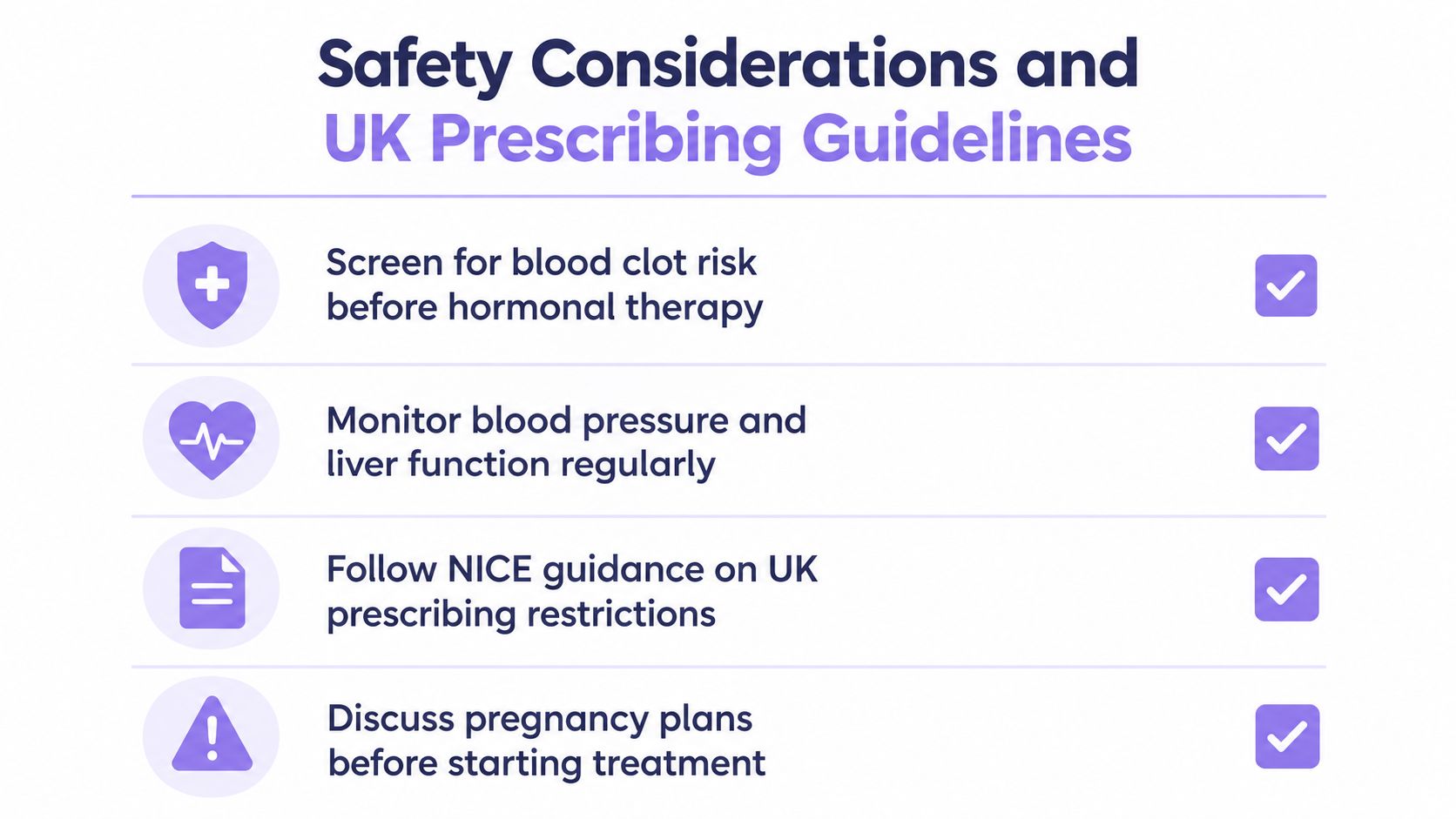
Prescription medicines need clinical oversight
Isotretinoin is a prescription-only treatment reserved for severe acne or acne that has not responded adequately to other treatment. It carries important pregnancy-related safety requirements and must be prescribed and monitored through the appropriate UK processes. Anyone who could become pregnant must discuss contraception and pregnancy plans with the prescriber before treatment begins.
Other medicines also need screening. A clinician should check whether a proposed treatment is compatible with existing conditions, other prescriptions and the possibility of pregnancy. Never share acne medication or use someone else's hormonal treatment, even if the symptoms appear similar.
NICE's evidence review found that there isn't sufficient evidence to identify one best treatment specifically for acne in PCOS. That uncertainty is not a reason to abandon treatment. It is a reason to use a staged process, document the response and stop or change treatment when the benefit doesn't justify the risks.
Seek urgent medical help for symptoms that could indicate a serious reaction or blood clot, such as sudden chest pain, difficulty breathing, coughing blood or one-sided leg swelling. These symptoms have many possible causes, but they shouldn't be assessed through routine online messaging.
Accessing Regulated Care and Next Steps
Start by arranging an assessment with a GP, dermatology service, gynaecology service or suitably qualified private clinician. NHS and private routes differ in availability and cost, but the clinical essentials are the same. The practitioner needs to understand the acne pattern, associated PCOS symptoms, previous products and medicines, medical history and treatment goals.
Prepare a concise record before the appointment. Include the treatments you've tried, how long you used them, whether they caused irritation, any previous contraceptive use, allergies, current medicines, smoking status, migraine history and pregnancy plans. Photographs can help an online clinician assess acne, although they won't replace examination when scarring, severe inflammation or other skin conditions are possible.
What a regulated online consultation should involve
A legitimate online pharmacy should not provide prescription-only acne treatment without a clinical assessment. A prescriber may ask structured questions, review photographs and request further information before deciding whether treatment is clinically appropriate. If the information is incomplete, the safe outcome may be a request for more details or a recommendation to seek in-person care.
Look for clear governance rather than promises of instant access:
- Check registration: A UK-registered pharmacy should be identifiable and regulated by the General Pharmaceutical Council, or GPhC.
- Expect a consultation: Prescription-only treatment should follow assessment by an appropriately qualified prescriber.
- Review the medicine: You should receive information about how to use it, likely adverse effects, pregnancy precautions and what to do if problems arise.
- Confirm follow-up: Hormonal treatment and persistent acne need review, particularly when treatment carries specific clot or pregnancy-related risks.
An online pharmacy can be convenient for ongoing prescribed medication when the service provides appropriate assessment, dispensing and follow-up. It shouldn't be used to bypass safety questions or obtain medication automatically. A UK-registered pharmacy regulated by the GPhC should make its registration and responsible clinical governance clear.
When to choose face-to-face care
Arrange in-person review when acne is severe, painful, rapidly worsening or leaving scars, or when the diagnosis is uncertain. Face-to-face care may also be more appropriate when acne occurs with substantial hirsutism, scalp hair loss, menstrual symptoms or other signs of androgen excess. NICE-linked guidance supports specialist referral when acne occurs alongside additional signs of hyperandrogenism.
If your main concern is scarring, pigmentation or texture after active acne has been controlled, an aesthetics clinic can discuss skin procedures separately. That conversation should remain distinct from decisions about prescription-only acne or hormonal medication. Botox, dermal fillers, skin boosters and polynucleotides are aesthetic treatments, not treatments for the hormonal cause of PCOS acne.
A sensible next step is to book a consultation and take your treatment history with you. Ask what the working diagnosis is, which first-line option is being recommended, when the response will be reviewed and what would prompt escalation or referral. That approach is safer than selecting a pill, antibiotic or anti-androgen based on an online testimonial.
XO offers clinician-assessed skincare through XO Medical, a UK-registered online pharmacy and telehealth service, alongside face-to-face skin and aesthetics consultations through XO Clinic. Visit XO to review the available services and decide whether an online assessment or in-person consultation is the more appropriate starting point for your PCOS-related acne.


0 comments