


At first glance, Wegovy and Ozempic appear almost identical. Both are weekly injections, share the same active ingredient, and come in similar-looking pens. The crucial difference, however, lies in what they are officially licensed for in the UK.
Simply put, Wegovy is specifically MHRA-approved for weight management, whereas Ozempic is authorised to treat type 2 diabetes. This distinction is fundamental to how clinicians prescribe these medications, and they are not interchangeable.
Understanding Wegovy and Ozempic in the UK
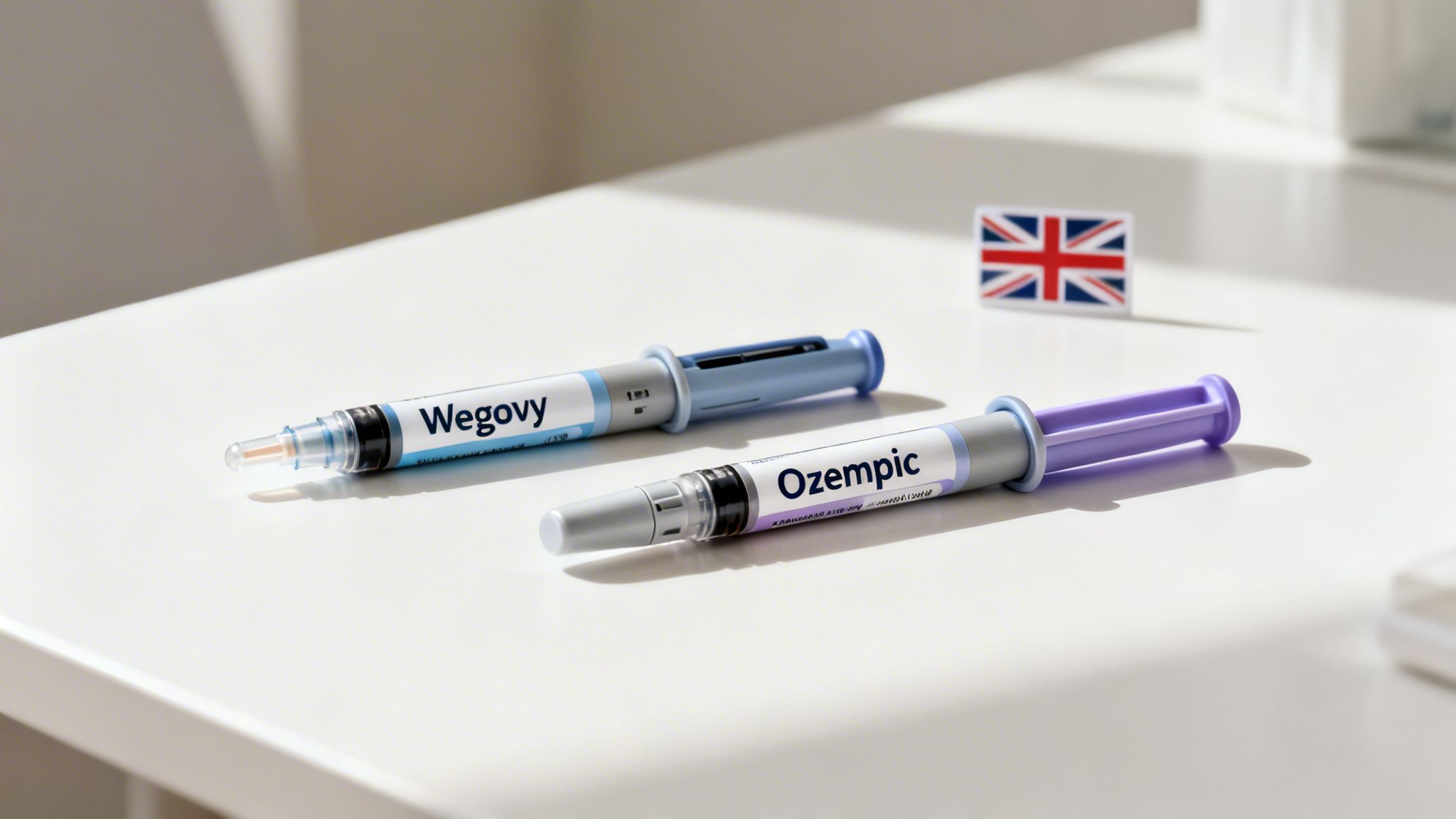
Both Wegovy and Ozempic have received significant media attention for their effectiveness. However, their use in UK clinical practice is clearly defined, following strict guidance from the Medicines and Healthcare products Regulatory Agency (MHRA).
The Shared Active Ingredient: Semaglutide
The reason for the common confusion is understandable. At their core, both medications contain semaglutide, a type of drug known as a GLP-1 (glucagon-like peptide-1) receptor agonist.
Semaglutide works by mimicking a natural hormone released from the gut after eating. This hormone signals to the brain to promote feelings of fullness, helping to regulate appetite. It also plays a key role in managing blood sugar levels. This dual action is why it is effective for two distinct conditions. For those interested in the science, you can read more about GLP-1 agonists and how they function.
Distinct Medical Licensing
The key takeaway is that the intended use, or 'licence', is what separates them. A UK-registered clinician will always assess your specific health needs and full medical history before deciding if either medication is appropriate for you.
- Wegovy is licensed for adults requiring support with chronic weight management who meet specific Body Mass Index (BMI) criteria.
- Ozempic is licensed for adults diagnosed with type 2 diabetes to help manage their blood sugar levels.
This is not simply a regulatory technicality; it is about ensuring patient safety and achieving the best possible clinical outcomes. Patient awareness is growing, with data showing a high percentage of people using weight loss medication understand Wegovy's specific purpose. This highlights the importance of patients understanding the clear clinical distinction between the two brands.
Key Takeaway: The choice between Wegovy and Ozempic is not a personal preference. It is a clinical decision made by a qualified prescriber based on your diagnosed medical condition. They cannot be substituted for one another, and a thorough consultation is always required to obtain a valid prescription.
Wegovy vs Ozempic at a Glance
To clarify the fundamental differences between these two treatments in the UK, here is a summary table.
| Feature | Wegovy | Ozempic |
|---|---|---|
| Primary Licensed Use (UK) | Chronic weight management | Type 2 diabetes management |
| Active Ingredient | Semaglutide | Semaglutide |
| Regulating Body | MHRA-approved | MHRA-approved |
| Typical Patient Profile | Adults with obesity or overweight with related health conditions | Adults with type 2 diabetes |
| Prescription Status | Prescription-only medication | Prescription-only medication |
Ultimately, obtaining either of these treatments safely requires using a regulated service, such as a GPhC-regulated online pharmacy. This process ensures that the prescribed medication is appropriate and suitable for your specific health situation.
How Semaglutide Works Within the Body
To understand the Wegovy vs Ozempic comparison, it is important to first look at the science they have in common. Both are powered by the same active ingredient, semaglutide, which is a glucagon-like peptide-1 (GLP-1) receptor agonist.
Semaglutide acts as a synthetic version of a hormone the gut naturally releases after a meal. This hormone is a key part of managing appetite and blood sugar. By mimicking its actions, semaglutide produces several effects in the body that are beneficial for both weight management and diabetes control.
Regulating Appetite in the Brain
A significant part of semaglutide's mechanism involves directly influencing the area of the brain that controls hunger—the hypothalamus.
When a patient uses a medication like Wegovy or Ozempic, the semaglutide activates specific GLP-1 receptors in the brain. This activation sends signals that help to reduce feelings of hunger and increase feelings of fullness, or satiety. As a result, patients often feel satisfied with smaller meals, which can lead to a reduction in overall calorie intake.
Promoting a Feeling of Fullness
Beyond its effects in the brain, semaglutide also has a direct impact on the digestive system.
It slows down the rate at which the stomach empties its contents into the small intestine. This process, known as gastric emptying, means that food remains in the stomach for a longer period after eating. This delay contributes to a prolonged feeling of fullness, which can help in managing appetite between meals.
Clinical Insight: The effectiveness of semaglutide lies in its dual-action approach. It targets both the brain's hunger signals and the physical process of stomach emptying. Addressing appetite through these two mechanisms is fundamental to its success in both weight management and blood sugar control.
Balancing Blood Sugar via the Pancreas
The third component of semaglutide's mechanism is its effect on the pancreas, which is particularly important for Ozempic's role in treating type 2 diabetes.
After a meal, blood glucose levels naturally rise. Semaglutide detects this rise and prompts the pancreas to release insulin, the hormone that helps cells absorb glucose from the blood for energy.
This is a glucose-dependent mechanism. It is activated when blood sugar is high but reduces as levels return to normal, which lowers the risk of hypoglycaemia (abnormally low blood sugar). It also helps by reducing the amount of glucose the liver produces.
This three-pronged mechanism—targeting the brain, stomach, and pancreas—is the common thread linking Wegovy and Ozempic. The core science is identical; the difference lies in the licensed application and dosing for different health goals. Understanding these processes is key to seeing how prescribed medications can support complex conditions. For a deeper look into related topics, particularly concerning women's metabolic health, further reading can provide valuable context.
Comparing Dosage Schedules and Administration
Although Wegovy and Ozempic share the same active ingredient, their dosing schedules are distinct. The dosage regimens are not a minor detail; they are specifically designed and licensed for different medical purposes.
Both are once-weekly subcutaneous injections that patients can self-administer after receiving proper instruction from a healthcare professional. The key difference lies in the amount of semaglutide in each injection and the step-by-step titration plan to reach the final maintenance dose. This is because the dose required to manage blood sugar in diabetes is not the same as the higher dose proven effective for significant weight loss.
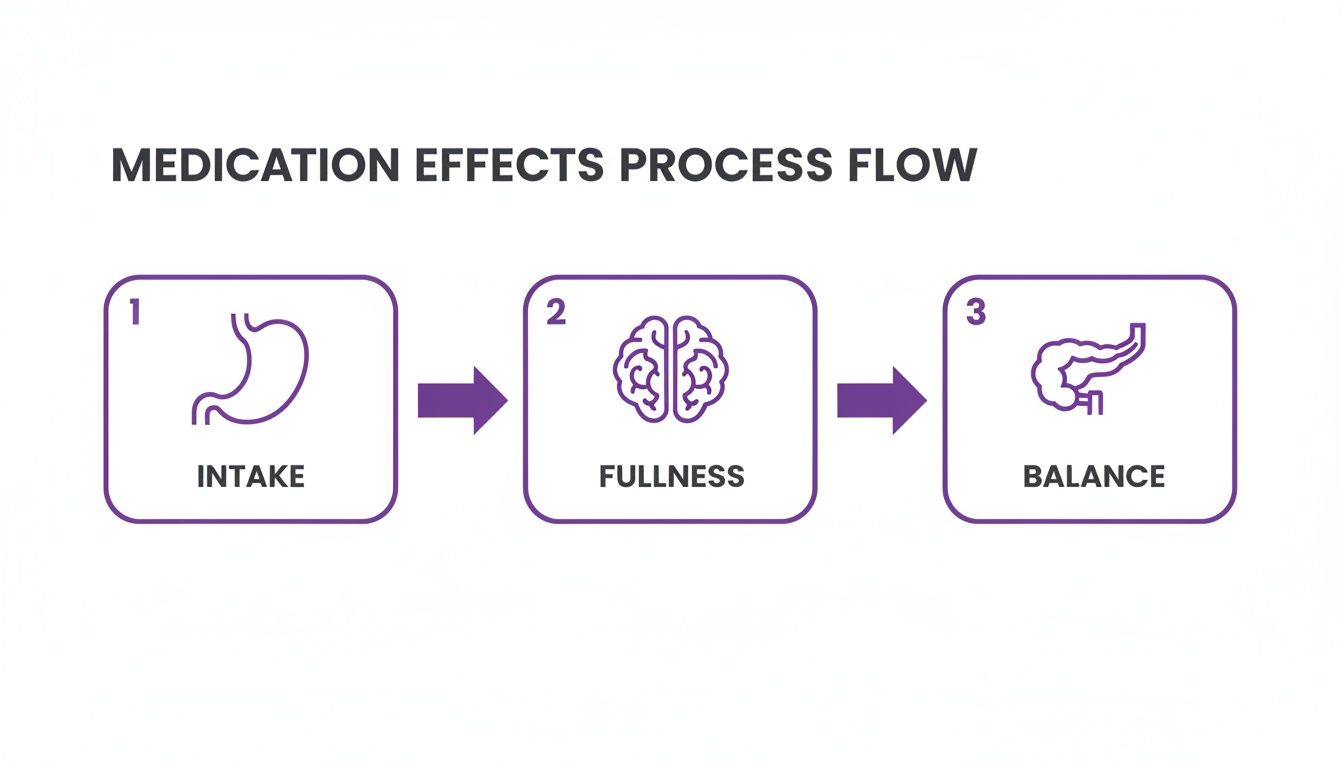
This diagram illustrates how the medication targets different parts of the body to produce its effects, whether for weight management or diabetes control.
The Wegovy Dose Escalation Plan
Wegovy's dosing is for weight management and follows a strict dose escalation (or titration) schedule. This gradual increase is crucial for minimising common side effects like nausea and allowing the body time to adjust.
A qualified clinician will start a patient on the lowest dose and increase it gradually over several months. The typical schedule is as follows:
- Month 1: 0.25 mg once weekly
- Month 2: 0.5 mg once weekly
- Month 3: 1.0 mg once weekly
- Month 4: 1.7 mg once weekly
- Month 5 onwards: 2.4 mg once weekly (this is the full maintenance dose)
The final target dose for Wegovy is 2.4 mg. This specific dose was proven highly effective for weight loss in major clinical trials. Adhering to this schedule is a vital part of ensuring the treatment is both safe and effective.
Why the Slow Titration? The gradual increase in dose is essential for tolerability. Starting immediately at the 2.4 mg dose would likely cause significant gastrointestinal side effects for most people. The gradual increase allows the body to adapt, improving the likelihood of comfortably reaching the therapeutic dose.
The Ozempic Dosing Strategy
Ozempic is dosed for the management of blood sugar in people with type 2 diabetes. It also starts with a low dose to help the body acclimatise, but the final licensed dose is lower than Wegovy's.
A typical Ozempic titration plan is:
- Starting at 0.25 mg or 0.5 mg once weekly.
- Increasing as needed to a maximum maintenance dose of 1.0 mg once weekly in the UK, depending on blood sugar response.
The goal with Ozempic is to find the lowest effective dose to manage HbA1c levels. While many patients experience some weight loss, this is a secondary benefit. The dosing is not designed to be escalated to the 2.4 mg level required for dedicated weight management, which is why it is licensed for diabetes, not weight loss.
It is critical to follow the exact instructions from a prescriber. Whether a patient is prescribed Wegovy or Ozempic, the dose has been chosen for their specific medical situation. Treatment should only begin after a full clinical assessment from a regulated, UK-registered pharmacy. For those looking for a clinically supervised programme, you can learn more about our approach to Wegovy and its carefully managed dosing schedule, which prioritises patient safety.
How Effective Are They? A Look at Clinical Trial Data
To understand the effectiveness of a medication, it is essential to review the clinical trial data that led to its approval. For Wegovy and Ozempic, this means examining two distinct, large-scale research programmes—the STEP trials for Wegovy and the SUSTAIN trials for Ozempic.
It is crucial to understand that these trials were designed to measure different outcomes. The STEP trials focused on weight loss, while the SUSTAIN trials focused on blood sugar control. This means a direct, like-for-like comparison for the same condition is not possible, as they are licensed for different purposes and use different maximum doses.
Wegovy and the STEP Clinical Trials
Wegovy's efficacy as a weight management treatment was established by the STEP (Semaglutide Treatment Effect in People with Obesity) clinical trial programme. This series of studies provided the evidence required for its approval as a prescription-only treatment for weight loss, intended to be used alongside lifestyle modifications.
One of the landmark trials, published in a leading medical journal, studied adults with a high BMI who did not have diabetes.
After 68 weeks, participants taking the 2.4 mg maintenance dose of Wegovy in conjunction with a reduced-calorie diet and increased physical activity had lost, on average, nearly 15% of their initial body weight.
This was a significant difference compared to the group who only made the same lifestyle changes with a placebo. The data from the STEP programme is precisely why the 2.4 mg dose is the specific target for Wegovy when prescribed for weight management.
Ozempic and the SUSTAIN Clinical Trials
Ozempic’s clinical evidence is based on the SUSTAIN (Semaglutide Unabated Sustainability in Treatment of Type 2 Diabetes) trials. This series of studies was designed to assess how well semaglutide, at doses up to 1.0 mg, could help adults with type 2 diabetes manage their blood sugar.
The primary goal was to measure the reduction in HbA1c, a key marker indicating average blood sugar levels over the preceding two to three months. The SUSTAIN trials consistently demonstrated that Ozempic was highly effective at lowering HbA1c, helping patients to manage their condition.
A secondary finding in these trials was a degree of weight loss. While not the primary focus, many people using Ozempic did lose some weight. However, this effect was not studied with the sole purpose of weight management, and the doses used (up to 1.0 mg) were lower than Wegovy's target dose.
Putting the Efficacy Data into Context
When comparing Wegovy and Ozempic, the clinical results must be viewed within their intended context. Wegovy is licensed for weight management because its higher 2.4 mg dose has been proven to drive significant weight reduction. Ozempic is licensed for type 2 diabetes because its 1.0 mg maximum UK dose is proven to manage blood sugar.
To clarify, the key outcomes from their respective clinical trial programmes are broken down below.
Summary of Clinical Trial Outcomes
This table compares the key efficacy data from the primary clinical trial programmes for Wegovy (weight management) and Ozempic (type 2 diabetes).
| Outcome Measure | Wegovy (STEP Trials) | Ozempic (SUSTAIN Trials) |
|---|---|---|
| Primary Goal | To assess the percentage of body weight loss in adults with overweight or obesity. | To assess the reduction in HbA1c (average blood sugar) in adults with type 2 diabetes. |
| Maintenance Dose Studied | 2.4 mg once weekly. | Up to 1.0 mg once weekly. |
| Key Efficacy Finding | Participants achieved an average body weight loss of approximately 15% over 68 weeks. | Participants achieved significant and sustained reductions in their HbA1c levels. |
| Weight Loss Outcome | Primary endpoint, demonstrating substantial weight reduction. | Secondary benefit, showing modest weight loss compared to Wegovy. |
| Clinical Application | Prescribed as a dedicated MHRA-approved weight management treatment. | Prescribed as an MHRA-approved treatment for glycaemic control in type 2 diabetes. |
The evidence clearly shows that while both medications contain the same active ingredient, they are optimised for different clinical applications. This is why a thorough clinical assessment with a healthcare professional is essential to determine which, if either, is the appropriate treatment for an individual's health needs.
For those curious about how semaglutide compares to other GLP-1 medications, our Ozempic vs Mounjaro guide may offer useful additional context.
This content is for informational purposes only and does not constitute medical advice. Always consult a qualified healthcare professional before starting or changing any treatment.
Understanding the Side Effects and Safety Profile

When considering any prescription-only treatment, patient safety is the priority. Since Wegovy and Ozempic are based on the same active ingredient, semaglutide, they share a similar safety and side effect profile. Understanding these potential effects is a key part of an informed discussion with a clinician.
Most side effects are gastrointestinal and tend to occur during the dose escalation phase. They are usually mild to moderate and often diminish as the body adjusts to the medication. This is why adhering to the prescribed titration schedule is critical, as it allows the body time to adapt.
Common Side Effects of Semaglutide
The most frequently reported side effects are related to the digestive system. A prescriber will discuss these before treatment begins, so patients know what to expect and how to manage them.
Potential side effects include:
- Nausea: This is the most common side effect and often occurs when the dose is increased.
- Diarrhoea: Changes in bowel habits are also common.
- Constipation: Conversely, some people may experience constipation.
- Vomiting: Similar to nausea, this is more likely during the initial stages of treatment.
- Abdominal pain: Some general stomach discomfort may also occur.
Some data suggests these effects could be more common with Wegovy, which is likely related to its higher maximum dose compared to Ozempic. The most effective way to manage these issues is a slow, steady increase in dose, as prescribed.
Clinical Perspective: It is essential that you share your full medical history with your clinician. Any history of pancreatitis, gallbladder problems, or specific thyroid conditions must be discussed, as this information is crucial for determining if semaglutide is a safe option for you.
Rare but Serious Risks
While less common, there are serious risks associated with semaglutide, which are detailed in the official Patient Information Leaflet supplied with the medication. It is important to be aware of these and to seek medical help immediately if any concerning symptoms arise.
These rare but serious risks include:
- Pancreatitis: Inflammation of the pancreas, which can cause severe, persistent stomach pain.
- Gallbladder problems: This can include gallstones or inflammation of the gallbladder.
- Kidney problems: In rare cases, severe vomiting or diarrhoea can lead to dehydration that affects kidney function.
- Allergic reactions: Signs include swelling of the face, lips, or throat, and difficulty breathing.
This information is provided to ensure patients have a complete understanding. Any regulated, UK-registered pharmacy will conduct a detailed clinical assessment to confirm this medication is both safe and appropriate. Ongoing support and monitoring from the prescribing clinician are an essential part of the process, ensuring any issues are identified and managed promptly.
This content is for informational purposes only and does not constitute medical advice. Always consult a qualified healthcare professional before starting or changing any treatment.
UK Prescription Criteria, Availability, and Cost
Obtaining Wegovy or Ozempic in the UK is not a simple process. Both are prescription-only medications, and the eligibility criteria are distinct. A qualified clinician must assess a patient against strict medical guidelines, and the route to a prescription—whether through the NHS or private healthcare—is entirely separate for each drug.
Who Is Eligible for Wegovy for Weight Management?
Wegovy is licensed specifically for chronic weight management. Before a clinician can consider prescribing it, a patient must meet the criteria set out by the National Institute for Health and Care Excellence (NICE).
Generally, this means a patient must have:
- A Body Mass Index (BMI) of 30 kg/m² or higher, which is classified as obesity.
- Or, a BMI between 27 kg/m² and 29.9 kg/m² (overweight) plus at least one weight-related health condition, such as pre-diabetes or high blood pressure.
These are the required thresholds for both NHS and private treatment. The first step is always a thorough consultation to check for eligibility and suitability.
Who Is Eligible for Ozempic for Type 2 Diabetes?
Ozempic is licensed only for the management of type 2 diabetes. Its purpose is to help adults control their blood sugar levels, and prescribing decisions are not based on BMI.
A clinician will prescribe Ozempic when a person diagnosed with type 2 diabetes requires additional support to manage their condition beyond first-line treatments like metformin. It is a part of diabetes care, not a weight loss treatment.
The Clinician Decides, Not the Patient. It is vital to understand that patients do not choose between Wegovy and Ozempic. A UK clinician will determine which medication, if any, is appropriate based on the diagnosed medical condition—obesity for Wegovy, or type 2 diabetes for Ozempic.
Availability and Cost in the UK
High demand for semaglutide has led to global supply constraints, resulting in intermittent shortages of both Wegovy and Ozempic. While manufacturing is increasing, availability may still vary.
The cost differs significantly between the NHS and private routes.
- On the NHS: Patients who meet the strict criteria will pay the standard English prescription charge (or receive it for free in Scotland, Wales, and Northern Ireland). However, access is often restricted to specialist weight management services, which can have long waiting lists.
- Through Private Services: The cost of private treatment covers the entire clinical service. This includes the initial consultation, ongoing support from the prescriber, and the safe management of treatment from a GPhC-regulated, UK-based pharmacy.
The popularity of these drugs is significant, with an estimated 1.6 million UK adults having used GLP-1 medications for weight loss in the past year. As research from UCL highlights, this high demand makes it more important than ever to use legitimate, regulated providers. This is the only way to guarantee patient safety and ensure the receipt of genuine, MHRA-approved medication.
This content is for informational purposes only and does not constitute medical advice. Always consult a qualified healthcare professional before starting or changing any treatment.
Frequently Asked Questions
It is normal to have questions when trying to understand the differences between Wegovy and Ozempic. Here are some straightforward, clinically-based answers to common queries.
Can my doctor switch me from Ozempic to Wegovy?
Yes, but this is a carefully managed clinical process that requires a new, separate consultation with a qualified clinician. A direct swap is not possible. The clinician must assess your eligibility for Wegovy based on its specific weight management criteria. If a switch is appropriate, they will create a safe and suitable plan to transition your dose.
Is Wegovy or Ozempic better?
This is a common question, but one medication is not inherently 'better' than the other. The appropriate choice depends on the clinical need. Wegovy is specifically licensed and formulated for chronic weight management, while Ozempic is licensed and optimised to manage type 2 diabetes. Their effectiveness is measured against different clinical goals, so the best medication is the one that matches your diagnosed medical condition.
The "best" medication is the one licensed for your specific condition and prescribed by a qualified UK clinician after a full evaluation of your health. Patient safety is always the top priority.
Why are the maximum doses different?
The different maximum doses—2.4 mg for Wegovy and 1.0 mg for Ozempic in the UK—are based on the separate clinical trials each medication underwent. The Wegovy trials were designed to identify the most effective dose for significant weight loss. In contrast, the Ozempic trials were designed to find the optimal dose for controlling blood sugar in people with type 2 diabetes. The dosages are tailored to their distinct, licensed purposes.
How do I know if I qualify for Wegovy in the UK?
The eligibility criteria set by bodies like NICE, which include specific Body Mass Index (BMI) thresholds, can provide a general idea. However, the only way to know for certain is through a formal, confidential consultation with a qualified healthcare professional. They will need to review your full medical history to determine if Wegovy is a safe and appropriate treatment for you.
XO Medical offers a safe, regulated, and supportive pathway for adults seeking help with weight management. Our UK-registered clinicians conduct thorough online consultations to determine if MHRA-approved treatments are suitable, ensuring the entire process is managed with the highest standards of care.
To find out more about our clinician-led programmes, visit XO Medical.
This content is for informational purposes only and does not constitute medical advice. Always consult a qualified healthcare professional before starting or changing any treatment.


0 comments