


You've started Wegovy, your usual breakfast now feels too large, and the thought of a greasy takeaway brings on nausea before you've even ordered it. At the same time, you may be wondering whether eating less automatically means you're eating well. It doesn't. When appetite falls, every mouthful needs to contribute more protein, fibre, vitamins, minerals or fluid.
Wegovy is a prescription-only treatment used alongside a reduced-calorie diet and increased physical activity, not a standalone diet. The NHS and NICE position semaglutide within structured weight-management care, while UK patient guidance recommends balanced portions rather than a branded or highly restrictive eating plan. This article explains what to eat on Wegovy, how the medicine changes fullness and digestion, and how to respond to nausea, constipation and low appetite safely.
Table of Contents
- Introduction to Eating Well While Taking Wegovy
- How Wegovy Changes Appetite Digestion and Fullness
- Nutrition Priorities and Portion Balance on Wegovy
- Foods That Help and Foods to Limit on Wegovy
- Managing Nausea Low Appetite and Other Common Side Effects
- Sample Day and Week Meal Ideas for Wegovy Users
- Safety Eligibility and When to Seek Clinician Support
Introduction to Eating Well While Taking Wegovy
During the first weeks, a person might serve a familiar plate, eat half of it and suddenly feel uncomfortably full. Another person may manage yoghurt and fruit in the morning, a small lunch and little else, then worry that reduced appetite means something is wrong. Reduced hunger is an expected effect, but persistent difficulty eating or drinking needs clinical attention.
The practical answer isn't to force a normal-sized meal. It's to use smaller, nutrient-dense portions and eat at a pace that allows fullness to register. A plate built around vegetables, lean protein and higher-fibre carbohydrates can support weight-management goals without relying on rigid food rules.
The central principle: Wegovy can reduce how much you want to eat, so prioritise the nutritional value of the food you can comfortably manage.
UK guidance recommends using Wegovy with a healthy, balanced diet. The official UK advice describes a plate with half vegetables or salad, one quarter healthy protein and one quarter carbohydrates, alongside at least five portions of fruit and vegetables daily. Tinned, frozen and dried produce can count, while fruit juice and smoothies are limited to 150 ml per day because they count as only one portion. These recommendations are set out in UK guidance on eating with Mounjaro or Wegovy.
Wegovy should be supplied through appropriate clinical assessment and prescriber oversight. If you use an online pharmacy, check that it's a UK-registered pharmacy regulated by the GPhC, rather than assuming that every website offering weight-loss medicine follows the same safeguards. You'll also need to tell the prescriber about other medicines, relevant medical conditions and any previous problems with weight-management treatments.
The sections below focus on the science first, then turn that science into practical portions, food choices, symptom strategies and meal ideas. The aim is not to make eating complicated. It's to help you continue meeting your nutritional needs when hunger is quieter than usual.
How Wegovy Changes Appetite Digestion and Fullness
Wegovy contains semaglutide, a GLP-1 receptor agonist. It changes the signals that shape hunger and fullness, so many people feel less hungry, feel satisfied after smaller meals, and stay full for longer.
It also slows gastric emptying. A helpful way to picture it is the stomach as a slower-moving conveyor belt, carrying food toward the next stage of digestion at a reduced pace. If a meal is large, rich or eaten too quickly, it can sit heavily for longer and trigger early fullness, nausea or bloating.
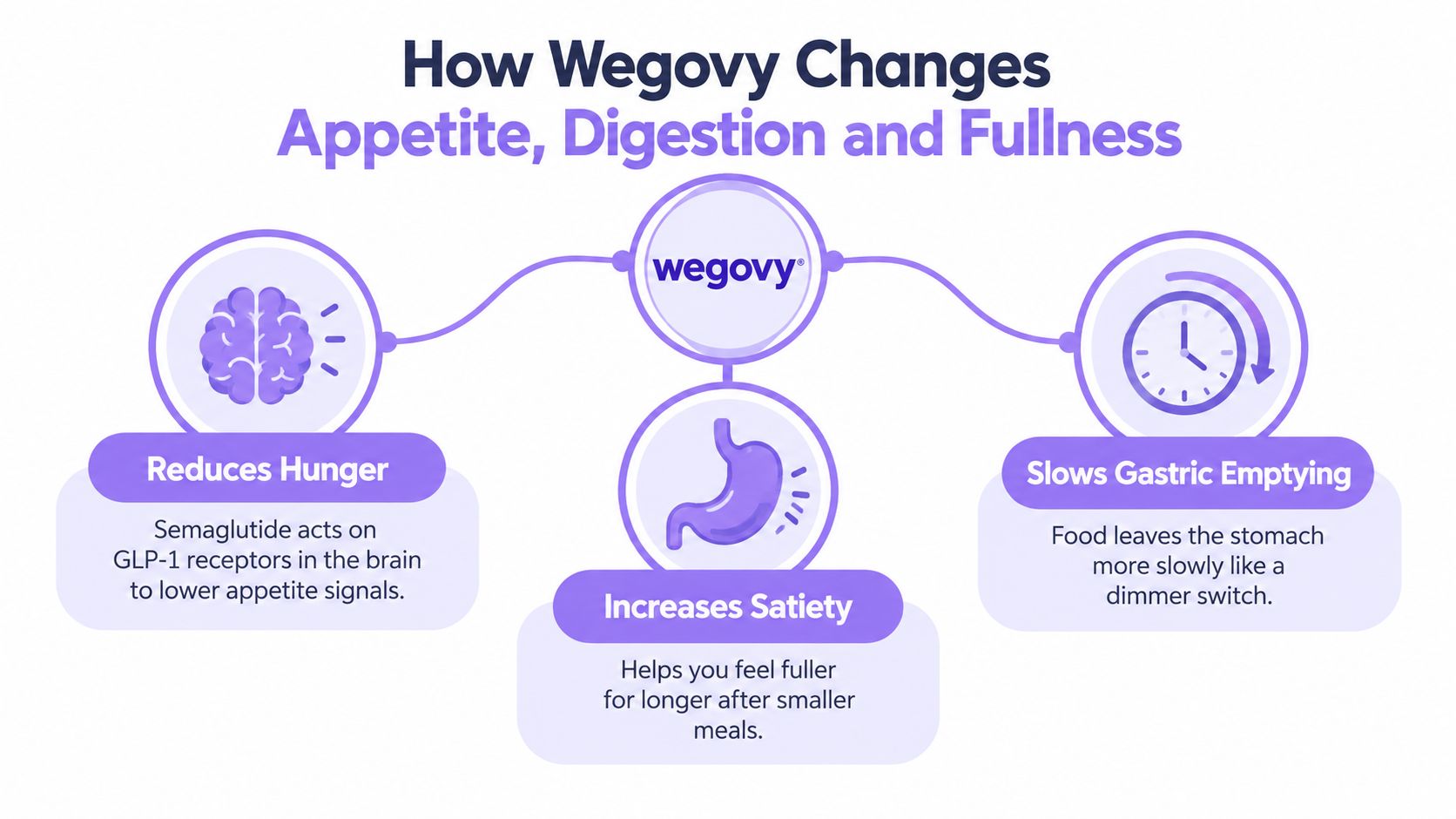
What the mechanism means at mealtimes
The medicine does not stop someone from eating a normal diet. It changes the cues that tell them when to begin, continue and stop. A person who eats quickly may go past comfortable fullness before the body has time to register it, especially with a larger plate.
That makes the way food is eaten just as important as the food itself:
- Smaller portions put less volume into the stomach at once.
- Slower eating gives fullness signals time to catch up.
- Lower-fat cooking methods are often easier to tolerate than fried or greasy meals.
- Protein and fibre help a smaller meal do more useful work.
- Regular eating can reduce the urge to make up for missed intake with one very large meal later.
This is the low-volume, high-nutrient challenge that matters most on Wegovy. Appetite may be quieter, but the body still needs protein, fibre and fluids, so the aim is to make each mouthful count rather than to eat as little as possible.
A smaller, calmer pattern usually fits the changed fullness response better than long gaps followed by a big meal. That can be especially helpful for people using the oral tablet form, where the fasting window around dosing also needs to be followed carefully. For a plain-language overview of treatment, see this explanation of Wegovy treatment. Follow the prescriber's dosing and titration plan, and do not change treatment because one food seems easier or harder to tolerate.
Nutrition Priorities and Portion Balance on Wegovy
When the plate is smaller, balance becomes more important. UK advice broadly follows the NHS Eatwell pattern, with fruit and vegetables, higher-fibre starchy carbohydrates, dairy or alternatives, beans and pulses, fish, eggs, meat and other protein foods, plus small amounts of unsaturated oils.
Start with the visual structure rather than calorie counting.
Build the plate in three parts
- Half vegetables or salad: Use cooked vegetables, leafy salad, peppers, tomatoes, courgettes, carrots or frozen mixed vegetables. This adds fibre, colour and micronutrients without making the meal heavily energy-dense.
- One quarter protein: Choose lean meat, fish, eggs, tofu, beans, pulses or another suitable protein food. Protein deserves early attention because it can be difficult to eat enough when appetite is suppressed.
- One quarter carbohydrate: Select potatoes, wholegrain rice, chapatti, yam, pasta, oats, wholemeal bread or another higher-fibre carbohydrate. These foods provide energy and can support a more satisfying meal.
UK Wegovy guidance also recommends at least five portions of fruit and vegetables per day. Fresh produce isn't essential. Tinned, frozen and dried varieties can all help, although tinned fruit in juice or syrup and dried fruit may need sensible portioning because they're easier to consume quickly.
Protect protein, fibre and fluids
UK-linked GLP-1 guidance commonly suggests around 20 to 30 g of protein per meal or at least 0.8 g/kg/day, with the precise amount depending on the individual and their clinical circumstances. People with kidney disease or other relevant conditions should discuss protein targets with a healthcare professional rather than adopting a target from the internet. Practical choices include Greek yoghurt, eggs, chicken, fish, tofu, cottage cheese, lentils and beans.
Fibre targets are commonly around 30 g per day, increased gradually from wholegrains, vegetables, fruit, beans and lentils. Increasing fibre suddenly can worsen bloating, so build it up while maintaining fluid intake.
Hydration matters when food intake changes. NHS-linked guidance advises at least 6 to 8 sugar-free drinks per day, mainly water, unless a clinician has given you a different fluid plan. Tea and coffee may contribute to fluid intake, but sugary drinks can add energy without providing much fullness.
The plate model is a starting point, not a requirement to finish every section. If you become full early, begin with the protein and vegetables, then eat the carbohydrate portion as comfortably as possible. This guide to protein intake for weight loss provides further educational context, but your prescriber or dietitian should personalise advice where necessary.
Foods That Help and Foods to Limit on Wegovy
The best food choice often depends on two questions. Does it provide useful nutrition in a manageable portion, and is it likely to sit comfortably while gastric emptying is slower? Grilled chicken with vegetables may work better than fried chicken with chips, not because one food is morally good and the other bad, but because cooking method, fat content and portion volume can affect comfort.
The UK Wegovy patient guidance recommends grilled, baked, poached or steamed foods, alongside wholemeal or wholegrain carbohydrates, fruit, vegetables, beans and pulses. It also supports unsaturated oils such as olive, vegetable, sunflower and rapeseed oil, while advising people to have fried foods, processed meals, high-energy snacks and ultra-processed foods less often. The UK guidance on optimising the treatment journey explains this pattern in more detail.
A practical comparison
| Choose More Often | Have Less Often | Why |
|---|---|---|
| Grilled, baked, poached or steamed fish, chicken, eggs, tofu, beans and pulses | Fried or deep-fried meals, fatty cuts of meat and heavy cream-based dishes | Lower-fat cooking may be easier to tolerate when fullness and nausea are concerns |
| Vegetables, salad, fruit and higher-fibre wholegrains | Large portions of refined carbohydrates with little protein or fibre | Fibre and micronutrients are valuable when total intake is lower |
| Wholemeal bread, wholewheat pasta, brown rice, oats and potatoes | Crisps, sweets, chocolate, cakes and biscuits | These can provide less nutritional value per mouthful and may be easy to overconsume |
| Olive or rapeseed oil in small amounts | Excess saturated fat and heavily processed foods | A balanced pattern supports overall dietary quality |
| Water and other sugar-free drinks | Sugary drinks and excess alcohol | Liquid energy may not create the same fullness as food |
| Whole fruit | Fruit juice and smoothies above 150 ml per day | UK guidance limits these drinks because they count as only one fruit portion |
You don't need to ban a food permanently. A small amount of a food you enjoy may be manageable, while a large, fatty or greasy meal may trigger discomfort. Your own tolerance can change during treatment, particularly around dose changes, so use symptoms as information rather than as a reason to impose increasingly restrictive rules.
Spicy food isn't automatically unsuitable, either. If it worsens nausea or reflux, reduce it temporarily. If it doesn't cause symptoms, there's no general requirement to remove every spice. The same principle applies to fizzy drinks, rich sauces and takeaway meals. Consider portion, fat content, speed of eating and how you feel afterwards.
Managing Nausea Low Appetite and Other Common Side Effects
Food selection is only part of the solution. How you eat can determine whether a small meal feels manageable or becomes uncomfortable. UK-facing semaglutide guidance commonly recommends smaller, regular meals and warns that high-fat meals can worsen symptoms.
Try dividing the day into modest eating occasions rather than waiting until hunger returns fully. Appetite signals may be unreliable, so a planned yoghurt, egg, soup with beans or small chicken salad can be more useful than relying on a strong hunger cue that may not arrive.
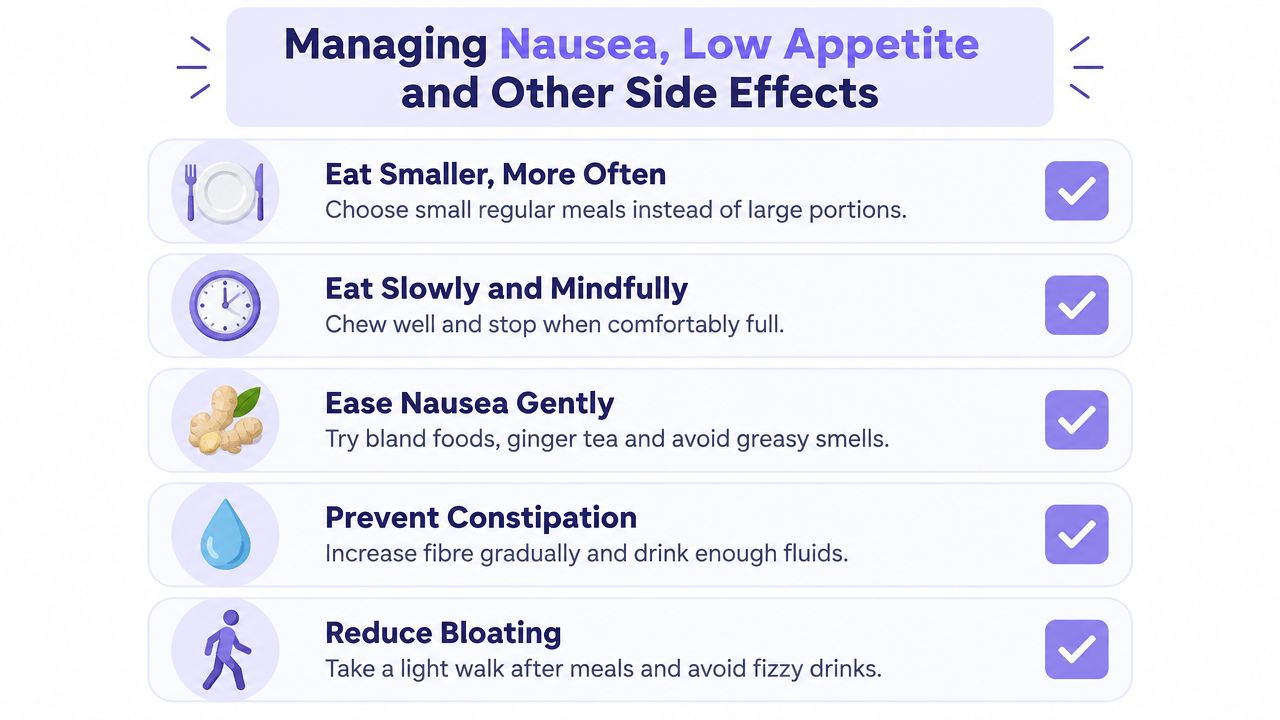
Match the strategy to the symptom
- For nausea: Choose bland, lower-fat foods and eat slowly. Some people find ginger tea or cooler foods easier to manage, but stop any option that worsens symptoms.
- For early fullness: Serve less, chew thoroughly and stop when comfortably satisfied. You can eat again later if you're hungry.
- For constipation: Increase fibre gradually, drink enough fluid and include movement as tolerated. Oats, berries, vegetables, beans and lentils can contribute.
- For bloating: Reduce fizzy drinks and large meals. A gentle walk after eating may feel more comfortable than lying down immediately.
- For low appetite: Prioritise protein and nutrient density. A small portion of Greek yoghurt, cottage cheese, egg, fish or tofu may contribute more than a larger plate of low-protein food.
If appetite falls sharply: The goal isn't to force volume. It's to protect nutrition with small portions that contain protein, fibre and fluids.
Avoid treating persistent vomiting, inability to drink or ongoing severe symptoms as a routine adjustment. Dehydration and under-eating can require prescriber review, particularly if you take diabetes medicines, blood-pressure treatment or other medicines affected by changes in food and fluid intake.
The oral tablet needs a separate routine
Advice about meal timing changes if you're prescribed an oral semaglutide tablet rather than an injection. The UK patient leaflet states that tablets must be taken after fasting for at least 8 hours, swallowed whole with up to 120 ml of water, followed by at least 30 minutes without food, drink or other oral medicines. This is an administration rule designed to support absorption, not a general diet preference. Read the UK oral semaglutide patient leaflet and follow the exact instructions supplied with your prescription.
Sample Day and Week Meal Ideas for Wegovy Users
A useful meal plan on Wegovy should feel achievable on a low-appetite day. The examples below use familiar UK foods, modest portions and simple cooking methods. They're templates, not personalised prescriptions, so adjust ingredients for allergies, dietary preferences and advice from your healthcare team.
A manageable sample day
Breakfast could be Greek yoghurt with berries and a small amount of oats. If that feels too filling, serve less and keep the remaining portion chilled for later.
Lunch might be grilled chicken with mixed leaves, cucumber, tomatoes and quinoa. Beans or tofu can replace chicken, while a small wholemeal pitta can provide a different carbohydrate option.
Dinner could be baked salmon with roasted vegetables and brown rice. Salmon offers protein and oily fish, while vegetables and brown rice support fibre intake.
Optional snacks include apple slices with a little peanut butter, a small handful of nuts, a boiled egg, cottage cheese or hummus with vegetable sticks. For more practical ideas that suit weight-loss routines, see these healthy snack ideas from Rip Van.
A flexible week pattern
| Day | Protein focus | Fibre and carbohydrate focus |
|---|---|---|
| Monday | Chicken or tofu | Wholemeal wrap with salad |
| Tuesday | Eggs and lentils | Oats and vegetables |
| Wednesday | White fish | Potatoes and greens |
| Thursday | Beans or lean mince | Wholegrain rice and peppers |
| Friday | Salmon or another oily fish | Brown rice and roasted vegetables |
| Saturday | Greek yoghurt and eggs | Berries, oats and wholemeal toast |
| Sunday | Roast chicken, tofu or beans | Potatoes, carrots and other vegetables |
Use fresh, frozen or tinned vegetables according to convenience. Batch-cooking chicken, lentils, rice or roasted vegetables can reduce the pressure to prepare a full meal when nausea or fatigue is present. Keep portions small at first, and avoid interpreting an unfinished plate as failure.
Hydration can be spread across the day rather than concentrated around meals. If a meal feels too large, separate the protein and carbohydrate into different small eating occasions, while still aiming for a varied pattern overall.
Safety Eligibility and When to Seek Clinician Support
Wegovy is a prescription-only treatment. A prescriber must assess whether it's clinically appropriate, consider relevant conditions and medicines, and provide follow-up. If treatment is supplied through an online pharmacy, use a UK-registered pharmacy regulated by the GPhC and make sure a qualified clinician is involved in the assessment.
Eligibility isn't determined by appetite or a single online questionnaire alone. Your medical history, current medicines, weight-related health risks and treatment goals all matter. Never share Wegovy, use someone else's pen or change the dose without prescriber guidance.
Contact a clinician promptly if you have persistent vomiting, cannot keep fluids down, signs of dehydration, severe or worsening abdominal pain, or symptoms of an allergic reaction such as swelling or breathing difficulty. You can also read UK information about Wegovy side effects, but urgent symptoms should be discussed with a healthcare professional rather than managed from an article.
Tell your prescriber if poor appetite prevents you from eating adequately, constipation persists, or another medicine becomes difficult to take. A clinician may need to review your treatment, hydration, nutrition or other prescriptions.
This content is for informational purposes only and does not constitute medical advice. Always consult a qualified healthcare professional before starting or changing any treatment.
XO Medical provides clinically assessed, prescribed medication through a UK-registered online pharmacy, with ongoing clinician support for people considering weight-management treatment. Visit XO to learn about regulated healthcare services and access further educational information before discussing your options with a qualified prescriber.


0 comments