


You've had a couple of drinks at a pub, feel more relaxed than usual, and are wondering whether sex will be easier, better, or more difficult tonight. Perhaps you're also considering an erectile dysfunction treatment, or trying to understand why desire feels present but your body isn't responding as expected. The question, does alcohol affect sex, doesn't have a simple yes-or-no answer.
Alcohol can influence desire, arousal, erection, lubrication, orgasm, judgement and consent, and these effects vary with the amount consumed, your health, tiredness, stress, medicines and the setting. The NHS explains that erectile dysfunction is usually caused by factors including stress, tiredness or drinking too much alcohol, and advises adults not to drink more than 14 units of alcohol a week (NHS guidance on erection problems).
This guide looks first at what alcohol does inside the body, then separates short-term effects from longer-term drinking patterns. It also covers consent and sexual negotiation, medication safety, and when ongoing problems deserve clinical assessment. For broader background, you can read this educational guide on what sexual health means.
The information is written for UK adults and isn't personalised medical advice. Any prescription-only treatment requires an appropriate clinical assessment, prescribing oversight and supply through a lawful pharmacy, including an online pharmacy that is a UK-registered pharmacy regulated by the GPhC.
Table of Contents
- Introduction to How Alcohol and Sex Interact
- How Alcohol Works in the Body to Influence Sexual Response
- Short Term Effects on Desire Arousal and Performance
- Long Term Drinking and Sexual Health Over Time
- Consent Safety and the Social Context of Drinking
- Medication Interactions and Practical Harm Reduction
- When to Seek Support and Next Steps in the UK
Introduction to How Alcohol and Sex Interact
Alcohol changes two systems that sex depends on. It affects the brain, where desire, attention and decision-making begin, and it affects physical responses such as blood flow, sensitivity and erection. That's why someone may feel psychologically confident while experiencing weaker physiological arousal.
The common social experience is familiar. A drink may reduce self-consciousness, make conversation feel easier and lower anxiety about initiating intimacy. Yet the same substance can make it harder to communicate clearly, notice discomfort, maintain an erection or recognise that another person's agreement is uncertain.
The central idea: feeling more willing to have sex isn't the same as having stronger physical arousal, and neither is the same as giving or receiving valid consent.
Alcohol also affects people differently. A person who is stressed, sleep-deprived, taking medication or already experiencing erectile difficulties may notice problems sooner than someone who feels rested and well. The environment matters too. A private conversation between partners is different from a crowded event where social pressure makes refusal more difficult.
The sections that follow use a practical model:
- Physiology: how ethanol alters nervous-system signalling, blood flow and sensitivity.
- Short-term response: why a small amount may feel confidence-building while more can impair performance.
- Longer-term health: how repeated heavy drinking can affect hormones, mood, sleep and sexual function.
- Consent and context: why alcohol changes negotiation, not just sexual performance.
- Safety: how to approach alcohol alongside prescribed medication and when to seek help.
A balanced answer matters because “alcohol ruins sex” is too broad, while “alcohol helps confidence” can hide important risks. The useful question is what changes for you, your partner and your safety as drinking increases.
How Alcohol Works in the Body to Influence Sexual Response
Ethanol, the active substance in alcoholic drinks, is a central nervous system depressant. In plain English, it slows some of the brain's signalling rather than stimulating the body in the way a true stimulant does. The NHS specifically notes that alcohol can contribute to erectile dysfunction, while UK sexual-health guidance explains that it can reduce blood flow and sexual sensitivity (Drinkaware's guidance on alcohol and men).
A useful analogy is a dimmer switch. At first, lowering the brightness slightly may soften self-consciousness and make a social situation feel less demanding. Continue turning the dimmer down, however, and the signals needed for attention, touch, arousal and coordinated sexual response become less clear.
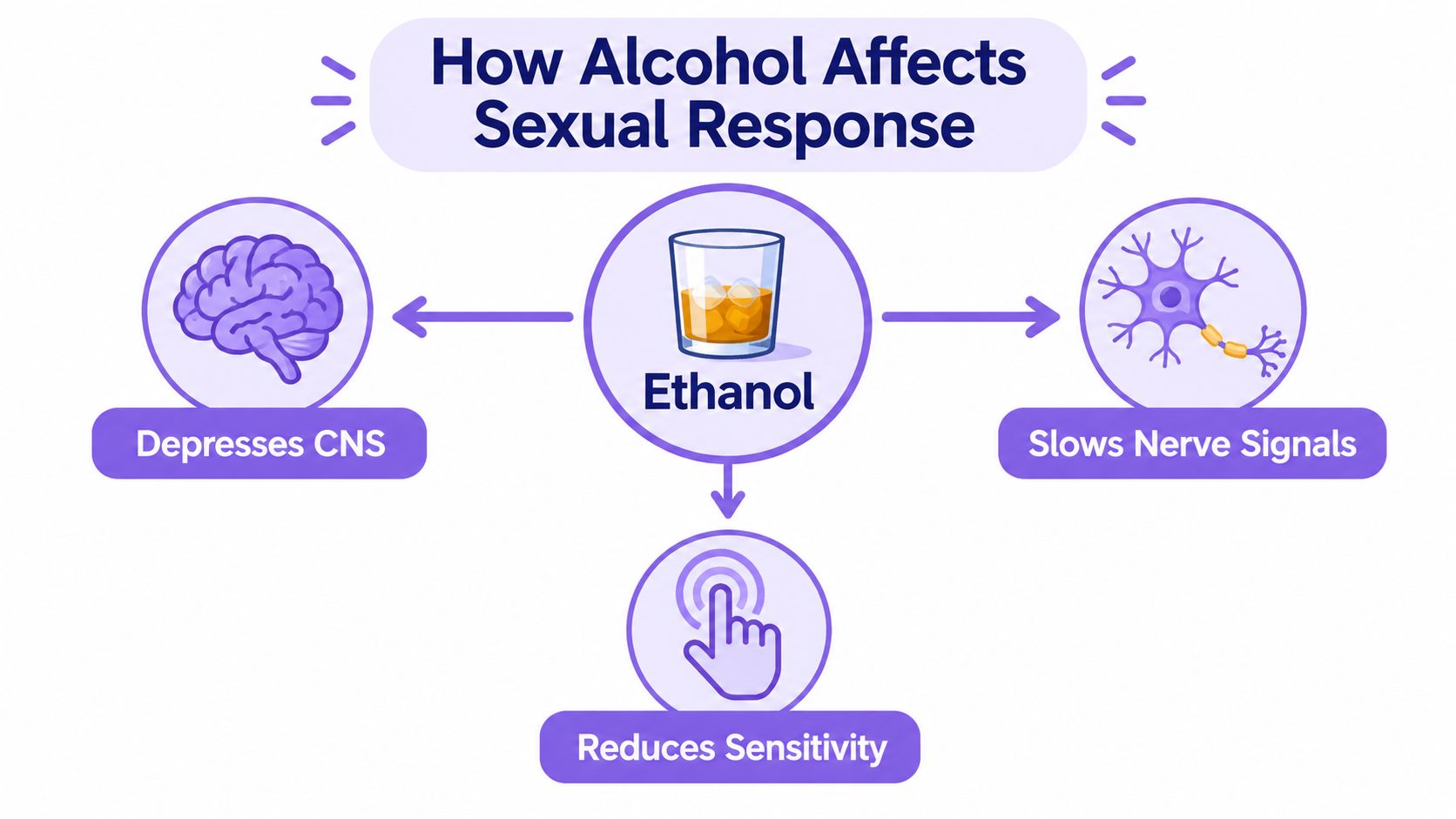
Desire and arousal are separate processes
Desire is the wish to have sex. It's shaped by mood, attraction, hormones, relationship factors and thoughts. Arousal is the body's response, including genital blood flow, lubrication, erection and changes in sensitivity. Alcohol may lower inhibition and increase the feeling of desire while simultaneously weakening the physical mechanisms needed for arousal.
An erection requires coordinated communication between the brain, nerves, blood vessels and erectile tissue. If alcohol depresses brain signalling, the initial arousal message may be less effective. Changes in circulation and reduced sensitivity can then make it harder to achieve or maintain an erection. A helpful plain-English resource on whether alcohol affects erections explores this performance question in more detail.
The same distinction applies to people who don't have a penis. Alcohol-related changes in blood flow and sensitivity may reduce genital response and lubrication, even when the person still wants intimacy. Lower sensitivity can also mean that touch feels less clear or that orgasm takes longer.
Hormones and the liver
Longer-term heavy drinking can interfere with hormonal regulation. UK guidance describes effects including reduced testosterone and higher oestrogen levels associated with liver injury. The liver helps process hormones, so liver damage can disturb the balance that supports libido and sexual function.
Orgasm is another separate stage. It depends on sensory input, nerve signalling, attention and muscle responses. Alcohol can delay orgasm or make it more difficult, rather than reliably improving sexual pleasure.
The result is a physiological contradiction. Alcohol may make a person feel less anxious about sex, but it doesn't necessarily make the body more capable of responding.
Short Term Effects on Desire Arousal and Performance
Alcohol's short-term sexual effects can change during the same evening. Someone may feel more relaxed after a small amount, then become tired, less coordinated or less able to notice physical signals as intake rises. The NHS lists drinking too much alcohol among contributors to erection problems (NHS information on erection problems).
A useful distinction is desire, arousal and performance. Desire means wanting sexual contact. Arousal involves the body's response, such as an erection, genital blood flow or lubrication. Performance includes coordination, communication and sustaining activity. Alcohol may lower self-consciousness and make initiation feel easier, while making the later stages less dependable.
A practical comparison
| Intake level | Desire and confidence | Arousal and performance | Orgasm and sensitivity |
|---|---|---|---|
| Lower intake | Some people feel less socially anxious or inhibited | Physical response may remain broadly intact, although reactions vary | Sensitivity may feel unchanged or slightly altered |
| Higher intake | Confidence can turn into poor judgement and reduced awareness of boundaries | An erection may be harder to get or keep; genital arousal and lubrication may decrease | Orgasm may take longer, feel less satisfying or be harder to reach |
| Very heavy intoxication | Desire becomes difficult to interpret because awareness and judgement are impaired | Coordination and communication may be too poor for safe sexual activity | Reduced consciousness prevents meaningful participation and creates serious consent concerns |
The table is not a dosing guide. Alcohol units vary between drinks, and response depends on factors such as body size, food, health, medicines and drinking speed. Slurred speech, poor balance, confusion or difficulty communicating are practical reasons to pause. Trying to calculate a “safe amount” for sex misses the more important question: can everyone still understand, communicate and choose freely?
Expectations can also distort interpretation. Alcohol is often linked with spontaneity and intimacy, so a person may expect better sex, feel confident because inhibition has fallen, and overlook reduced sensation or fatigue. Difficulty maintaining an erection may then be blamed on attraction or feared as a permanent medical problem, even though the immediate cause may be alcohol interacting with anxiety, tiredness and timing.
The same pattern can affect people with different bodies. Someone may want sex but experience less lubrication or delayed orgasm. Someone else may feel mentally aroused but lose an erection during intercourse. These responses do not establish a lack of attraction. Sexual signalling works like a message passed through several systems. Alcohol can make the message quieter, slower or harder to coordinate.
Practical rule: if alcohol is making communication, coordination or physical response less reliable, pause rather than drinking more.
Long Term Drinking and Sexual Health Over Time
One difficult night and a repeated drinking pattern raise different health questions. Regular heavy drinking can affect libido and erectile function through hormone changes, altered blood flow, liver injury, disrupted sleep and mood. The process may be gradual, so sexual changes are not always linked with alcohol at first.
UK guidance advises adults not to drink more than 14 units a week. This is guidance about alcohol-related health risk overall, not a guaranteed point below which sexual effects cannot occur. Body, health, drinking pattern and individual sensitivity all influence the response.
What changes over time
Alcohol can interfere with hormone release and penile blood flow. Heavy drinking is also associated with lower testosterone and increased oestrogen linked to liver injury, as described in UK-facing sexual-health information (Drinkaware's evidence on alcohol and men).
These changes often work through several connected systems. Sleep provides the body's recovery time, so repeated disruption may reduce energy and sexual interest. Low mood or anxiety can make arousal harder, while drinking to cope can strain relationships, confidence and willingness to seek help. The body and mind can therefore reinforce each other, like two feedback loops running in the same circuit.
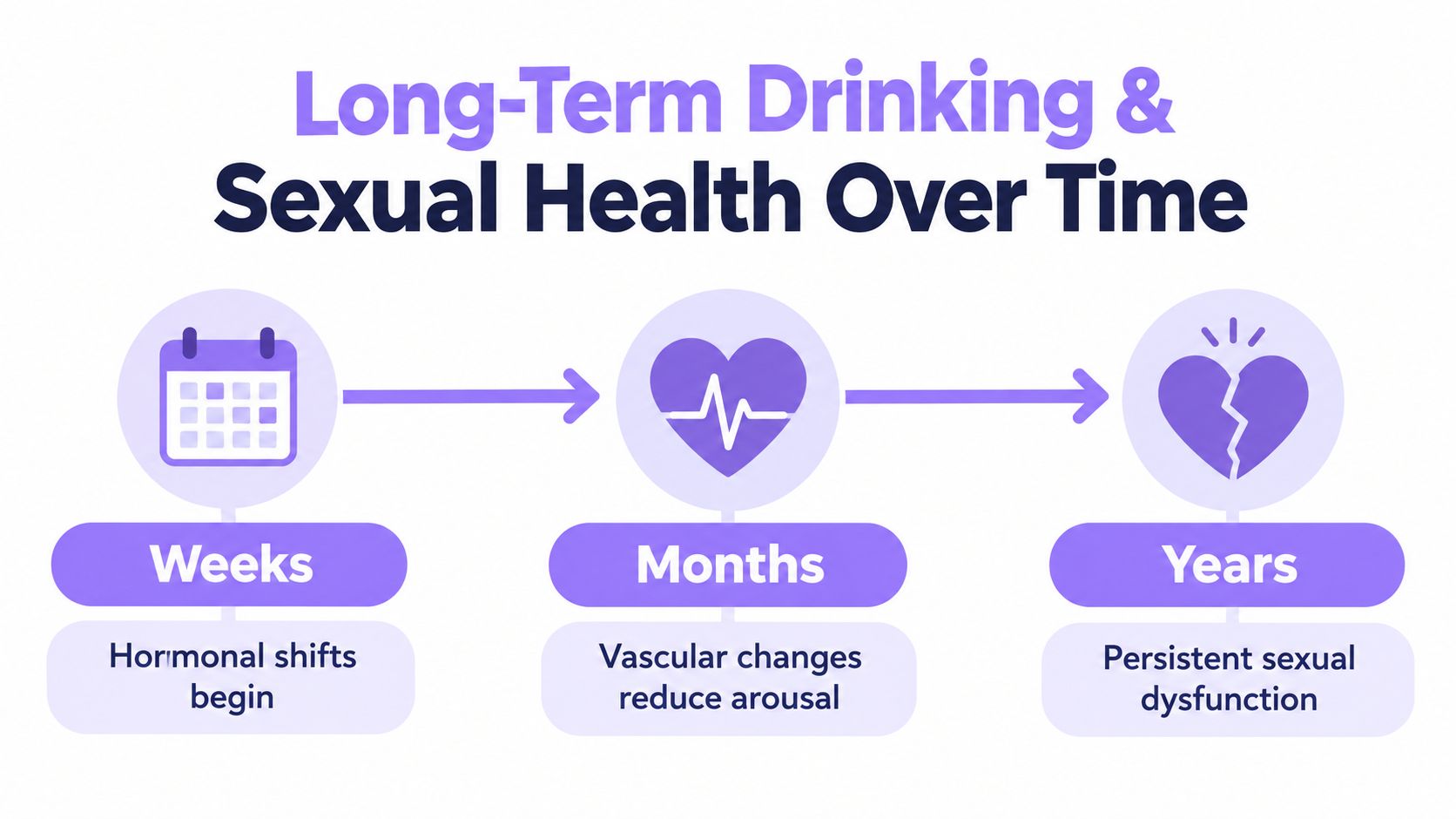
Evidence needs careful interpretation. A UK evidence review used in Drinkaware materials reports that male heavy drinkers were more likely to report sexual-function problems, while a meta-analysis associated light to moderate consumption with lower erectile dysfunction risk and found no significant benefit or harm at high intake (Drinkaware's evidence review). These findings do not show that alcohol protects erections. Differences in age, health, lifestyle and drinking patterns may explain associations, and they cannot establish that alcohol improves sexual function.
Changes in mood, sleep and cognition can also affect sexual wellbeing indirectly as well as directly. A wider discussion of alcohol's long-term impact on brain health helps place those effects in context.
Ongoing erectile difficulties, persistent loss of libido or sexual changes alongside heavier drinking merit medical review. A GP or qualified clinician can assess cardiovascular health, diabetes, hormones, mental health, prescribed medicines and alcohol use, rather than assuming one cause.
Consent Safety and the Social Context of Drinking
Alcohol changes sexual situations in ways that aren't captured by the phrase “performance problem”. It can make initiating intimacy feel easier, but it can also make refusal harder when social expectations, event pressure or group dynamics are present. A 2026 mixed-methods study of 354 UK adults aged 18–40 identified themes showing that substance use can facilitate sexual negotiation, create new opportunities and constrain negotiation when people's freedom to refuse is affected (the UK study indexed by PubMed).
The key distinction is between desire and consent. Wanting sex, flirting, kissing earlier in the evening or agreeing to one act doesn't establish agreement to everything that follows. Consent needs to be voluntary, specific and ongoing.
UK legal principles
UK consent law doesn't treat alcohol as automatically removing capacity. Section 74 of the Sexual Offences Act 2003 focuses on whether a person agrees by choice and has the freedom and capacity to make that choice. A person who is unconscious or semi-conscious can't consent, as explained in UK legal guidance on consent and alcohol.
The law also addresses deliberate administration of substances. The Sexual Offences Act 2003 states that intentionally administering a substance, or causing someone to take it, while knowing they don't consent and intending to stupefy or overpower them so sexual activity can occur is an offence (the legislation's explanatory notes).
These principles don't turn ordinary social drinking into an automatic legal conclusion. They do explain why capacity, freedom and choice matter more than a simple question about how many drinks someone had.
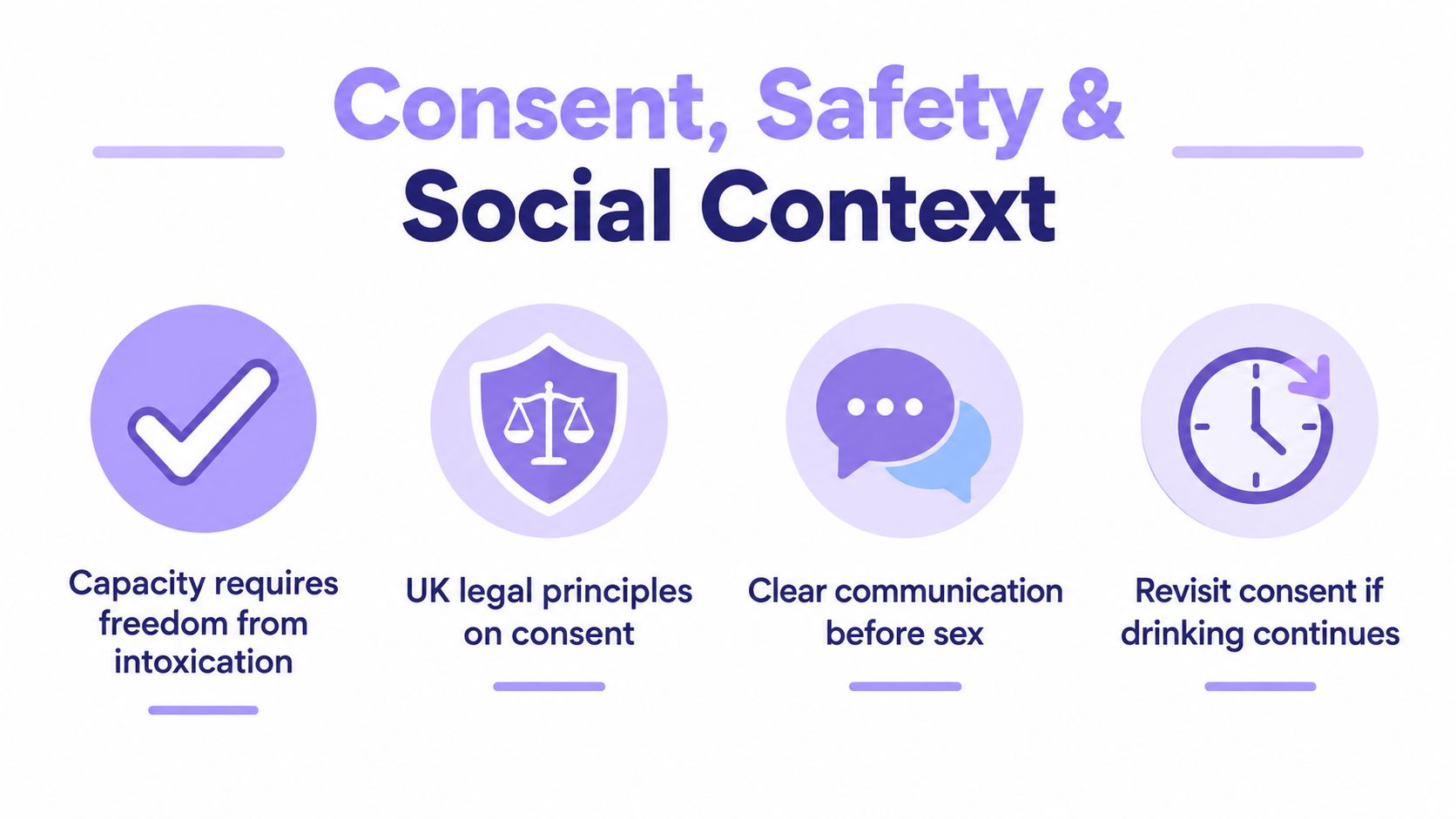
Safer negotiation in real situations
Discuss boundaries before drinking when possible. During the evening, check in using clear questions and pay attention to responses, not just words. Slurred speech, confusion, inability to stay awake, poor balance or inconsistent answers should prompt a pause and a move towards safety, not sexual activity.
A responsible friend or bystander can help someone get home safely, stay with them and contact appropriate support. If a person's ability to choose is uncertain, waiting is the safest course.
Medication Interactions and Practical Harm Reduction
Alcohol can complicate sexual-health treatment because it may worsen dizziness, affect judgement and intensify side effects. The exact risk depends on the medicine, dose, other health conditions and the amount of alcohol involved. Prescription-only treatments aren't automatically suitable because they're available through an online pharmacy.
Erectile dysfunction medicines, including prescribed sildenafil, may require particular care. Antidepressants can also affect libido, erection, ejaculation or orgasm, while alcohol may worsen some of the symptoms these medicines are intended to manage. Read the patient information leaflet and ask a prescriber or pharmacist before combining alcohol with a new medicine.
Safer practical steps
- Plan before drinking: Set a personal limit in advance rather than deciding while judgement is affected.
- Pace yourself: Eating alongside alcohol and drinking water can help reduce rapid intake, though neither cancels alcohol's effects.
- Check the leaflet: Look specifically for warnings about alcohol, dizziness, blood pressure, drowsiness and impaired coordination.
- Avoid experimentation: Don't combine a new prescribed medication with alcohol for the first time without clinical advice.
- Discuss boundaries sober: Talk about contraception, condoms and preferences before either person becomes intoxicated.
- Use regulated services: A UK-registered pharmacy and qualified prescriber can review medicines, medical history and suitability before supplying treatment.
For general educational information about one commonly prescribed erectile dysfunction medicine, see sildenafil 50 mg. Information online can't replace an assessment, and sildenafil is a prescription-only treatment in the UK.
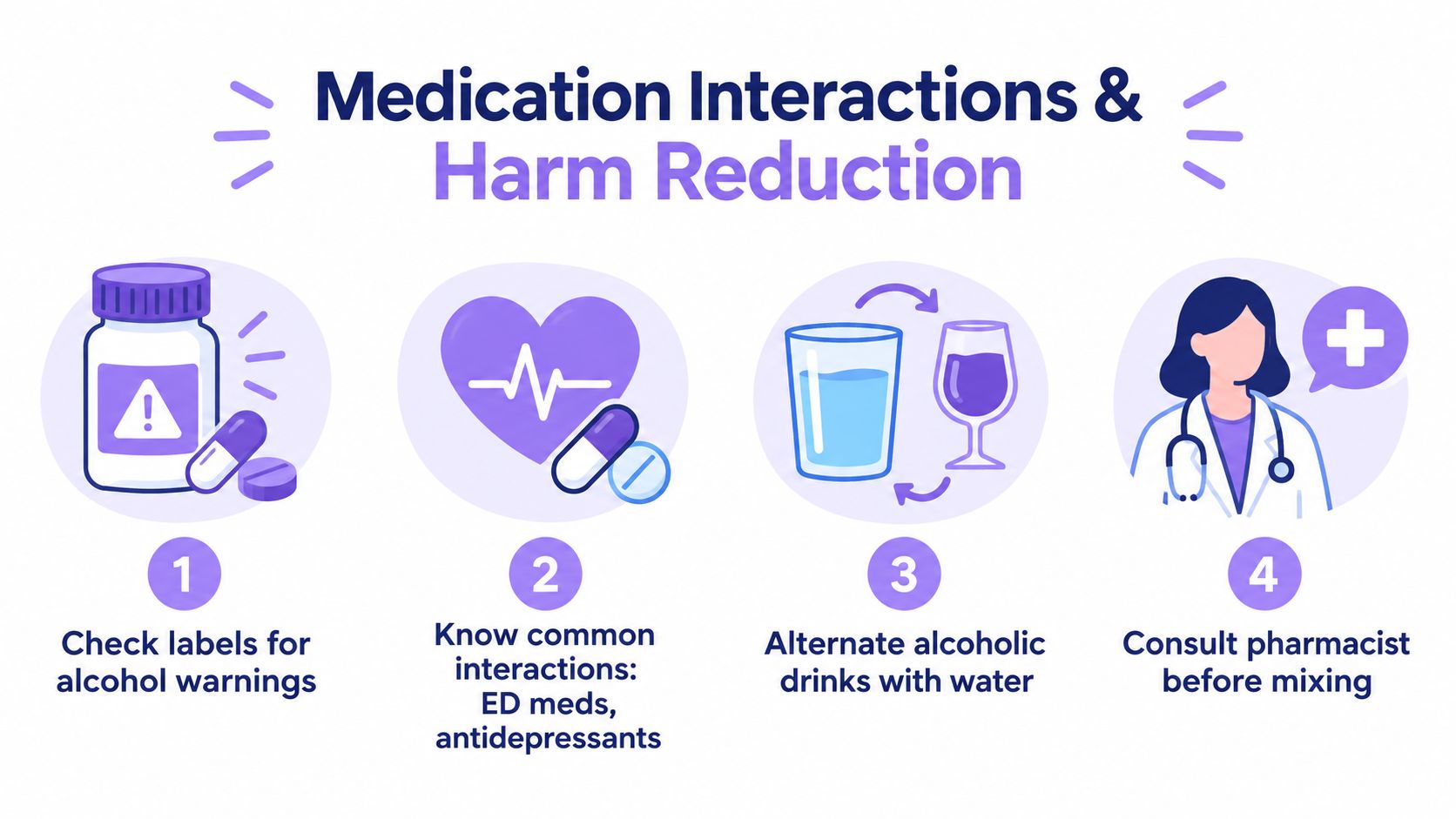
Never take someone else's medicine, buy prescription treatment from an unregulated seller or assume that a medicine is safe because it was prescribed previously. A pharmacist can check for interactions and explain whether alcohol could make side effects more likely in your circumstances.
When to Seek Support and Next Steps in the UK
Alcohol can affect sex through dose, timing, physiology and context. A small amount may make some people feel less anxious, but that doesn't guarantee stronger arousal or better sex. More alcohol can reduce sensitivity, impair coordination, make erections or lubrication less reliable, delay orgasm and make consent harder to assess.
Arrange a clinical review if erectile difficulties continue when you're sober, libido remains low, sexual changes occur with mood or sleep problems, or drinking is affecting relationships or your ability to make decisions. A GP, pharmacist or UK-registered clinician can assess possible physical and psychological causes and discuss appropriate support.
Seek urgent help if someone is unconscious, difficult to wake, breathing abnormally, injured or at immediate risk. If you're worried about sexual assault or a person's safety, contact emergency services or a specialist support service.
For readers considering treatment, erectile dysfunction treatment online should be understood as a regulated clinical pathway, not automatic access to medication. Any prescribed medication requires eligibility checks, prescriber oversight and clear instructions. Choosing a service regulated by the GPhC can help you verify that pharmacy governance is in place.
Reviewed by: Qualified UK healthcare professional
Review date: 22 September 2026
This content is for informational purposes only and does not constitute medical advice. Always consult a qualified healthcare professional before starting or changing any treatment.
XO offers confidential online consultations through XO Medical, a UK-registered online pharmacy and telehealth service, with clinically assessed prescription-only options where appropriate. Visit XO to explore regulated sexual-health information and arrange professional support rather than making medication decisions based on alcohol-related symptoms alone.


0 comments