


Sildenafil 50 mg is the standard starting dose for erectile dysfunction in the UK, taken about one hour before sexual activity. It's available either on the NHS or through a regulated UK online pharmacy after a clinical assessment by a UK-registered prescriber.
You may be researching this after a first prescription, comparing private treatment with an NHS appointment, or wondering why one tablet didn't produce the result you expected. The important point is that 50 mg is a starting point, not a fixed dose for every person. Timing, food, other medicines, health conditions and tolerability all affect the decision.
This guide explains how sildenafil 50 mg fits into UK practice, what patients should discuss before changing dose, and how to distinguish a regulated online pharmacy from an unsafe seller. It's educational information, not a substitute for a consultation.
Medical review: Written in a clinician-informed style using UK regulatory and NHS sources. Review date: 16 September 2026.
This content is for informational purposes only and does not constitute medical advice. Always consult a qualified healthcare professional before starting or changing any treatment.
Table of Contents
- What Is Sildenafil 50 mg and Who Is It For
- How Sildenafil Works for Erectile Dysfunction
- Standard Dosing and When to Adjust the Dose
- Comparing UK Access Routes and Costs
- Side Effects and Safety Guidance
- Medicine Interactions and Contraindications
- Choosing a Regulated UK Pharmacy Safely
- Practical Patient Guidance and Daily Use
What Is Sildenafil 50 mg and Who Is It For
A man in the UK might begin by searching for “sildenafil 50 mg online” after noticing repeated difficulty achieving or maintaining an erection. He may find NHS information, private consultations, community pharmacy services and branded products, but still be unsure whether 50 mg is the correct amount for him.
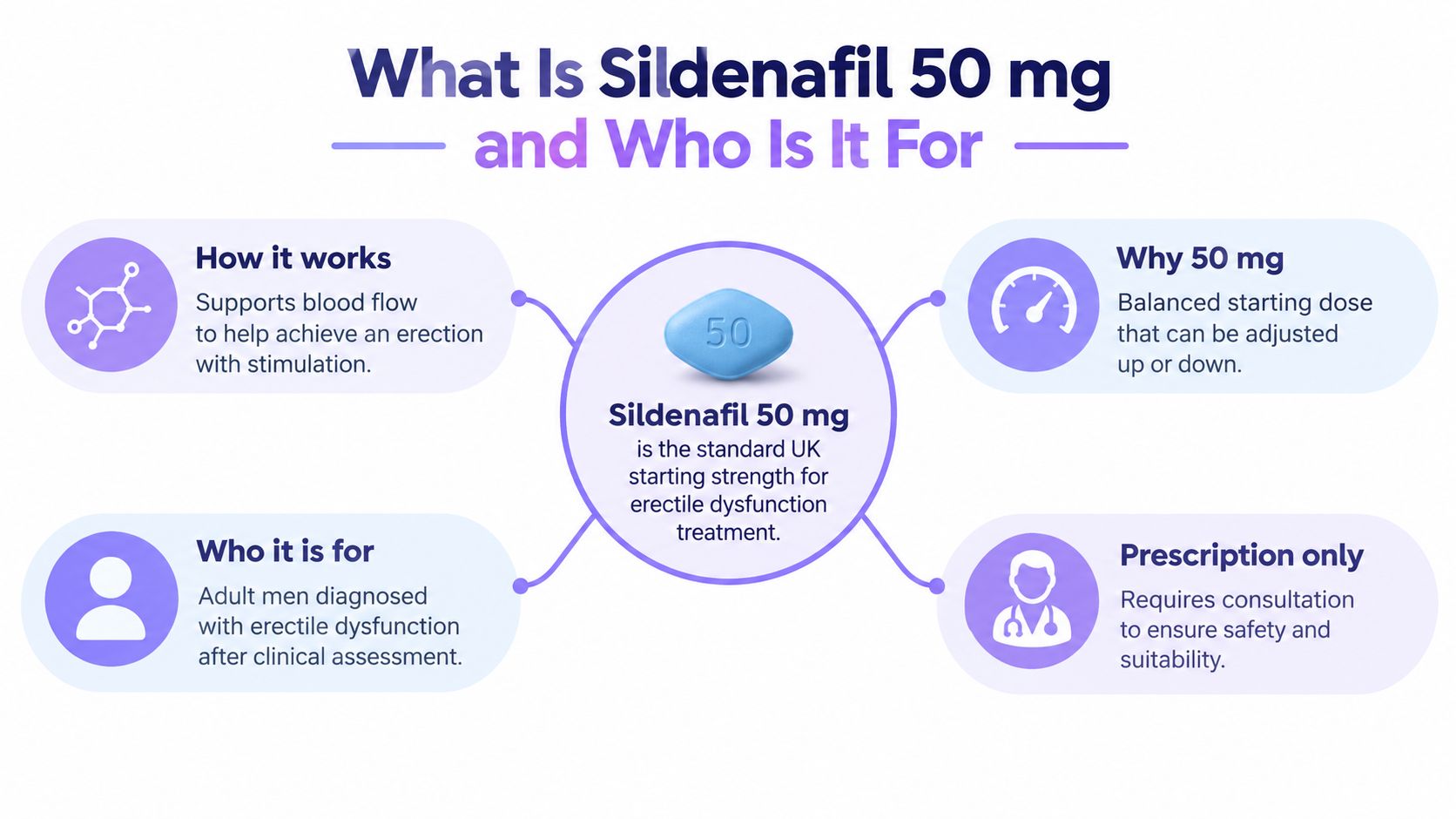
Sildenafil is a prescribed medicine used to treat erectile dysfunction. It's also used for pulmonary hypertension, but the dose and clinical context differ. In authorised UK medicines, each film-coated tablet labelled 50 mg contains 50 mg of sildenafil, as sildenafil citrate, as confirmed by the UK electronic Medicines Compendium product information.
For erectile dysfunction, UK prescribing guidance describes 50 mg taken as needed about one hour before sexual activity as the recommended starting approach. A prescriber may adjust this to 25 mg or 100 mg, depending on efficacy and tolerability. The maximum recommended dose is 100 mg, and the maximum frequency is once per day, so taking extra tablets because the first dose seems slow isn't appropriate.
What the standard strength means
The word “standard” can cause confusion. It means 50 mg is the usual starting reference in UK practice, not that every patient should remain on it or that it's suitable without assessment. Some people may need a lower dose because of age, health conditions or interacting medicines, while others may discuss an increase if the response remains inadequate and the medicine is tolerated.
The NHS explains that sildenafil is used for erection problems and pulmonary hypertension. Branded Viagra isn't normally available on the NHS except in special circumstances, while generic sildenafil may be prescribed through NHS care or supplied privately after clinical review.
For another plain-English overview of treatment considerations, readers can also consult OneTwenty's Sildenafil guide. It should be read alongside, rather than instead of, advice from a qualified prescriber. You may also find broader UK treatment context in this educational guide to erectile dysfunction medicines in the UK.
How Sildenafil Works for Erectile Dysfunction
Sildenafil doesn't create sexual desire and it doesn't produce an automatic erection. It supports the body's normal erection process, so sexual stimulation is still needed.
During sexual arousal, nerve signals encourage the release of nitric oxide in erectile tissue. This starts a chemical process that relaxes smooth muscle and allows more blood to enter the penis. Sildenafil belongs to a group of medicines called PDE5 inhibitors. It helps preserve the chemical signals that support increased blood flow, making it easier to achieve and maintain an erection when arousal is present.
That explains why a tablet can appear not to work if it's taken without enough stimulation, taken at an unsuitable time, or used in circumstances where another health problem is affecting erections. Erectile dysfunction can have physical, psychological or mixed causes, and sildenafil doesn't remove every underlying cause.
Timing and expectations
The NHS says people are usually advised to take one tablet about one hour before sex. The medicine can remain effective for a substantial period, with NHS information stating that its effect can last up to 36 hours, but this doesn't mean an erection should last for that entire period. It means the opportunity for an erection in response to stimulation may remain during that window.
Food can also matter. A heavy meal may delay absorption, so a patient who takes sildenafil after a large meal could experience a slower onset than expected. Alcohol may make erections more difficult and can also increase dizziness in some people, so discussing drinking habits with a prescriber is sensible.
The practical lesson is straightforward: take the prescribed amount, allow adequate time, and don't judge the medicine solely by whether an erection occurs immediately. If you're comparing treatment routes or trying to understand private pricing, a neutral resource on cost for ED medicines may help, but the clinical decision must remain with a qualified UK prescriber.
Standard Dosing and When to Adjust the Dose
A first dose of sildenafil 50 mg can lead to one of three broad experiences. It may provide a satisfactory erection with manageable effects, it may produce a partial response, or it may appear ineffective. Each situation calls for a different conversation with the prescriber, rather than an automatic increase.
UK NHS and local NHS guidance use 50 mg as the usual starting dose, with adjustment to 100 mg if the response is insufficient or reduction to 25 mg if clinically appropriate. The decision depends on both benefit and tolerability. A stronger dose isn't automatically better if the lower dose is already effective or causes unwanted effects.
How clinicians interpret a first response
Before deciding that sildenafil has failed, check the circumstances with a clinician:
- Timing: It's usually taken about one hour before sexual activity.
- Food: Food, particularly a substantial meal, can delay the onset.
- Stimulation: Sildenafil supports the natural response to arousal, rather than replacing it.
- Consistency: A single disappointing experience may not show the medicine's overall effect.
- Safety: Side effects, other medicines and health conditions may make a lower dose more suitable.
Scottish NHS guidance notes that food can delay onset and that the effect may last up to about six hours in the operational counselling context described by local guidance. NHS sources also state that sildenafil shouldn't be taken more than once in a day. Because different sources describe duration in different ways, patients should follow the instructions supplied with their specific prescription and ask the prescriber if the advice seems inconsistent.
Dose adjustment at a glance
| Dose | When to consider | Clinical rationale |
|---|---|---|
| 25 mg | If a lower dose is clinically appropriate, or if tolerability is a concern | May reduce exposure when health factors or interactions require caution |
| 50 mg | Usual starting dose for erectile dysfunction | Provides the standard initial balance between response and tolerability |
| 100 mg | If 50 mg is ineffective and the medicine is tolerated | Allows a prescriber to assess whether a higher approved dose improves response |
Do not take two 50 mg tablets to imitate a 100 mg prescription unless a prescriber has specifically instructed you to do so. The maximum recommended dose is 100 mg once per day, and changing the dose without assessment can increase risk without addressing the reason for an inadequate response.
Comparing UK Access Routes and Costs
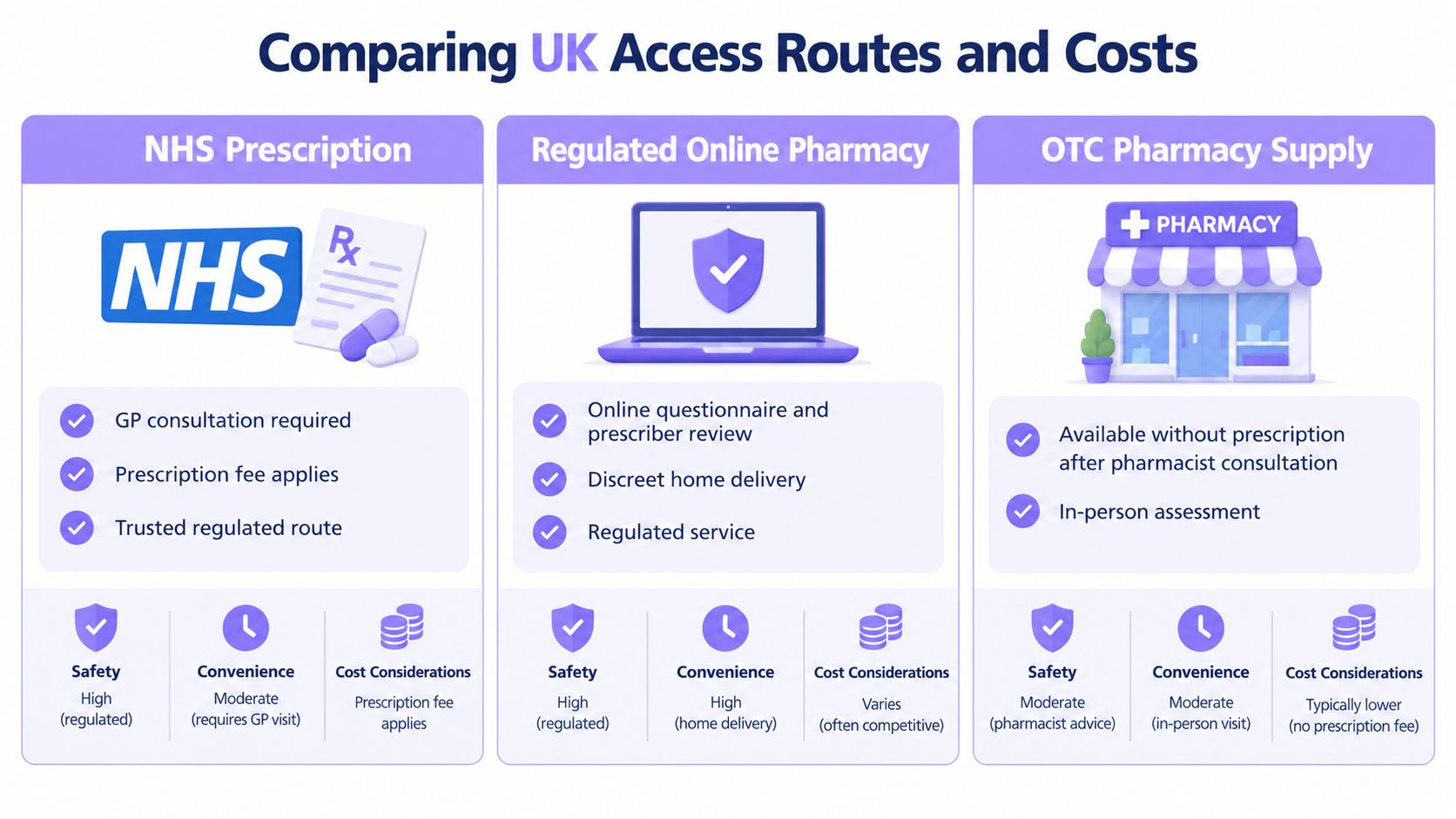
UK patients can usually discuss sildenafil through NHS care, a regulated online pharmacy or a community pharmacy supplying Viagra Connect. These routes aren't identical. They differ in how the assessment happens, what product is supplied and what the patient pays.
The MHRA's reclassification of Viagra Connect created a pharmacy-access route for a specific sildenafil 50 mg product. This didn't turn sildenafil into an unrestricted shop product. Pharmacy supply still involves pharmacist supervision and eligibility checks.
Route comparison
| Access route | Supervision level | Typical cost | Speed of access |
|---|---|---|---|
| NHS prescription | GP or other NHS prescriber assessment | NHS prescription arrangements apply | Depends on appointment and dispensing |
| Regulated online pharmacy | Online questionnaire followed by review from a UK-registered prescriber or pharmacist | Private prices vary by provider and pack size | Can be convenient, subject to assessment and dispensing |
| OTC Viagra Connect | Face-to-face pharmacist consultation | Private pharmacy price | Depends on stock and consultation |
The NHS says sildenafil can be obtained on the NHS for erectile dysfunction or pulmonary hypertension, while branded Viagra isn't generally available on the NHS except in special circumstances. Private pharmacy prices demonstrate why comparing cost per tablet matters. Examples listed by UK pharmacies include £13.99 for 4 tablets, £23.99 for 8 tablets and £38.99 for 16 tablets from one provider, and £14.50 for 4, £22.00 for 8, £38.00 for 12 and £43.00 for 16 from another. These are listed prices, not universal rates, and they can change.
Another listing cited £49.99 for 64 tablets, illustrating that pack size and provider can materially affect the apparent price per tablet. Patients should check whether the price includes assessment, dispensing and delivery, rather than comparing headline figures alone.
For more information about the clinical process behind an online consultation, see this guide to a UK online doctor prescription. A legitimate service won't promise automatic access. It will ask relevant health questions and may decline treatment when sildenafil isn't suitable.
Side Effects and Safety Guidance
Most side effects associated with sildenafil are mild and temporary, but patients need to know what requires prompt medical attention. Common effects can include headache, facial flushing, indigestion, nausea, nasal congestion, dizziness and visual changes.

If symptoms are mild, sit down, avoid driving and follow the advice supplied with your medicine. Don't take another tablet to compensate for an unwanted or incomplete effect. Tell the prescriber about side effects before requesting a dose increase.
Symptoms that need urgent help
Seek urgent medical help for:
- Chest pain or severe breathlessness, especially during or after sexual activity.
- A prolonged or painful erection, which requires prompt assessment.
- Sudden loss of vision or hearing, or a significant new disturbance.
- A serious allergic reaction, such as facial swelling, difficulty breathing or widespread rash.
- Severe dizziness or fainting, particularly if it follows another medicine.
Sildenafil can lower blood pressure. The risk becomes particularly important when it's combined with nitrates or nitric oxide donors, discussed in the next section. Anyone with significant cardiovascular symptoms should seek clinical advice rather than relying on online information.
For patients who prefer visual explanations, the following educational video may support a consultation:
A safe consultation should cover your medical history, current prescriptions, allergies and any previous reactions. Don't feel embarrassed about mentioning recreational drugs or supplements. Those details can change the safety assessment.
Medicine Interactions and Contraindications
The most important interaction to identify is with nitrates, medicines used for angina and some heart conditions. Sildenafil can add to their blood-pressure-lowering effect, creating a potentially dangerous reaction. Nitric oxide donors, including some recreational substances, can create a similar concern.
Tell the prescriber about every medicine you use, including inhalers, injections, over-the-counter products and supplements. Don't assume that a medicine is irrelevant because you take it only occasionally.
Factors that can change the dose
Some people may need a lower starting dose or closer assessment. UK guidance notes that 25 mg may be considered for older patients and for people with hepatic or severe renal impairment, as well as those taking interacting medicines. This is a prescribing decision, not a reason to alter tablets at home.
Other relevant considerations can include:
- Blood-pressure treatment: Some medicines can add to the blood-pressure-lowering effect.
- Alpha-blockers: These may increase the risk of dizziness or low blood pressure.
- Liver or kidney disease: The body may process sildenafil differently.
- Eye or blood disorders: Certain conditions require individual assessment.
- Penile anatomical problems: A clinician may need to consider the risk of complications.
A prescriber may also ask about previous heart symptoms, recent cardiovascular events, exercise tolerance and other causes of erectile dysfunction. That isn't unnecessary questioning. Erectile difficulties can sometimes prompt a wider health review.
Practical rule: Never conceal a nitrate prescription because you're seeking a discreet service. It's one of the details that directly determines whether sildenafil is safe.
Sildenafil may also be prescribed for pulmonary hypertension under a different clinical plan. Don't use tablets supplied for one condition to self-treat another, and don't combine products containing sildenafil.
Choosing a Regulated UK Pharmacy Safely
A UK online pharmacy should make its regulatory status easy to check. Look for registration with the General Pharmaceutical Council, often referred to as the GPhC, and confirm the pharmacy's details through the regulator's own register. A service that is regulated by the GPhC should show a responsible pharmacy structure and provide a way to contact the pharmacy team.
What a responsible service should do
A regulated online pharmacy should:
- Collect medical information: Expect questions about symptoms, diagnoses and current medicines.
- Use prescriber oversight: A qualified UK prescriber should review suitability before prescribed medication is supplied.
- Explain the medicine: The service should provide directions, warnings and follow-up information.
- Protect confidentiality: Health information should be handled through a secure process.
- Provide pharmacy contact details: You should be able to ask about your prescription and side effects.
The MHRA confirmed that Viagra Connect, containing sildenafil 50 mg, was reclassified from prescription-only medicine to pharmacy medicine in November 2017. It can be supplied without a prescription only from a pharmacy and under pharmacist supervision for men aged 18 and over with erectile dysfunction, as described in the MHRA announcement about Viagra Connect.
That distinction matters. A website selling tablets without meaningful questions, pharmacist involvement or clear registration information isn't offering the same safeguards as a UK-registered pharmacy. Avoid sellers that offer unusually broad ranges of unlicensed products, refuse to identify the responsible pharmacist or encourage you to exceed the prescribed amount.
You can read more about how to assess an online pharmacy in the UK. XO Medical is one example of a UK-registered online pharmacy model that uses a digital consultation and clinician review before dispensing, but patients should still decide whether any service is appropriate for their circumstances.
Practical Patient Guidance and Daily Use
Take sildenafil exactly as supplied by your prescriber. Swallow the tablet with water at the advised time, usually about one hour before sexual activity. Don't take more than one dose in 24 hours, even if the first tablet seems ineffective.
Food can delay the onset, particularly when the tablet follows a heavy meal. Alcohol can make it harder to achieve an erection and may worsen dizziness, so moderation and individual advice matter. If you feel dizzy, light-headed or affected by visual symptoms, don't drive or use machinery.
Common questions after the consultation
What if I miss a dose? Sildenafil for erectile dysfunction is taken as needed, rather than as a routine daily treatment. If the opportunity for sex has passed, don't take a tablet because you had planned to. Follow the prescription instructions and never double the next dose.
How should I store it? Keep the tablets in their original packaging, away from excess heat and moisture, and out of children's reach. Check the expiry information and ask a pharmacist how to dispose of unused medicine.
What if it doesn't work? First review timing, food, stimulation and whether you followed the prescribed directions. Then contact the prescriber. They may consider whether a dose adjustment is appropriate, whether another treatment would suit you, or whether an underlying condition needs attention.
Can I change from 50 mg to 100 mg myself? No. The UK-labelled maximum recommended dose is 100 mg, but that doesn't make it suitable for everyone. A clinician should assess response, side effects, other medicines and relevant health conditions before changing the prescription.
XO Medical provides online consultations with UK-registered clinicians and pharmacy dispensing for suitable prescribed treatments, while XO Clinic is an in-person aesthetics clinic offering Botox, dermal fillers, skin boosters and polynucleotides (salmon DNA). To discuss regulated care for erectile dysfunction, visit XO and complete the appropriate consultation rather than buying sildenafil from an unverified seller.


0 comments