


Dryness is the top skin concern for 46% of British consumers, and moisturising creams are the mainstream first-line choice for managing it. In the same UK survey, 65% used moisturising creams, making a face cream for dry skin part of ordinary skincare as well as a traditional emollient approach.
Facial dryness can mean tightness, roughness, flaking or sensitivity after cleansing. It can also reflect a disrupted skin barrier, contact dermatitis or another condition that needs assessment rather than a succession of new products. The practical question isn't which cream feels richest. It's whether the formulation attracts water, replaces missing lipids, limits water loss and suits the skin area being treated.
This guide explains how to choose and use an emollient in the UK, where over-the-counter products sit alongside NHS-supported emollient care and prescription-only treatment.
Table of Contents
- Understanding Dry Skin in the UK Context
- How Face Creams Repair the Skin Barrier
- Evaluating Ceramide and Urea-Based Formulations
- Correct Application Techniques for Facial Emollients
- Navigating OTC Options and Prescribed Medications
- Clinical Summary and When to Seek Advice
Understanding Dry Skin in the UK Context
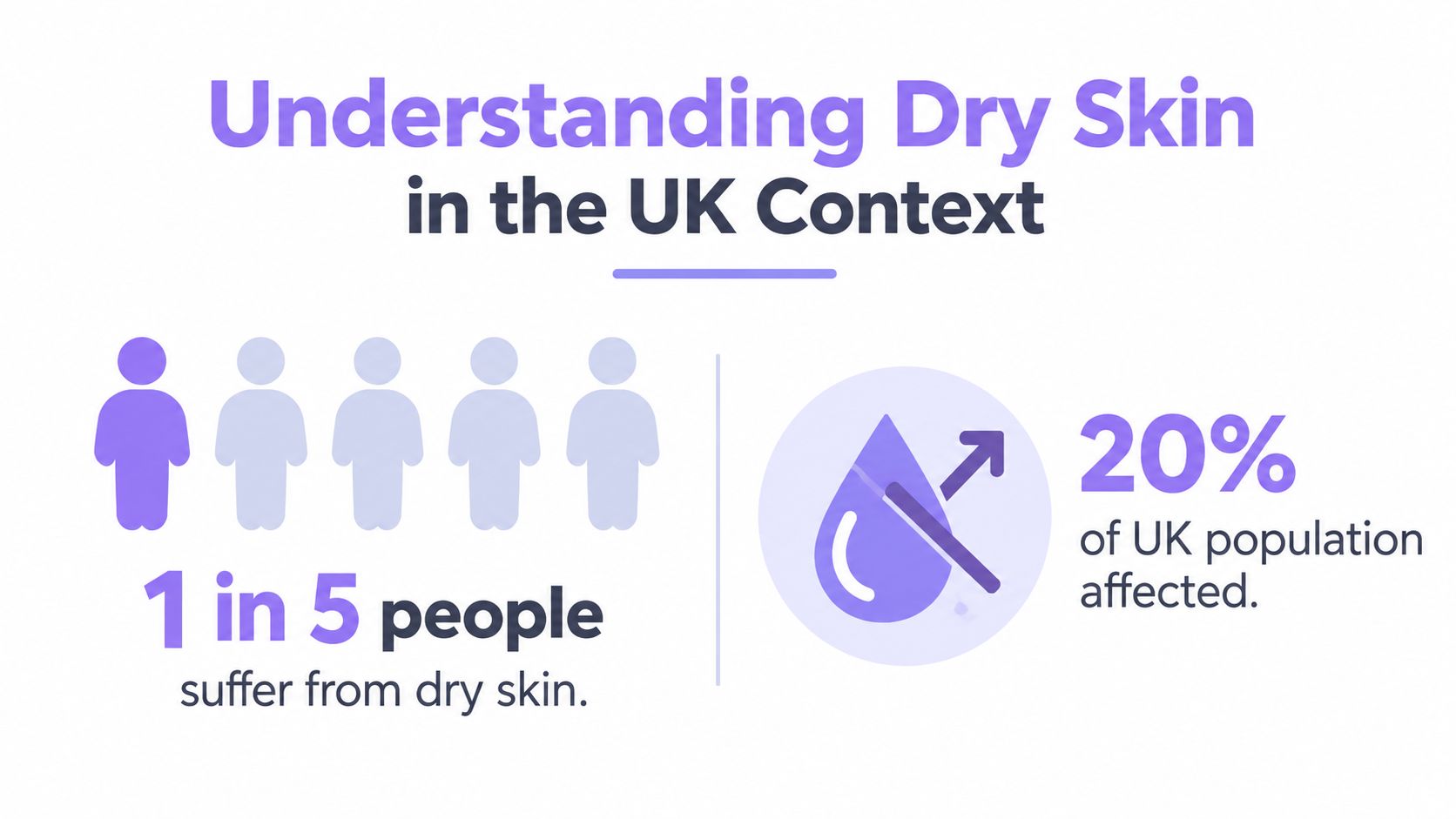
A UK infographic reports that 1 in 5 people, or 20% of the population, experience dry skin. That figure gives context to a common complaint, but it does not identify the cause in an individual patient. A cold commute, frequent washing or a new cleanser can leave skin feeling “just dry”. Tightness immediately after washing may indicate excessive removal of surface oils, while persistent scaling, itch or inflammation can suggest a dermatological condition that needs professional review.
Dry skin, also called xerosis, is therefore assessed by its pattern and duration, not by sensation alone. Creams are a medium-emollient format suited to moderate dryness and daytime facial use, according to UK pharmacy guidance on emollient selection. Choosing a face cream can form part of the UK's established clinical emollient tradition, where the practical aim is to reduce water loss and support the outer skin layer. The product may come from an OTC shelf, but the barrier-care principle also underpins NHS-supported treatment.
Why creams remain clinically relevant
The Appinio survey found that dryness was the leading skin issue among British consumers. Ageing was reported by 39% and dehydration by 32%. Men reported dryness slightly more often than women, at 50% compared with 43%. These results show that dry skin concerns extend across adult consumers, helping explain the continued role of cream-based moisturisers in everyday care.
The NHS defines emollients as moisturising treatments applied directly to the skin. They form a protective film that helps retain moisture, so a leave-on cream can support a therapeutic routine as well as improve skin comfort and appearance. NHS guidance on emollients also explains that leave-on emollients may replace ordinary soap, which can aggravate dryness.
Clinical perspective: A cream can be an everyday skincare product while following the same barrier-repair model used in medical emollient care.
UK prescribing practice shows how established this approach is. A UK guide cites NHS Business Services Authority spending of approximately £33,000 a year on emollients for dry skin, alongside typical quantities of about 500g weekly for adults and 250g for younger children. These figures describe emollient use broadly, not the amount suitable for the face. They do show that leave-on barrier care has a long-standing place in UK healthcare.
How Face Creams Repair the Skin Barrier
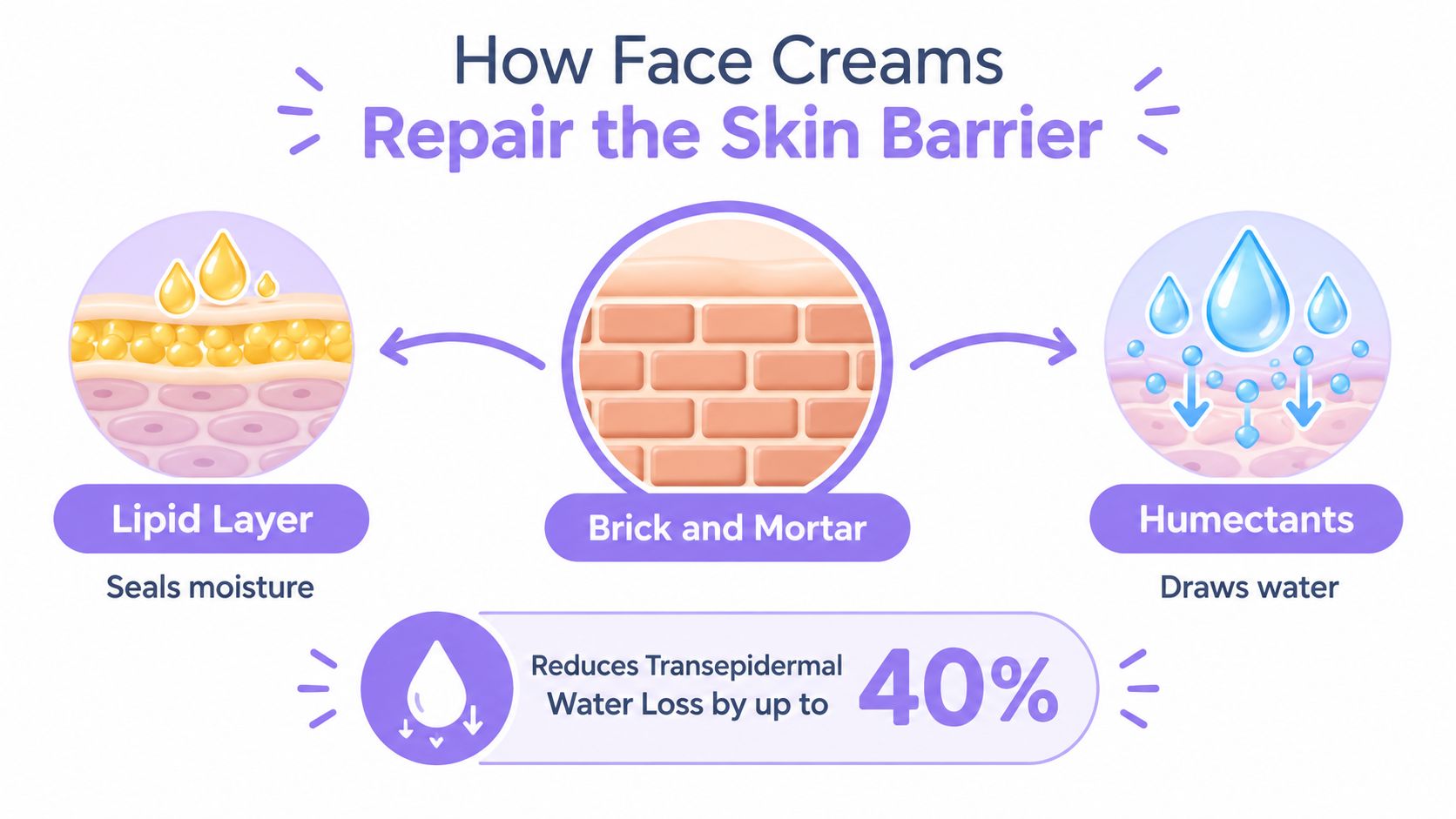
The outermost layer of the skin, the stratum corneum, is often described as bricks and mortar. The corneocytes act as the bricks, while lipids between them provide the mortar. When that structure becomes disrupted, water escapes more readily through the skin. This process is known as transepidermal water loss, or TEWL.
A useful face cream for dry skin usually combines several functions rather than relying on one fashionable ingredient.
The three formulation functions
Humectants attract and bind water. Common examples include glycerin, urea and hyaluronic acid. They can improve the feel of tight skin, but a humectant alone may not prevent that water from evaporating.
Emollients fill some of the uneven spaces between surface cells, making skin feel smoother. Fatty alcohols, plant oils and selected lipids can contribute to this effect, although the texture and tolerability depend on the complete formula.
Occlusives form a more substantial surface film. Petrolatum, shea butter and related ingredients can reduce water loss, which is particularly useful overnight or during cold, windy conditions. The trade-off is texture. A strongly occlusive product may feel heavy, shiny or uncomfortable under make-up.
Reading beyond “hydrating”
Ceramides, cholesterol and fatty acids are relevant when dryness reflects lipid depletion. They support the mortar between skin cells, while humectants improve water binding. This is why a multi-component barrier cream may be more useful than a light lotion containing one humectant.
For readers comparing ingredient categories, a resource on a calming ceramide moisturiser can help clarify how ceramides fit into barrier-focused routines. It shouldn't replace checking the full ingredient list or considering whether fragrance, preservatives or other components might irritate your skin.
The practical distinction between hydration and barrier support is also covered in this skin barrier repair guide. A cream may make skin feel temporarily softer without addressing the reason it is losing water. Persistent discomfort, redness or itch deserves a more careful assessment.
Evaluating Ceramide and Urea-Based Formulations
Ingredient selection is only half the decision. Concentration, texture, compatibility and the surrounding formula determine whether a product works comfortably on the face.
CeraVe Intensive Moisturising Cream is a useful example of transparent formulation logic. Its UK product information states that it contains three essential ceramides, hyaluronic acid and 5% hydro-urea, described as a blend of natural moisturising factors. It is positioned for extra-dry skin with barrier-strengthening and non-greasy hydration claims. CeraVe's UK formulation information provides the product-specific details.
Why combine urea with ceramides
Urea and hyaluronic acid act primarily as water-binding ingredients. Ceramides replenish lipid components in the spaces between surface cells. Used together, these ingredient groups address different parts of the dryness problem, rather than asking one ingredient to perform every role.
This matters in winter, when cold air, wind, indoor heating and repeated cleansing can make a compromised barrier feel more uncomfortable. A light lotion may be pleasant in the morning or on mildly dry skin, but it can lack the richer lipid and occlusive support needed when flaking and tightness persist.
| Formulation type | Potential advantage | Limitation |
|---|---|---|
| Lightweight lotion | Spreads easily and may suit daytime use | May feel insufficient for marked dryness |
| Humectant serum | Adds water-binding ingredients with little weight | Needs a cream or occlusive layer to reduce evaporation |
| Ceramide-rich cream | Combines lipid support with a more substantial texture | Can feel too rich for some people or under make-up |
| Occlusive ointment | Strong surface protection for very dry areas | May be greasy and isn't always comfortable across the face |
A CBD product may appeal to readers comparing different approaches, but the presence of CBD doesn't automatically establish that a formulation is suitable for facial xerosis or dermatitis. If you want to compare products in that category, browse CBD moisturisers while still checking the complete ingredients list and avoiding assumptions based on one active ingredient.
For a focused explanation of hyaluronic acid in a routine, see this guide to hyaluronic acid moisturiser use. The key practical point is simple. A single humectant can improve surface hydration, but a dry, irritated barrier often needs a combination of water-binding, lipid-replenishing and water-loss-limiting ingredients.
Correct Application Techniques for Facial Emollients
Application technique can change how an emollient feels and how consistently you use it. Start with a gentle cleanse using lukewarm rather than hot water. Pat the face lightly so it remains slightly damp, then apply the cream without dragging the skin.
Smoothing is preferable to rubbing
The NHS advises smoothing emollients onto the skin rather than rubbing them in. Rubbing can generate friction and warmth, which may be uncomfortable when the barrier is already irritated. Use clean hands and spread a thin, even layer over the affected areas.
The face is not just a smaller version of the body. The NHS notes that the emollient used on the face and hands may differ from the one selected for the body. Facial skin may be more sensitive to heaviness, fragrance or pore-blocking textures, so don't assume that a thick body ointment is automatically the best facial option.
Practical rule: Choose the richest texture you can use consistently, not the richest product available.
Very dry skin may need an emollient 2 to 4 times a day, or as prescribed by a doctor, according to NHS contact dermatitis treatment guidance. That doesn't mean every adult should apply a particular amount or frequency to the face. It means that repeated application can be clinically appropriate when dryness is significant, provided the product is suitable and the cause has been considered.
A straightforward routine might look like this:
- Cleanse gently, or use a leave-on emollient as a soap substitute where appropriate.
- Apply cream while the skin is slightly damp.
- Reapply when tightness returns, following the product directions.
- Reduce irritating extras, such as harsh scrubs or strongly fragranced products, while the skin settles.
For localised sensitivity around the eyes, this guide to dry skin around the eyes offers a useful reminder that the area needs particularly careful product selection.
The following video demonstrates a facial skincare application routine. It isn't a substitute for NHS or clinician guidance.
Navigating OTC Options and Prescribed Medications
A good starting point is an over-the-counter emollient. That is reasonable when the skin is mildly or moderately dry, there are no concerning symptoms and the product is tolerated. Look for a fragrance-free cream with a combination of humectants, emollients and barrier-supporting lipids, then assess whether it improves comfort without causing stinging or worsening redness.
An OTC moisturiser isn't the same as a prescription medicine. The distinction matters if a clinician suspects contact dermatitis, eczema, infection or another condition that needs more than barrier support. A prescribed product may contain a medicine directed at inflammation or another diagnosis, and it requires an assessment of suitability, interactions, contraindications and follow-up.
What prescription-only means in the UK
UK medicines law classifies Prescription Only Medicines, or POMs, as products available only on a valid prescription from an authorised prescriber. The government states that the public cannot buy a POM directly. UK government guidance on medicine reclassification supports clear wording here: a prescription-only treatment must be assessed and dispensed through an authorised route.
An online pharmacy can be convenient, but convenience doesn't remove clinical governance. The General Pharmaceutical Council says pharmacies in Great Britain, including online pharmacies, must be registered and meet its standards. Patients should be able to verify registration, and distance-selling services must have appropriate safeguards. GPhC guidance for online pharmacy services explains what responsible verification involves.
Check that an online pharmacy is regulated by the GPhC, provides a clear consultation pathway and identifies the prescriber and pharmacy responsible for your care. Avoid services that imply automatic access to prescribed medication, minimise medical questions or encourage treatment without reviewing your symptoms.
When an OTC cream isn't enough
Seek professional advice if dryness is persistent, painful, intensely itchy, inflamed, cracked, spreading or associated with weeping or crusting. New symptoms after a cosmetic or cleanser may indicate contact dermatitis, while symptoms around the eyes require particular caution.
Readers comparing routine ingredients can also review this practical discussion of what not to use on dry skin. The broader principle is to simplify during a flare and introduce changes one at a time, so you can identify what your skin tolerates.
XO Medical is one example of a UK-registered online pharmacy and telehealth service that offers clinician-led skincare consultations. Any prescribed medication remains subject to assessment and prescriber approval. An in-person aesthetics clinic offering botox, dermal fillers, skin boosters and polynucleotides (salmon DNA) is a separate type of service and isn't a substitute for diagnosing persistent dry or inflamed skin.
Clinical Summary and When to Seek Advice
The most reliable face cream for dry skin usually does more than add a temporary feeling of moisture. Look for a multi-component barrier formula that combines humectants such as glycerin, urea or hyaluronic acid with ceramides and other lipids, then consider whether a moderate occlusive layer is appropriate for the severity of dryness and the time of day.
Apply the product gently to slightly damp skin and smooth rather than rub. Follow the NHS approach to repeated application where needed, but remember that the face may require a different emollient from the body. Product tolerance matters as much as the label.
Speak to a qualified healthcare professional if symptoms don't settle, keep returning or include inflammation, marked itch, pain, cracking, weeping or suspected allergy. A clinician can distinguish uncomplicated xerosis from contact dermatitis and other conditions, explain whether a prescribed medication is appropriate and provide safety-netting. This article is informational, not a diagnosis or personalised treatment plan.
Reviewed by: Qualified UK healthcare professional
Review date: 24 September 2026
This content is for informational purposes only and does not constitute medical advice. Always consult a qualified healthcare professional before starting or changing any treatment.
XO Medical provides UK skincare consultations through a registered online pharmacy and clinician-led telehealth service, while XO Clinic provides in-person, medically led aesthetics and skin-health consultations. Visit XO to understand the available services and choose the appropriate route for your concern.


0 comments