


HRT can improve menopause symptoms within a few days or weeks, but the NHS says it can take up to 3 months to work fully. Early improvement is often gradual, so partial relief before the three-month point doesn't necessarily mean the treatment has failed.
You may be reading this after starting HRT and wondering whether a hot flush, restless night, low mood or vaginal discomfort should already have improved. It's a common concern. One symptom may ease while another remains unchanged, and side effects can sometimes appear before the benefits become clear.
The most useful answer to how long HRT takes to take effect isn't one universal date. The NHS describes improvement within days or weeks, with full benefit potentially taking up to three months. NICE recommends reviewing HRT after 3 months for effectiveness and tolerability, then reviewing it annually. You can read the NHS explanation of how long HRT may take to work alongside this symptom-by-symptom guide.
This article explains what HRT is, why symptom response varies, how different formulations may behave in practice, and what UK follow-up should look like. It also covers what partial benefit means and when to speak to your prescriber rather than changing a prescribed medication yourself.
HRT is a prescription-only treatment in the UK. It should follow a clinical assessment, with a qualified prescriber considering your symptoms, medical history, risks, preferences and the type of HRT that may be appropriate. An online pharmacy can support access only through a regulated clinical process. For readers comparing treatment timelines, it can also help to understand why other prescribed medicines have different onset patterns, such as how quickly Zoloft helps, although antidepressants and HRT work differently.
Table of Contents
- Introduction to How Long HRT Takes to Work
- Understanding HRT and How It Works in the Body
- Symptom by Symptom Timeline for HRT Benefits
- How Different HRT Types Influence Onset of Effects
- Factors That Affect How Quickly HRT Works for You
- Monitoring Progress and Follow Up in the UK
- Safety Eligibility and Realistic Expectations for HRT
Introduction to How Long HRT Takes to Work
Consider someone who starts an oestrogen patch on a Monday. By the following weekend, night sweats may feel less intense, but sleep is still broken and anxiety remains. That mixed result can be confusing, especially when the expectation is that every menopause symptom should improve at the same speed.
A more realistic interpretation is that the body may respond in stages. The NHS says HRT can improve symptoms within days or weeks, but may take up to three months to work fully. This broad window includes early changes as well as the time needed to judge whether the treatment is providing suitable overall benefit.
Why one timeline doesn't fit every symptom
Hot flushes and night sweats are often noticed first because they're closely linked to the body's temperature regulation. Sleep can improve indirectly if night sweats reduce, while mood, concentration and libido may depend on several overlapping factors. Vaginal and urinary symptoms involve local tissues and may need a different treatment approach or a more targeted review.
The formulation also matters. Tablets, patches, gels and sprays provide systemic hormone treatment, while local vaginal oestrogen is intended to act mainly in the vaginal and surrounding genitourinary tissues. The choice depends on clinical suitability and isn't a question of which option works fastest.
Practical rule: Early improvement is encouraging, but it doesn't prove that the final regimen is right. Persistent symptoms deserve a structured review, not an unsupervised dose change.
HRT is prescription-only, and patients usually start on a low dose that may be increased later if needed, as described by the NHS information on HRT prescriptions and dosing. Prescription charges may also apply unless you qualify for free NHS prescriptions. These practical issues can affect whether someone takes treatment consistently, so they're relevant when assessing apparent lack of benefit.
The rest of this guide uses the NHS and NICE review framework to explain what you might reasonably monitor, without treating a general timeline as personal medical advice.
Understanding HRT and How It Works in the Body
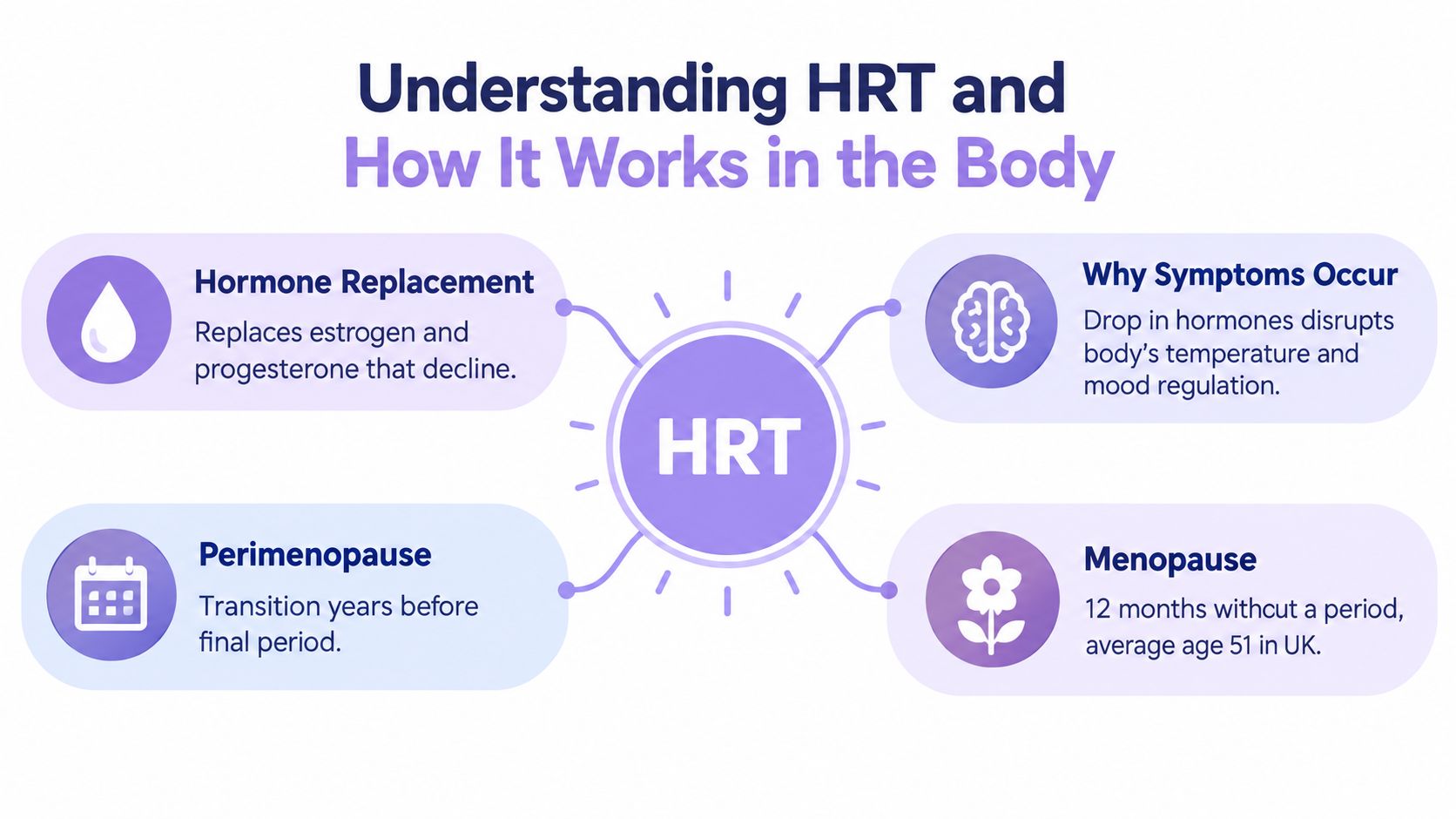
During perimenopause and menopause, ovarian hormone production changes. Oestrogen levels can fluctuate and later remain lower, contributing to symptoms such as hot flushes, sleep disruption, mood changes and vaginal dryness.
HRT replaces hormones that the body is producing in lower or less predictable amounts. Oestrogen is the hormone mainly used to treat menopause symptoms. If someone has a uterus, a prescriber will usually consider whether progestogen is needed alongside oestrogen to protect the womb lining. Oestrogen-only and combined HRT are therefore not interchangeable choices.
A simple way to understand the process
Think of oestrogen as one of several signalling systems that helps regulate different tissues. When hormone signalling changes, the brain's temperature control can become more sensitive, sleep may become less settled, and tissues in the vagina and urinary tract may become drier and more fragile.
Systemic HRT sends oestrogen through the bloodstream. Depending on the regimen, it may influence whole-body symptoms such as flushes and sweats. Local vaginal oestrogen is used differently. It targets local symptoms, so its role and expected response shouldn't be judged by whether it improves hot flushes or mood.
The body doesn't respond as if a single switch has been turned on. Hormone levels, tissue sensitivity, dose, absorption, existing health conditions and other medicines can all influence what a person notices first. That's why two people using HRT can report different experiences even when their products appear similar.
The NHS overview of HRT confirms that HRT is prescription-only and that treatment commonly begins at a low dose. A prescriber can decide whether the regimen is suitable and whether a later adjustment should be considered.
For a broader UK explanation of treatment options and clinical context, see hormone replacement therapy in the UK. It's still important to treat educational information as background, not as a substitute for an assessment.
Symptom by Symptom Timeline for HRT Benefits
The broad NHS message is useful, but it doesn't tell you what to expect from each symptom. A practical approach is to look for direction of change, rather than demanding complete symptom control immediately.
| Symptom Domain | Early Changes | Review at 3 Months |
|---|---|---|
| Hot flushes and night sweats | Episodes may become less frequent or less intense within days or weeks | Assess whether control is sufficient and whether the regimen is tolerated |
| Sleep | Sleep may improve if night sweats settle, but the pattern can remain uneven | Consider whether sleep is still being disrupted and whether other causes need attention |
| Mood and anxiety | Irritability or emotional volatility may change gradually | Review benefit, ongoing symptoms and whether separate mental health support is needed |
| Libido | Desire may not change quickly, particularly if discomfort or relationship factors remain | Assess comfort, desire and other contributing factors |
| Vaginal dryness and discomfort | Local symptoms may respond differently from systemic symptoms | Review persistent discomfort, treatment technique and whether local treatment is appropriate |
| Skin and hair changes | Changes are less predictable and may not be a primary marker of HRT response | Discuss expectations and alternative explanations rather than assuming treatment failure |
Hot flushes and night sweats
These symptoms may be among the first to change because systemic oestrogen can affect the temperature-regulation pathways involved in flushing and sweating. You might notice fewer episodes, less intense heat or less disruptive night sweats before other benefits become apparent.
An early response can still be incomplete. A person who moves from frequent severe sweats to occasional milder episodes may be benefiting, even though symptoms haven't disappeared.
Sleep, mood and anxiety
Sleep is often connected to other symptoms. If night sweats improve, sleep may become more settled. However, persistent insomnia can also involve stress, an established sleep disorder, pain, medication effects or mood symptoms.
Mood changes, anxiety and irritability can take longer to interpret. HRT may help symptoms associated with hormonal change, but it isn't a universal treatment for every anxiety or depressive illness. Ongoing symptoms should be discussed with a clinician rather than attributed automatically to menopause.
Libido and vaginal symptoms
Libido is influenced by comfort, mood, relationships, stress, fatigue and physical health. If sex is painful because of dryness, improved vaginal comfort may help, but desire may not rise at the same pace.
Vaginal dryness and genitourinary symptoms can require a more targeted approach. If systemic HRT improves flushes but vaginal discomfort persists, that doesn't necessarily mean the whole treatment is ineffective. It may indicate that the local symptom needs separate assessment.
Skin and hair changes are especially difficult to use as a measure of treatment response. They have many possible causes, so a prescriber should consider the wider clinical picture.
How Different HRT Types Influence Onset of Effects
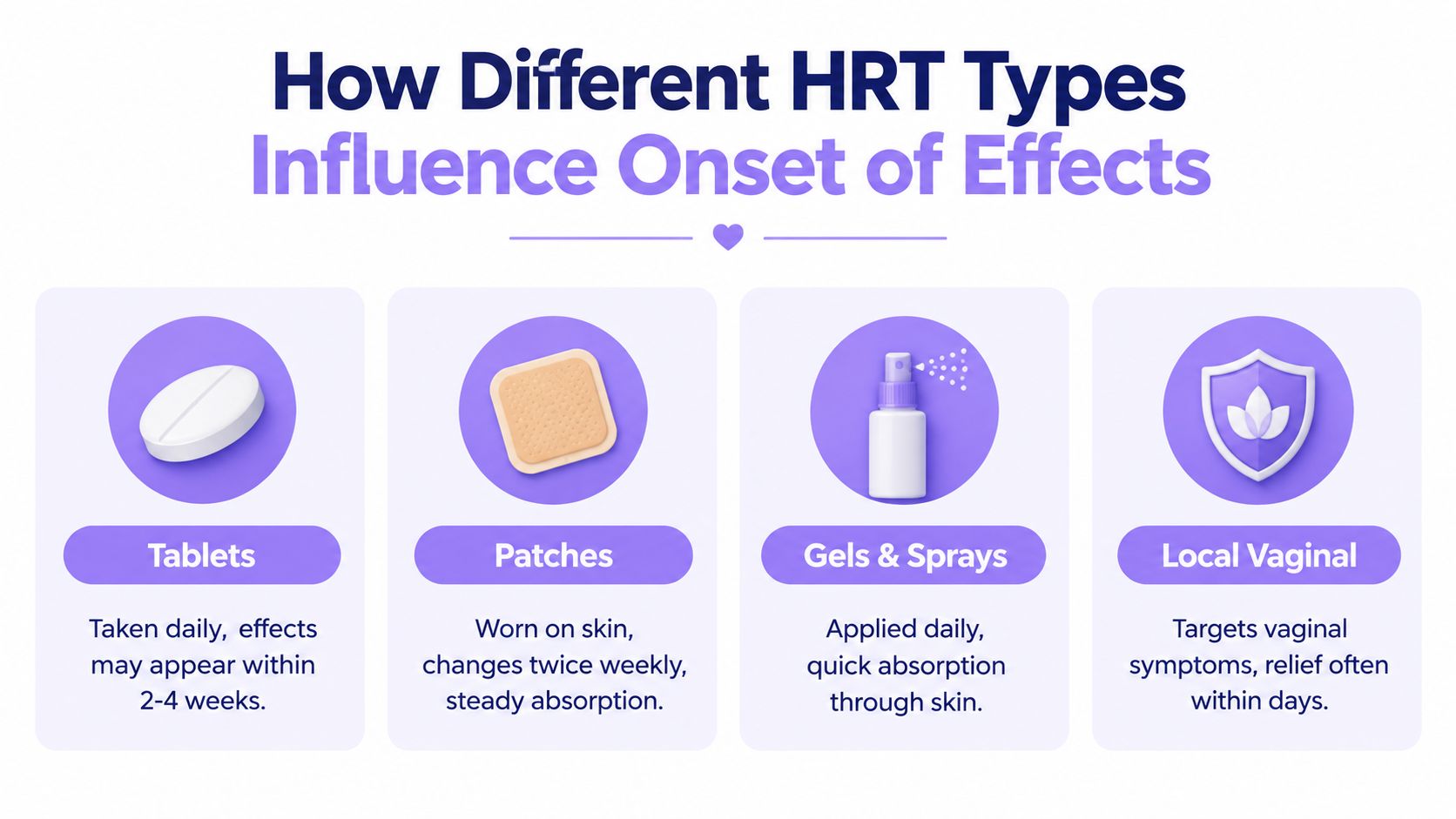
HRT formulations deliver hormones in different ways. That affects how the medicine is absorbed and where it acts, but it doesn't create a guaranteed timetable.
Tablets are taken by mouth and provide systemic treatment. Patches release hormones through the skin, while gels and sprays are also absorbed through the skin. Local vaginal oestrogen is designed to address vaginal and nearby urinary symptoms rather than provide the same whole-body effect as systemic HRT.
Systemic options
Tablets, patches, gels and sprays may all be considered for systemic symptoms. A clinician may take account of medical history, other medication, personal preference, skin sensitivity, practical routine and tolerability when choosing between them.
Correct use matters. A patch needs to be applied as directed and changed according to its instructions. Gel and spray need to be applied to the appropriate skin area, and users need to follow instructions about drying and avoiding transfer to other people. Taking a tablet consistently is equally important.
A different formulation can be considered if side effects, absorption or practicality create problems, but patients shouldn't switch or increase doses without prescriber guidance. You can read more about one commonly prescribed patch option in this educational resource on Evorel Conti patches.
Local vaginal oestrogen
Local vaginal treatment has a different purpose. It may be considered when dryness, irritation or discomfort remains a prominent concern, including when systemic symptoms are managed separately. The expected response should therefore be judged against the symptom being targeted.
The NHS and NICE guidance provide the framework for clinical decisions. If treatment is arranged through an online pharmacy, use a UK-registered pharmacy regulated by the GPhC, with an identifiable prescriber and a process that assesses whether prescribed medication is clinically appropriate.
Different routes can produce different experiences, but route alone doesn't explain every delay. Dose, adherence, absorption and the symptom being treated remain important.
Factors That Affect How Quickly HRT Works for You
A slow or uneven response doesn't automatically mean HRT isn't working. Prescribers usually look at the pattern of symptoms, the treatment being used, how consistently it's taken and whether side effects are influencing the experience.

Treatment-related factors
The first question is often practical. Are doses being taken as prescribed? Is a patch adhering properly? Is gel being applied correctly? Has a missed dose, product shortage or change in routine made the response difficult to judge?
Absorption differs between people. Skin condition, application technique and interactions with other medicines can matter. Oral treatment also has its own prescribing considerations, so formulation decisions need clinical oversight.
Personal and health factors
The stage of perimenopause or menopause can affect the symptom pattern. Hormone fluctuations may continue, meaning symptoms can vary even after treatment begins. Existing sleep problems, anxiety, depression, thyroid conditions, pain and other health issues can also overlap with menopause symptoms.
Lifestyle doesn't replace treatment, but it can affect how improvement feels. Stress can intensify poor sleep and anxiety. Alcohol, room temperature, work demands and caregiving pressures may make night sweats or fatigue harder to assess. A symptom diary can help separate a general impression from a useful pattern.
Record a few consistent details:
- Symptom intensity: Note whether each symptom is mild, moderate or severe in your own terms.
- Frequency: Record how often it occurs, especially for flushes, night sweats or awakenings.
- Function: Write down whether symptoms affect work, sleep, relationships or daily activities.
- Treatment use: Record missed doses, application problems and new side effects.
This information gives a prescriber something more reliable to assess than “it doesn't work”. It can show partial benefit, identify a persistent symptom domain and support a safer discussion about whether the formulation or dose needs review.
A partial response is clinical information. It's a reason to assess the regimen, not a reason to abandon treatment or alter it independently.
Monitoring Progress and Follow Up in the UK
NICE recommends reviewing HRT at 3 months to assess efficacy and tolerability, then annually. The three-month appointment is not a deadline by which every symptom must have disappeared. It's a structured opportunity to decide whether benefits are meaningful, side effects are manageable and the treatment remains suitable.
What happens at the review
A prescriber may ask which symptoms changed first, which remain troublesome, whether bleeding or other effects have occurred, and how consistently the medication has been used. They'll also consider your medical history, other medicines and any new health concerns.
If symptoms persist, the clinician may discuss a dose or formulation change. That decision depends on the reason for the limited response. For example, persistent vaginal discomfort may need a different management plan from continuing night sweats. The safest next step is a review, not self-directed escalation.
The NICE menopause recommendations advise discussing duration at the outset, reassessing benefits and risks at each review, and recognising that there isn't a universal stop date that applies to everyone. NICE also notes that combined or oestrogen-only HRT is unlikely to affect life expectancy overall.
What if symptoms return?
Symptoms can return when HRT is stopped. The NHS explains that restarting may be an option, but that decision should be made with a healthcare professional after considering the reason for stopping, current symptoms and suitability.
Duration is individualised rather than imposed by an arbitrary timetable. The British Menopause Society also states that there are no arbitrary limits when benefits outweigh risks and recommends a review after starting or changing treatment. These points don't mean HRT is suitable for everyone or that treatment should continue without reassessment.
Use an NHS GP, menopause service, qualified prescriber or regulated online provider for follow-up. A UK-registered pharmacy regulated by the GPhC should make clear who is prescribing, how assessment works and how patients can obtain clinical support. Information about the process for a regulated UK online doctor prescription can help readers understand the distinction between a consultation and automatic access to medicine.
Recent UK prescribing trends also make access and follow-up important. NHSBSA-related reporting states that two million women aged 40 and over in England were prescribed HRT in 2025-26, compared with 800,000 in 2020-21. The figures are reported in coverage of NHSBSA HRT prescribing data, but they don't tell an individual whether a treatment is suitable or explain a personal response.
Safety Eligibility and Realistic Expectations for HRT
HRT can be helpful for menopause symptoms, but suitability depends on the individual. A prescriber needs to consider medical history, unexplained bleeding, previous hormone-sensitive conditions, blood-clotting history, cardiovascular risk, liver disease, migraine history and other relevant factors. This list isn't a self-screening tool, and a person shouldn't decide eligibility from one symptom or risk factor alone.
Side effects can occur, particularly when treatment starts or changes. Report troublesome or unexpected symptoms to the prescriber, and seek urgent medical help for severe or rapidly developing symptoms. Bleeding patterns, breast symptoms and other concerns should be assessed through the appropriate NHS or clinical pathway.
What safe access looks like
HRT is a prescription-only treatment, not an over-the-counter product. A legitimate online pharmacy should require a clinical consultation and prescribe only when the treatment is appropriate. Check that the pharmacy is registered with the General Pharmaceutical Council, commonly shown as being regulated by the GPhC, and that you can identify the prescriber and access follow-up support.
People can also ask about cost before starting. The NHS states that patients usually pay for HRT prescriptions unless they qualify for free prescriptions, so prescription charges may be relevant when planning ongoing treatment.
The central expectation is gradual improvement, not instant complete symptom control. Some symptoms may improve earlier, others may remain unsettled, and symptoms may return after stopping. NICE recommends a three-month review for effectiveness and tolerability, followed by annual reviews, while treatment duration should be revisited in light of benefits and risks.
This content is for informational purposes only and does not constitute medical advice. Always consult a qualified healthcare professional before starting or changing any treatment.
XO Medical provides online consultations for women's health, including HRT support, with assessment by UK-registered clinicians and prescribing through a GPhC-regulated pharmacy when clinically appropriate. Visit XO to review the available educational and consultation information, or speak with your GP or another qualified healthcare professional about your symptoms.


0 comments