


Alcohol does not directly interact with lansoprazole and isn't expected to make the medicine toxic on its own. It can still aggravate the stomach symptoms lansoprazole is being used to treat.
You may be asking this after taking your prescribed dose and then noticing burning, reflux or indigestion after a drink. The useful distinction is between a dangerous chemical interaction and alcohol worsening the underlying stomach problem. For many, the first isn't the concern, while the second can be very relevant.
This guide explains how lansoprazole works, why alcohol can still trigger symptoms, what dizziness and low magnesium have to do with longer-term treatment, and why changing your dose without clinical advice isn't safe. It's general health information, not personal medical advice.
Table of Contents
- What UK Adults Should Know About Lansoprazole and Alcohol
- How Lansoprazole Works in the Stomach
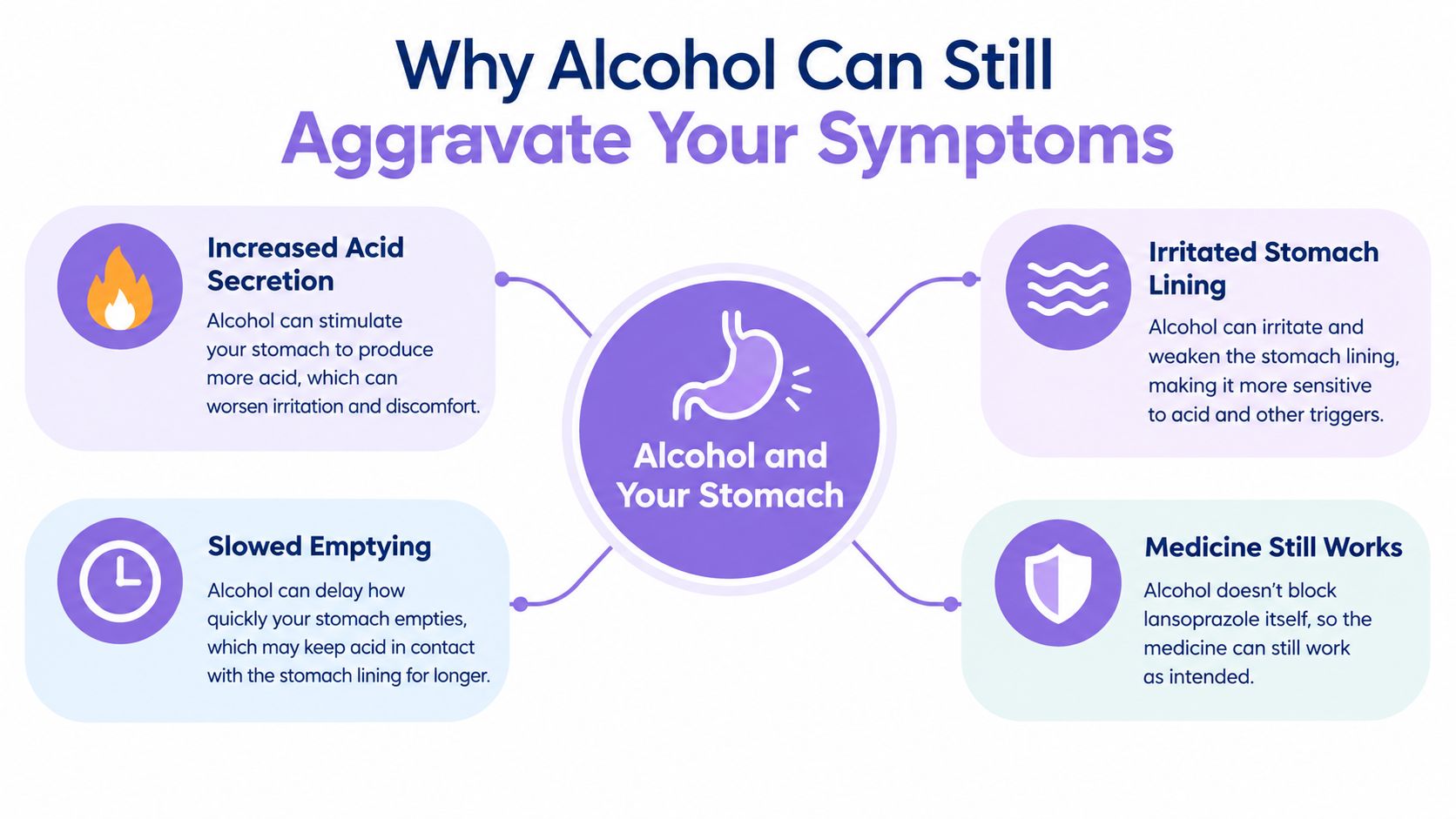
- Why Alcohol Can Still Aggravate Your Symptoms
- Everyday Drinking Scenarios and What to Consider
- Dizziness, Magnesium and Other Risks People Often Miss
- Why You Should Not Self-Adjust Your Lansoprazole Dose
- When to Seek Clinician Advice or Stop Drinking
- Key Takeaways for Safer Use
What UK Adults Should Know About Lansoprazole and Alcohol
A glass of wine with dinner doesn't usually create a toxic reaction with lansoprazole. NHS guidance states that alcohol can be consumed while taking lansoprazole, and the medicine isn't expected to have a direct alcohol interaction that changes its pharmacokinetics or causes a disulfiram-like reaction. In plain English, alcohol doesn't switch lansoprazole into a poisonous form or automatically cancel its effects. NHS guidance on alcohol and lansoprazole
That answer can feel incomplete because someone may still develop heartburn, a sour taste, upper-abdominal discomfort or reflux after drinking. The explanation is usually pharmacodynamic rather than chemical. Alcohol can affect the stomach and food pipe in ways that make the original condition more troublesome, even while lansoprazole continues reducing acid production.
The practical distinction: alcohol may be compatible with the medicine, but it may not be compatible with your symptoms.
The question that matters day to day
If your symptoms are settled, you might tolerate an occasional drink. If alcohol repeatedly brings symptoms back, that pattern matters more than the absence of a formal interaction warning. Reducing or avoiding alcohol during a flare can be a sensible way to give irritated tissues time to settle.
This is similar to questions people ask about other medicines and alcohol, including guidance on Mounjaro and alcohol. The answer depends not only on whether the medicine and alcohol react directly, but also on how alcohol affects the condition being treated.
The rest of this article focuses on that second layer. It also covers taking lansoprazole at the right time, recognising medicine-related dizziness, understanding long-term magnesium concerns and knowing when persistent symptoms need a clinician rather than more self-treatment.
How Lansoprazole Works in the Stomach
Lansoprazole is a proton pump inhibitor, often shortened to PPI. It reduces the amount of acid made by specialised cells in the stomach lining. Rather than neutralising acid that is already present, it acts on the acid-producing pumps that release acid into the stomach.
A simple analogy is a tap and a mop. An antacid is more like a mop, dealing with acid that has already collected. Lansoprazole turns down the tap, so less acid is produced in the first place. That's why it's used for conditions involving acid-related symptoms, including reflux and dyspepsia.
Why timing affects the result
Lansoprazole is generally taken about 30 minutes before food to optimise acid-pump inhibition. Food activates acid-producing pumps, so taking the medicine before eating helps it act when those pumps are becoming active.
The timing doesn't make alcohol safe or unsafe by itself. It just helps the prescribed treatment work as intended. Follow the directions on your prescription or from your clinician rather than moving the dose around to accommodate a planned drink.
Lansoprazole is a prescription-only treatment in the UK when supplied under a prescription. A clinical assessment should establish whether it's suitable, what problem is being treated and how long treatment should continue. A regulated online pharmacy can support this process, but an online consultation isn't a substitute for assessment when symptoms are unusual, severe or persistent.
A pharmacist can also help you think through practical factors around meals and triggers. For general nutrition ideas, some people may find resources such as vegan chocolate energy bites useful, although any food can still be a personal reflux trigger and shouldn't be treated as a medical remedy.
The aim is straightforward: take prescribed lansoprazole consistently, approximately 30 minutes before food unless your clinician has told you otherwise, and judge alcohol by its effect on your symptoms rather than assuming that no direct interaction means no possible discomfort.
Why Alcohol Can Still Aggravate Your Symptoms
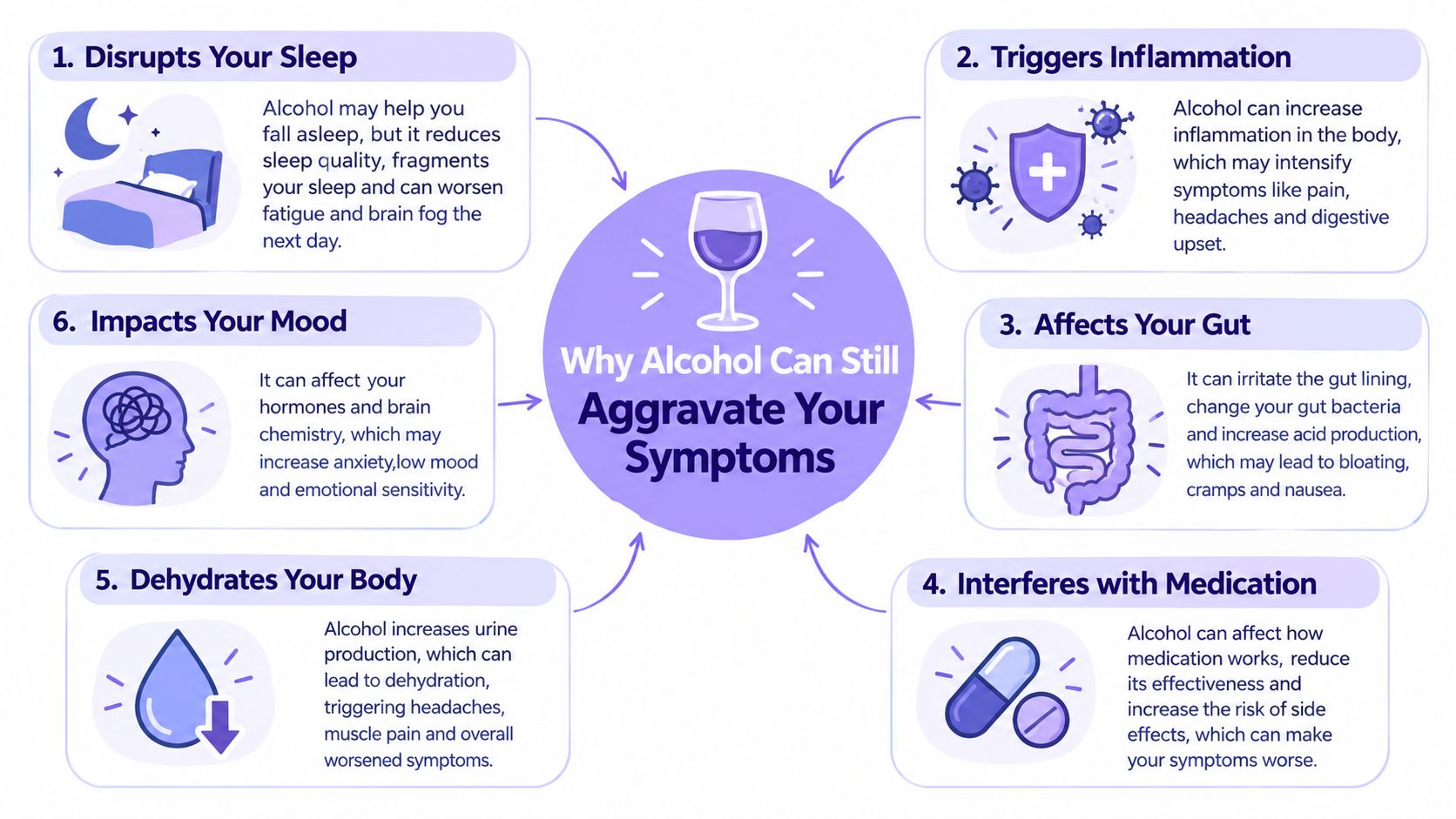
A glass of wine with dinner may seem harmless, yet heartburn can appear later that night, particularly if you lie down soon afterwards. You may notice a sour taste, burning behind the breastbone or disturbed sleep. Lansoprazole may still be helping, but the drink can coincide with a flare of the condition being treated.
Different drinks can produce different patterns:
- Wine: Night-time heartburn or a sour taste, especially after an evening meal.
- Beer: Bloating, burping and reflux as the stomach feels fuller.
- Vodka on an empty stomach: Burning or upper-abdominal pain soon after drinking.
- Several drinks: Indigestion, nausea or a return of symptoms that had been settling.
These are practical patterns, not a way to diagnose the cause. Food, portion size, timing and your underlying condition can also influence what happens. A symptom diary may help you compare the drink, amount, meal, timing and symptoms without assuming that every episode is caused by lansoprazole.
Alcohol can also make dizziness more noticeable. That matters if you already feel unwell, have eaten little or are taking another medicine that causes drowsiness. Low magnesium is a separate concern associated with prolonged acid-suppressing treatment, so ongoing symptoms should not automatically be blamed on alcohol.
If drinking repeatedly brings back burning, pain or reflux, reducing or avoiding it while the problem is assessed is a sensible trial. Keep taking lansoprazole as prescribed rather than adding doses after a flare. Persistent symptoms, worsening pain or suspected ulcer symptoms need advice from a pharmacist, GP or other clinician.
Everyday Drinking Scenarios and What to Consider
Consider an adult whose reflux is controlled and who is planning one glass of wine with an evening meal. There isn't a routine NHS ban on alcohol with lansoprazole. The sensible approach is to take the prescribed medicine at its usual time, eat normally and pay attention to whether symptoms develop.
A different situation is a wedding or social event involving several drinks. The concern remains symptom aggravation rather than an automatic toxic interaction, but alcohol exposure is more likely to coincide with late meals, rich food, lying down soon after eating and poorer sleep. If those factors have triggered reflux before, the event may be a predictable flare rather than a mystery medicine reaction.
Use your own symptom pattern
Weekend drinking can also reveal a pattern. If heartburn appears repeatedly after alcohol, it's reasonable to reduce or avoid alcohol while symptoms are being assessed. You don't need to prove that alcohol is the only cause before taking a practical step that makes symptoms less likely.
Early treatment deserves particular care. If lansoprazole has only recently been prescribed and symptoms haven't settled, adding alcohol can make it harder to tell whether the medicine is helping, whether the original problem needs different treatment or whether another trigger is involved.

If symptoms flare after drinking:
- Return to the prescribed routine: Don't take extra lansoprazole just because a drink was followed by heartburn.
- Reduce the trigger: Avoid further alcohol during the symptomatic period and choose meals that you already know you tolerate.
- Stay upright after eating: Reflux can feel worse when you lie down soon after a meal.
- Keep a short record: Note the drink, food, timing and symptoms so you can describe the pattern accurately to a pharmacist or GP.
Hydration may help if alcohol has left you feeling unwell, but it doesn't reverse irritation or replace assessment. Seek advice if symptoms are persistent, escalating or accompanied by warning signs.
Dizziness, Magnesium and Other Risks People Often Miss
A drink followed by dizziness can feel like a medication interaction, but the more useful question is what may be causing the symptom. Lansoprazole can sometimes cause dizziness or tiredness, and alcohol may make these effects more noticeable. The immediate concern is impairment, particularly if you feel unsteady, unusually sleepy or unable to concentrate.
The NHS information on lansoprazole side effects states that using lansoprazole for more than three months can reduce magnesium levels. Possible signs include tiredness, confusion, dizziness, muscle twitching, shaking and an irregular heartbeat. It also advises that alcohol may worsen dizziness or tiredness when lansoprazole is causing these effects.
Dizziness after drinking has several possible explanations. Alcohol, dehydration, lansoprazole, low magnesium or a combination of these may be involved. Guessing the cause is less safe when the symptom is new, severe or recurring.
Do not drive, cycle in traffic or operate machinery while dizzy or impaired. Alcohol can affect judgement and balance, adding accident risk to an existing medicine-related symptom.
Safety rule: If you feel dizzy after drinking while taking lansoprazole, treat the impairment as real, whatever the cause.
Seek urgent clinical advice for palpitations, marked confusion, fainting or severe weakness. Avoid changing or stopping prescribed treatment without guidance. If you're researching magnesium products, information on magnesium malate in the UK may be of interest, though it shouldn't replace clinical assessment of possible low magnesium or an irregular heartbeat.
A clinician may review your medicines, treatment duration and symptoms, then decide whether testing or a treatment change is appropriate.
Why You Should Not Self-Adjust Your Lansoprazole Dose
A bad episode after drinking can prompt a tempting thought: “Should I take another capsule?” That isn't a safe way to manage recurring symptoms. A higher dose may be appropriate in selected circumstances, but it should follow a prescriber's assessment rather than an individual decision after alcohol has aggravated reflux.
UK NICE dosage guidance lists 30 mg once daily as the standard dose for gastro-oesophageal reflux disease and dyspepsia. It lists 15 mg once daily as a low or on-demand dose, while 30 mg twice daily is a high or double dose described as off-label for gastro-oesophageal reflux disease. NICE dosage information for proton pump inhibitors
How the categories guide decisions
| Dose | Category | Self-adjustment implication |
|---|---|---|
| 15 mg once daily | Low or on-demand dose | Don't increase it without advice |
| 30 mg once daily | Standard dose for reflux and dyspepsia | Continue as prescribed |
| 30 mg twice daily | High or double dose, off-label for reflux | Requires prescriber oversight |
These categories don't tell you which dose is personally suitable. They show why the response to alcohol-related symptoms needs a proper review of the underlying condition, treatment response and safety.
Instead, continue the prescribed regimen and reduce or avoid the trigger while symptoms are active. Tell a GP, prescriber or pharmacist if drinking repeatedly brings symptoms back, because the pattern may need investigation rather than stronger self-treatment.
A UK online pharmacy service should operate within a prescriber-led and GPhC-regulated model. Prescription-only treatment requires appropriate clinical checks, whether the consultation happens in person or online.
When to Seek Clinician Advice or Stop Drinking
Stop treating the situation as an ordinary alcohol-related flare if symptoms persist despite taking lansoprazole as prescribed. Ongoing symptoms can indicate that the original diagnosis needs review, that treatment isn't suitable or that another condition is present.
Seek clinical assessment for:
- Gastrointestinal bleeding: This needs prompt medical attention rather than self-treatment.
- Recurrent vomiting: Repeated vomiting can cause dehydration and may signal a more significant problem.
- Unexplained weight loss: Weight loss without a clear explanation should be assessed.
- Difficulty swallowing: Trouble swallowing warrants clinical review.
- Persistent symptoms: Ongoing reflux, dyspepsia or upper-abdominal symptoms despite treatment shouldn't be managed by repeatedly increasing the dose.
These warning signs don't mean that lansoprazole and alcohol have caused a dangerous interaction. They mean the symptoms need a qualified professional to establish what's happening. Avoiding alcohol while waiting for advice is sensible if it consistently worsens discomfort or dizziness.
Support should match the problem
A UK-registered pharmacy may be able to assess whether a prescription-only treatment is suitable, explain how to use it and direct you to a GP or urgent service when the presentation falls outside pharmacy care. An online consultation is appropriate only when the service can identify exclusions and provide a clear route to further assessment.
If alcohol use itself is difficult to change, general guidance such as safe detox advice from Addiction Resource Center may help explain why stopping suddenly can require support for some people. Anyone who drinks heavily or experiences withdrawal symptoms should seek professional medical advice rather than attempting an unsupported detox.
Responsible treatment means checking rather than guessing. Don't use a prescription-only medicine to mask warning signs or continue drinking through symptoms that are becoming more severe.
Key Takeaways for Safer Use
The central answer is reassuring but not dismissive. Alcohol isn't directly incompatible with lansoprazole, and NHS guidance doesn't impose a routine ban. The practical issue is that alcohol can increase gastric-acid production and irritate the stomach lining, so it may worsen reflux, dyspepsia, gastritis or ulcer-related symptoms even while lansoprazole continues to reduce acid production.
Keep the following points in mind:
- Take the medicine correctly: Use lansoprazole as prescribed, approximately 30 minutes before food to optimise acid-pump inhibition.
- Judge alcohol by symptoms: Reduce or avoid it during a flare, especially if you've noticed a repeatable pattern.
- Don't chase symptoms with extra tablets: Dose changes require prescriber oversight, particularly when considering high or off-label dosing.
- Take dizziness seriously: Alcohol can worsen medicine-related dizziness or tiredness, increasing impairment and accident risk.
- Remember longer-term monitoring: Use beyond three months can lower magnesium and may be associated with dizziness, confusion, muscle symptoms or an irregular heartbeat.
- Escalate warning signs: Persistent symptoms, gastrointestinal bleeding, recurrent vomiting, unexplained weight loss and difficulty swallowing need clinical assessment.
Lansoprazole is a prescription-only treatment, so safe use includes appropriate eligibility checks, clear dosing instructions and access to a qualified clinician when symptoms don't follow the expected pattern. This content is for informational purposes only and does not constitute medical advice. Always consult a qualified healthcare professional before starting or changing any treatment.
XO Medical provides clinician-led consultations through a UK-registered pharmacy, with treatment suitability assessed before prescribed medication is supplied. Visit XO to learn about regulated online healthcare support and how to seek advice when reflux symptoms or medicine questions persist.


0 comments