


Combining Mounjaro with alcohol is not strictly prohibited, but it is a decision that requires careful consideration and caution. For individuals prescribed this medication, understanding how alcohol can interact with Mounjaro is critical for patient safety. This is not merely about preventing discomfort; it involves managing significant health risks.
This guide provides a factual overview of the key interactions and safety considerations.
Understanding the Risks of Combining Mounjaro and Alcohol
Mounjaro (tirzepatide) is an MHRA-approved, prescription-only medication used for the management of type 2 diabetes and for weight management in the UK. One of its primary mechanisms of action is delaying gastric emptying. This process slows the rate at which food and drink leave the stomach, which contributes to feeling fuller for longer.
While beneficial for managing appetite and blood glucose levels, this physiological change alters how the body processes alcohol. As alcohol remains in the stomach for a longer duration, its effects can become unpredictable. The onset of intoxication may be faster than usual, or it could be unexpectedly delayed.
Furthermore, both Mounjaro and alcohol can cause gastrointestinal side effects independently. When taken together, there is a potential for these side effects to be amplified.
Key Considerations for Patient Safety
If you are considering consuming alcohol while using Mounjaro, it is essential to be aware of the primary risks. This information is intended to support informed decision-making under the supervision of a qualified healthcare professional.
The main areas of concern include:
- Increased Risk of Hypoglycaemia: This is a significant concern. Both Mounjaro and alcohol can lower blood glucose levels. Combining them substantially increases the risk of hypoglycaemia (abnormally low blood sugar), which can cause symptoms such as dizziness, shakiness, and confusion. Severe hypoglycaemia can be a medical emergency.
- Amplified Gastrointestinal Side Effects: Alcohol is a known irritant to the gastric mucosa (stomach lining). Given that nausea, vomiting, and indigestion are common side effects of Mounjaro, consuming alcohol can exacerbate these symptoms.
- Dehydration Concerns: Alcohol is a diuretic, increasing fluid loss through urination. If you are also experiencing side effects such as vomiting or diarrhoea from Mounjaro, the risk of dehydration becomes more pronounced.
- Impact on Weight Management: Alcohol contains a significant number of calories with little nutritional value (often called 'empty calories') and can stimulate appetite. This can counteract the weight management objectives of your treatment plan.
In the UK, the Chief Medical Officers' guidelines recommend consuming no more than 14 units of alcohol per week, spread over several days. For any patient using Mounjaro, adhering to or staying well below this guidance is advisable. Clinical evidence indicates that alcohol can worsen common Mounjaro side effects, such as the nausea experienced by 20-30% of users, largely due to the delayed gastric emptying.
To better understand these risks, the following summary provides an overview.
Mounjaro and Alcohol At-a-Glance Risk Summary
This table outlines the main safety concerns when consuming alcohol while using Mounjaro. It is designed as a clear, quick reference to aid in safer decision-making.
| Risk Area | Potential Impact on Mounjaro Users | UK Safety Recommendation |
|---|---|---|
| Hypoglycaemia | Combination may cause a significant drop in blood glucose, leading to dizziness, confusion, and potential loss of consciousness. | Always consume alcohol with food. Monitor blood glucose levels, especially if you have type 2 diabetes. |
| Gastrointestinal Issues | May amplify common side effects like nausea, vomiting, indigestion, and diarrhoea. | Start with a very small amount of alcohol to assess your body's reaction. Avoid alcohol if you are already experiencing side effects. |
| Dehydration | The diuretic effect of alcohol combined with potential side effects (vomiting/diarrhoea) increases the risk of dehydration. | Drink plenty of water before, during, and after consuming alcohol. Avoid binge drinking. |
| Impaired Judgement | Delayed and unpredictable intoxication can affect the ability to recognise and manage hypoglycaemia or other side effects. | Drink slowly and be aware that your usual tolerance may be significantly different. Never drink and drive. |
This information is for guidance only. Each individual's response to this combination can vary.
The most critical step is to have a transparent discussion with the clinician who prescribed your medication. They have access to your full medical history and can provide personalised advice. For more information on accessing treatment safely, you can refer to our guide on using a UK online pharmacy.
This content is for informational purposes only and does not constitute medical advice. Always consult a qualified healthcare professional before starting or changing any treatment.
How Mounjaro Works Within the Body
To understand the interaction between Mounjaro and alcohol, it is helpful to first understand the medication's mechanism of action. Mounjaro is not just another weight management treatment; its design is distinct from many others available.
Mounjaro, the brand name for tirzepatide, is the first approved treatment that functions as a dual GIP and GLP-1 receptor agonist. In simple terms, it mimics two key incretin hormones that the gut naturally releases after a meal: Glucose-dependent Insulinotropic Polypeptide (GIP) and Glucagon-Like Peptide-1 (GLP-1). These hormones are integral to the body's management of blood glucose and appetite.
By activating the receptors for these hormones, Mounjaro helps the body release insulin more efficiently in response to high blood sugar levels and signals the liver to reduce its own glucose production. This has a significant therapeutic effect for individuals with type 2 diabetes and also has a powerful impact on weight.
The Impact on the Digestive System
One of the most notable effects of Mounjaro is the slowing of gastric emptying. The contents of the stomach, including food and drink, remain there for longer before passing into the small intestine.
This delay is a primary reason why Mounjaro is effective for weight management, as it promotes a feeling of fullness (satiety) for a longer period, which can naturally reduce overall calorie intake. However, this same mechanism makes the consumption of alcohol with Mounjaro complex.
Because Mounjaro delays the stomach from emptying, any alcohol consumed remains in the stomach for an extended period. This can lead to its effects feeling stronger and far more unpredictable. This is a core reason why many individuals report a different response to alcohol when using this treatment.
This interaction is the source of many of the increased health risks, as this overview illustrates.
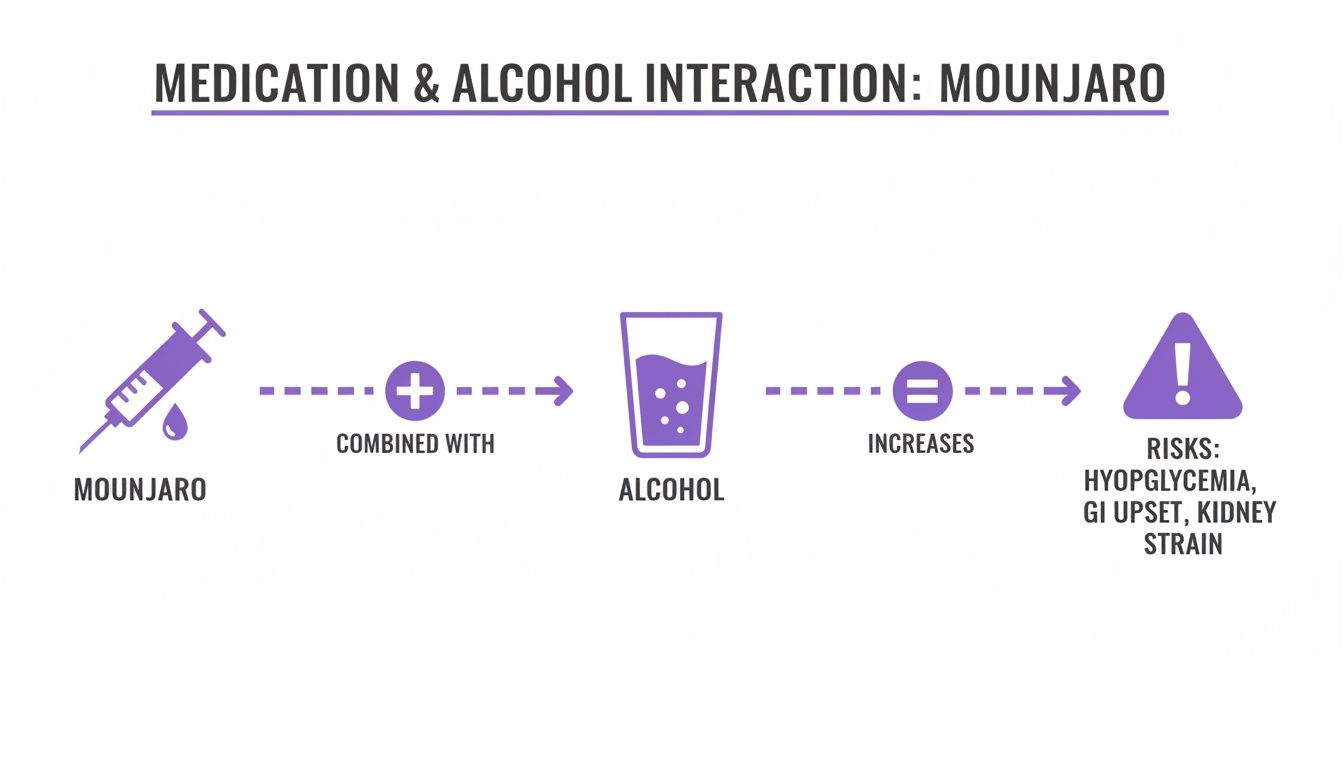
As shown, the combination is not straightforward and increases the likelihood of adverse effects.
Dual-Action Explained
Understanding the distinct roles of the two hormones helps to clarify Mounjaro's efficacy.
- GLP-1 (Glucagon-Like Peptide-1): This hormone is a common target in weight management treatments. It enhances insulin secretion when blood glucose is high, slows digestion, and communicates satiety signals to the brain.
- GIP (Glucose-dependent Insulinotropic Polypeptide): This hormone also aids in insulin release, but evidence suggests it may also play a role in how the body processes lipids (fats) and stores energy.
By targeting both of these pathways simultaneously, Mounjaro provides a more comprehensive approach to metabolic regulation. This unique dual-agonist action is what differentiates tirzepatide from other treatments. To learn how it compares with single-agonist medications, you can explore the key differences between Ozempic vs Mounjaro in our detailed guide.
Understanding this science is the first step toward making safe choices. The delayed digestive process is directly linked to many of the risks of drinking on Mounjaro, from nausea to unpredictable levels of intoxication. This is why proper clinical oversight from a UK-registered pharmacy, regulated by the GPhC, is essential. Always be transparent with your prescribing clinician about your lifestyle, including your alcohol consumption.
The Primary Health Risks of Mixing Mounjaro and Alcohol
The decision to consume alcohol while taking a potent medication like Mounjaro should not be taken lightly. It extends beyond the potential for transient discomfort and introduces real health risks that require awareness. While there is no direct chemical contraindication, the overlapping physiological effects of both substances can lead to complications.
The primary issues arise because both tirzepatide and alcohol significantly impact the metabolic and digestive systems. When their effects are combined, the situation can become medically complex. The following are the four main health risks to consider.
Increased Risk of Hypoglycaemia
One of the most immediate dangers is hypoglycaemia, the medical term for abnormally low blood sugar. Mounjaro is designed to help control glucose levels, which often involves lowering them. Alcohol, independently, has the same effect by inhibiting the liver's ability to produce and release glucose.
The liver functions as the body's glucose reserve. When alcohol is consumed, the liver prioritises its metabolisation, treating it as a toxin that requires immediate removal. This diverts it from its normal role of maintaining stable blood glucose levels. The result is a dual effect: Mounjaro is actively lowering glucose, while alcohol is preventing the liver from providing a corrective release of stored glucose.
This combined action can cause blood sugar levels to fall to an unsafe point. Symptoms may include dizziness, confusion, or shakiness. In severe instances, this can lead to loss of consciousness. The risk is particularly elevated if alcohol is consumed on an empty stomach.
Amplified Gastrointestinal Side Effects
Patients using Mounjaro may be familiar with the potential for side effects such as nausea, vomiting, or indigestion, particularly during the initial phase of treatment. These occur because the medication slows gastric emptying. Alcohol is a known irritant to the stomach lining.
When alcohol is consumed, it is held in the stomach for a longer period than usual due to Mounjaro's effect. This extended contact can intensify gastrointestinal irritation, potentially turning mild nausea into severe vomiting or causing significant indigestion.
This is not only a matter of comfort. Persistent vomiting and diarrhoea can lead to more serious problems, such as dehydration.
The Danger of Dehydration
Dehydration is a serious concern when mixing Mounjaro and alcohol, as both can deplete the body's fluids.
- Alcohol's Diuretic Effect: Alcohol is a diuretic, which means it increases urine production. This process flushes fluids and essential electrolytes from the body.
- Mounjaro's Side Effects: If you are already experiencing nausea due to Mounjaro, and alcohol worsens it, any resultant vomiting or diarrhoea will accelerate fluid loss.
Severe dehydration can place a strain on the kidneys, cause severe headaches, and lead to profound fatigue. It can also worsen nausea, creating a difficult cycle to manage. If you choose to consume an alcoholic drink, it is crucial to drink water alongside it.
To help you make more informed choices, the following is a guide to the units and calories in common drinks.
Alcohol Unit and Calorie Guide for Mounjaro Users
| Drink Type (UK Measure) | Approximate Alcohol Units | Estimated Calories |
|---|---|---|
| Pint of lower-strength lager (3.6% ABV) | 2 units | 180 kcal |
| Pint of higher-strength lager (5.2% ABV) | 3 units | 250 kcal |
| Bottle of lager (330ml, 5% ABV) | 1.7 units | 140 kcal |
| Can of cider (440ml, 5.5% ABV) | 2.4 units | 200 kcal |
| Small glass of wine (125ml, 12% ABV) | 1.5 units | 95 kcal |
| Standard glass of wine (175ml, 12% ABV) | 2.1 units | 135 kcal |
| Large glass of wine (250ml, 12% ABV) | 3 units | 190 kcal |
| Single spirit (25ml, 40% ABV) with mixer | 1 unit | 100 kcal |
Note: These are estimates. Values can vary by brand and mixer. Always check the label where possible.
Altered Alcohol Tolerance and Impaired Judgement
The delayed gastric emptying caused by Mounjaro fundamentally changes how the body processes alcohol. As it remains in the stomach for longer, its absorption into the bloodstream can be delayed and unpredictable. Consequently, many people find their alcohol tolerance is significantly altered.
You might consume a drink and initially feel no effect, which could lead to consuming more. However, the alcohol could then be absorbed suddenly, resulting in a much stronger and more surprising level of intoxication than you are accustomed to. UK clinical observations have noted that alcohol tolerance can decrease significantly while taking Mounjaro. For instance, dehydration affects 50% of combined users, a sharp rise from the 25% who experience it on the drug alone. This makes adhering to sensible limits more important than ever. You can find more practical advice from a UK clinical standpoint in Chemist Click's 2025 guide.
This unpredictability is the primary danger. It can impair your judgement at the very moment it is most needed—to recognise the warning signs of hypoglycaemia or other severe side effects. The symptoms of intoxication can be easily confused with those of hypoglycaemia, which could prevent you from seeking necessary medical attention.
Navigating these risks requires being well-informed and maintaining an open dialogue with your clinician from a UK-registered pharmacy. When taking any prescribed medication, patient safety must always be the priority.
How Alcohol Can Impede Weight Loss on Mounjaro
Beyond the immediate health risks, consuming alcohol can also undermine the progress made during your weight management journey with Mounjaro. While this MHRA-approved, prescription-only treatment is a powerful tool, alcohol can create significant obstacles.
To achieve the best possible outcomes, it is vital to understand this dynamic. The issue primarily relates to two factors: the hidden calories in alcoholic beverages and the unhelpful behavioural changes that often accompany alcohol consumption.
The Problem of "Empty Calories"
Alcohol is often described as a source of "empty calories." This is because it provides a high amount of energy—at 7 calories per gram, it is nearly as calorie-dense as fat—but offers minimal nutritional value. These calories accumulate quickly and can work directly against the calorie deficit required for weight loss.
Consider the calorie content of some popular UK drinks:
- A standard pint of lager (5% ABV) can contain around 250 calories, similar to a slice of pizza.
- A large glass of wine (175ml, 12% ABV) typically contains about 135 calories.
- A single gin and tonic can easily exceed 100 calories, depending on the mixer used.
It is easy to see how this can become problematic. A few drinks several times a week can introduce hundreds, or even thousands, of additional calories into your diet. This can be enough to slow, or even halt, the progress you are making with Mounjaro.
How Alcohol Affects Appetite and Food Choices
Alcohol's impact is not limited to the calories it contains; it also influences how you think and feel about food. One of the primary ways Mounjaro aids weight management is by promoting satiety and reducing appetite. Unfortunately, alcohol can disrupt this process.
Alcohol can lower inhibitions while stimulating the parts of the brain associated with hunger. This is why it often leads to cravings for high-fat, salty, or sugary foods that you might otherwise avoid. This effect can persist long after the initial feeling of intoxication has passed.
When alcohol is consumed, the body prioritises its metabolism. Other metabolic processes, such as fat burning, are put on hold. This can significantly complicate weight loss efforts.
This is a classic reason why many individuals experience a weight loss plateau when they consume alcohol regularly. The combination of extra liquid calories and a tendency to eat more can easily counteract the efforts of both you and your medication. Understanding what to eat while taking Mounjaro is key to making supportive choices. You can explore our guide on building a supportive diet plan for more practical advice.
Metabolism, Liver Function, and Long-Term Impact
The liver is primarily responsible for processing alcohol. It identifies alcohol as a toxin and dedicates its resources to its elimination, pausing other vital tasks like metabolising fat for energy. This metabolic disruption directly interferes with the body's ability to manage weight effectively.
Furthermore, consistent and heavy drinking places the liver under significant strain, which can lead to inflammation or damage over time. A healthy liver is essential for overall metabolic health—the foundation of sustainable weight management. Maintaining good liver health is non-negotiable when undergoing any long-term treatment plan.
Data from UK health sources is clear. With over 500,000 Mounjaro pens dispensed quarterly, its effectiveness is widely recognised. However, individuals who drink regularly can easily consume up to 1,000 extra calories per week from alcohol alone, directly counteracting the 15-20% body weight reduction observed in UK clinical trials. Furthermore, research suggests that 45% of moderate UK drinkers on GLP-1 agonists report stalled progress over a three-month period, as alcohol undermines the medication's appetite-suppressing effects.
For anyone committed to their health journey with this prescribed medication, understanding alcohol's true impact is empowering. By being aware of its effects on calories, cravings, and metabolism, you can make informed choices that protect your progress. Always have a transparent discussion about your alcohol consumption with your clinician at a UK-registered pharmacy to ensure your treatment plan remains both safe and effective.
Safe Drinking Guidelines for Mounjaro Users
For individuals taking Mounjaro who choose to consume alcohol, adopting a safety-first approach is essential. While abstaining from alcohol is often the most prudent advice, if you and your clinician have determined that light, occasional drinking is acceptable for you, certain guidelines can help manage the risks. The first and most important step is always to have a transparent discussion with the healthcare professional managing your treatment.
This guidance is intended to support, not replace, that professional medical advice. It underscores the importance of clinical oversight from a UK-registered pharmacy when using a prescription-only treatment like Mounjaro.
Moderation and Timing are Crucial
Moderation is the cornerstone of safety. The UK Chief Medical Officers' guidelines recommend no more than 14 units of alcohol per week, spread over at least three days. For anyone using Mounjaro, it is wise to remain well below this limit. A single, small drink should be considered a sensible maximum on any occasion.
The timing of alcohol consumption is also important. Side effects of Mounjaro, such as nausea, often peak in the 24 to 48 hours following the weekly injection. It is advisable to avoid alcohol completely during this period, as your digestive system is already under additional stress.
Practical Steps for Safer Drinking
If you do choose to drink, adopting these habits can significantly reduce the likelihood of adverse effects. These are not guarantees but practical measures to protect your health.
- Never Drink on an Empty Stomach: Consuming a meal before drinking is critical. Food slows alcohol absorption and provides a steady source of glucose, which helps to prevent hypoglycaemia.
- Stay Hydrated: Alcohol causes fluid loss, and some of Mounjaro's side effects can have the same effect. For every alcoholic drink consumed, follow it with a glass of water. This helps to prevent dehydration and also encourages slower consumption of alcohol.
- Choose Drinks Carefully: Opt for drinks that are lower in alcohol and calories. A single clear spirit with a sugar-free mixer or a small glass of dry wine is a more suitable option than high-calorie choices like beer, cider, or sugary cocktails.
Be aware that your body's response to alcohol while taking Mounjaro may be very different from what you are used to. Your tolerance could be lower, and the effects may feel stronger or have an unpredictable onset.
Monitor Your Body's Response
Listening to your body is more important than ever. The first time you drink after starting this prescribed medication, consume a very small amount in a safe, familiar environment to see how you react.
Be vigilant for any signs of low blood sugar, such as feeling dizzy, shaky, or confused. Be equally alert for any worsening of gastrointestinal symptoms, such as nausea or stomach pain. If you notice any concerning side effects, stop drinking immediately and contact your clinician for advice.
Ultimately, your journey with this MHRA-approved treatment is a partnership between you and your healthcare team. Maintaining an open and honest dialogue with the clinicians at your GPhC-regulated provider is the best way to ensure your treatment is both safe and successful. They can offer advice tailored to your individual circumstances and help you manage social situations without compromising your health goals.
When Alcohol Must Be Avoided on Mounjaro
While some individuals may be able to consume alcohol cautiously after consulting with their clinician, there are specific circumstances where alcohol must be avoided completely. For some patients, the risks of combining Mounjaro and alcohol are too high.
This is where a full and accurate medical history is vital. Being completely transparent with the clinician at your UK-registered pharmacy is non-negotiable. They require all relevant information to ensure your safety. Prioritising your health is fundamental to achieving the best outcomes from your treatment.
Medical Conditions Requiring Alcohol Abstinence
Certain health conditions are incompatible with alcohol consumption, particularly when taking Mounjaro. If you have a history of any of the following, you must avoid alcohol completely.
-
History of Pancreatitis: Mounjaro carries a warning regarding the risk of pancreatitis (inflammation of the pancreas). As alcohol is a known trigger for this condition, combining the two significantly increases this risk.
-
Severe Gastrointestinal Disorders: If you live with a condition such as gastroparesis (a condition where the stomach empties extremely slowly) or inflammatory bowel disease (IBD), alcohol acts as a known irritant. Since Mounjaro already slows digestion, adding alcohol can cause severe pain, vomiting, and significant flare-ups.
-
Significant Liver or Kidney Disease: The liver and kidneys are responsible for processing both Mounjaro and alcohol. If these organs are already compromised by disease, consuming alcohol adds a significant burden. This can lead to further organ damage and worsen your condition.
When Your Body Provides a Warning Signal
It is not only about pre-existing conditions. Your body may also signal that it is not an appropriate time to consume alcohol.
If you are already experiencing persistent or severe side effects from Mounjaro—such as significant nausea, vomiting, or diarrhoea—you must not consume alcohol. It is almost certain to make these symptoms worse, leading to increased dehydration and distress.
Consider these symptoms a clear signal. Your body is working hard to adapt to the medication. The most sensible course of action is to allow it time to settle and avoid placing it under the additional stress of processing alcohol.
Your prescriber, particularly from a GPhC-regulated service, is your guide throughout this journey. Maintaining an open and honest conversation about how you are feeling, any side effects you are experiencing, and your lifestyle choices is the best way to ensure your prescribed medication plan is safe and effective for you.
Mounjaro & Alcohol: Frequently Asked Questions
When starting a new prescription medication like Mounjaro, it is normal to have questions about how it will fit into your daily life. Here are answers to some of the most common queries regarding Mounjaro and alcohol.
This information is intended as a helpful guide but should always be secondary to a direct consultation with your prescribing clinician.
Can I have a single drink on Mounjaro?
While one drink poses less risk than several, it is not entirely without potential issues. Mounjaro slows digestion, which can dramatically alter how your body processes alcohol. A single drink could have a much stronger or more unpredictable effect than you are used to.
If you and your clinician have agreed that an occasional, single drink is acceptable for you, extreme caution is advised. The best approach is to assess your response with a very small amount of alcohol in a safe environment, particularly when you first begin treatment. Always adhere to basic safety measures: eat a meal beforehand and ensure you are well-hydrated.
Will drinking make Mounjaro less effective?
From a pharmacological perspective, alcohol does not stop Mounjaro from working in the body. The medication will remain active.
However, from a practical standpoint, drinking can certainly impede your weight management efforts, making the treatment feel less effective. The primary issue is the high number of "empty calories" in alcoholic drinks, which can negate the calorie deficit you are trying to achieve. Alcohol can also lower inhibitions and increase appetite, often leading to food choices that are not aligned with your health goals. Therefore, while the drug continues to function, regular alcohol consumption can create significant obstacles that may stall or even reverse your progress.
What types of alcohol are better choices?
If you have consulted with your clinician and decide to have a drink, some options are more suitable than others in terms of calorie and sugar content. Choosing drinks that are lower in both can help to mitigate the impact on your weight loss journey.
In general, better choices include:
- Clear spirits: A single measure of gin, vodka, or white rum with a sugar-free mixer such as soda water or a diet tonic.
- Dry wines: A small glass (125ml) of a dry white or red wine typically contains less sugar than sweeter dessert wines.
It is advisable to avoid high-calorie, sugary drinks such as most beers, ciders, sweet wines, and cocktails made with fruit juices or sugary syrups.
However, the most important factor is always the quantity of alcohol you consume. This has a greater impact on your safety and results than the type of drink. Even with lower-calorie options, moderation is paramount.
When should I contact my clinician about alcohol use?
Maintaining open communication with your healthcare provider is fundamental to safe and effective treatment, especially regarding lifestyle choices like alcohol consumption. You should contact the clinician at your UK-registered pharmacy immediately if you notice any of the following:
- You experience any severe or concerning side effects after drinking, such as intense nausea, vomiting, dizziness, or signs of low blood sugar.
- You feel that your alcohol consumption is hindering your weight loss goals or making it difficult to adhere to your health plan.
- You have any questions or concerns about how Mounjaro and alcohol may be interacting for you personally.
Your clinical team is your partner in this process. Being proactive and seeking guidance ensures they can provide the best advice to keep you safe and help you achieve your health objectives.
At XO Medical, we provide comprehensive, clinician-led care to support you throughout your entire treatment journey. If you are considering weight management options and want the reassurance of ongoing support from a GPhC-regulated UK online pharmacy, you can start a consultation with us today. Learn more about our medically supervised programmes and how we can help.


0 comments