


Complete prevention of loose skin after significant weight loss isn't realistic, but you can reduce its severity by losing weight at roughly 1–2 lb (0.45–0.9 kg) per week, resistance training, and maintaining adequate nutrition and hydration from the start. Established skin folds won't be removed by exercise alone, and substantial excess skin may ultimately require surgery.
The popular promise that a cream, supplement, or workout can guarantee tight skin is misleading. Skin adapts at different rates, and its response depends on how long it has been stretched, age-related changes in collagen and elastin, smoking, hydration, and the amount of weight lost. A sensible UK approach is therefore damage limitation, not chasing a result no treatment can promise.
Loose skin can also be a functional problem. Folds may trap moisture, rub against clothing, cause rashes, and make hygiene or movement more difficult. This guide explains what you can influence during weight loss, what probably won't help, how prescribed treatment fits into the picture, and why NHS access to corrective surgery is restricted.
Table of Contents
- Understanding Why Excess Skin Forms After Weight Loss
- Evidence-Based Strategies to Reduce Skin Laxity
- Topical and Non-Surgical Skin Improvement Options
- Medical Weight-Loss Pathways and Skin Outcomes
- NHS Surgical Access and Eligibility Barriers
- Managing Loose Skin and When to Seek Professional Care
Understanding Why Excess Skin Forms After Weight Loss
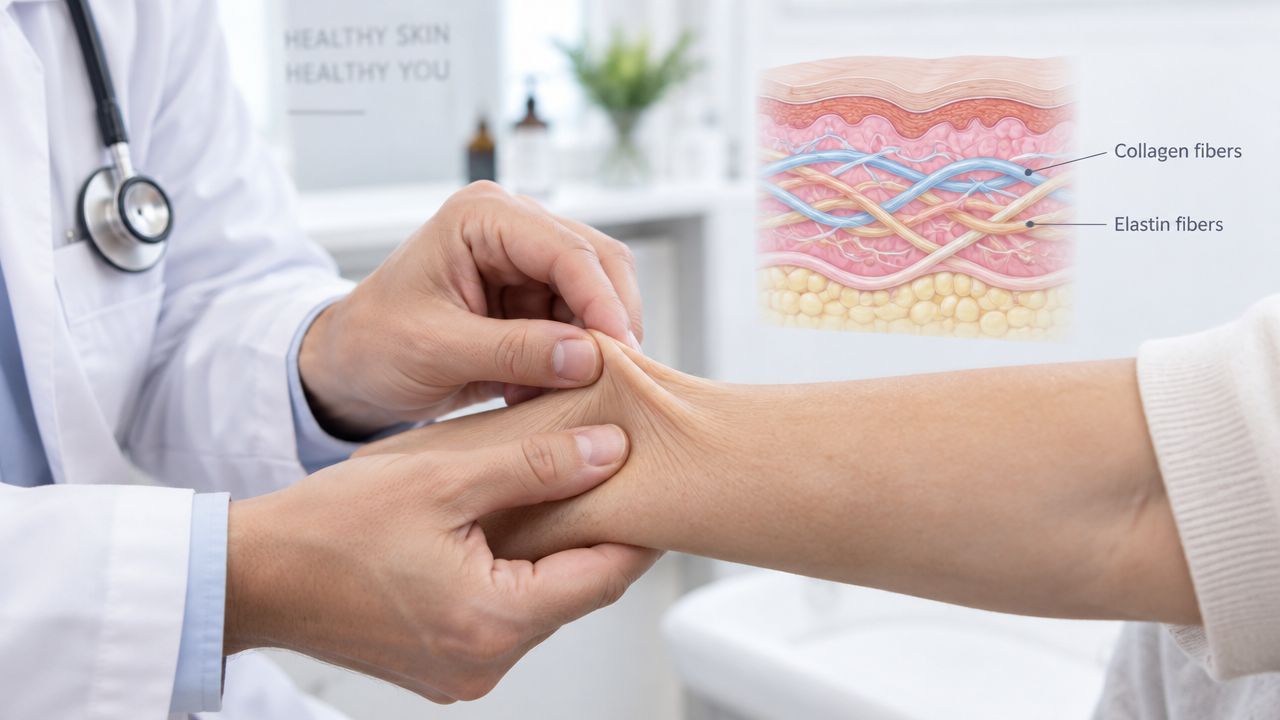
Loose skin isn't merely “fat that hasn't gone away”. When body volume increases, skin stretches to accommodate it. After substantial weight loss, the underlying volume reduces, but the skin may not contract fully because its supporting collagen and elastin have become less resilient. NHS guidance on weight loss, bariatric surgery and loose skin confirms that loose excess skin commonly follows significant weight loss, particularly after bariatric surgery.
Age matters because collagen and elastin reduce over time. The longer skin has remained stretched, the less predictable its recoil may be. Smoking and dehydration can further affect elasticity, so these are practical factors worth addressing even though they can't determine the final result on their own.
What you can influence
Your weight-loss pace, smoking status, hydration, nutrition, and muscle preservation are modifiable. They support healthier weight reduction and may improve the way your body contour looks, but they can't rewrite the structure of skin that has been stretched for years.
Clinical reality: Exercise can strengthen the tissue beneath loose skin, but it can't remove established folds.
Exercise does have an important role. Resistance training can preserve or build muscle underneath the skin, which may improve shape and firmness. NHS patient information is clear, however, that skin that cannot be removed through exercise may remain after substantial weight loss. When excess skin is significant, abdominoplasty or another body-contouring procedure is usually the only definitive way to remove it.
The question behind “losing weight excess skin how to avoid” therefore needs reframing. A slower, sustainable plan may reduce severity, but complete prevention is often impossible after a large loss. Avoiding rapid, unsupervised dieting is also important for maintaining nutrition and muscle, not just for appearance. Guidance on losing two stone in two months should be interpreted carefully, because a rapid target may not suit every patient or allow the skin and body composition to adapt gradually.
Evidence-Based Strategies to Reduce Skin Laxity
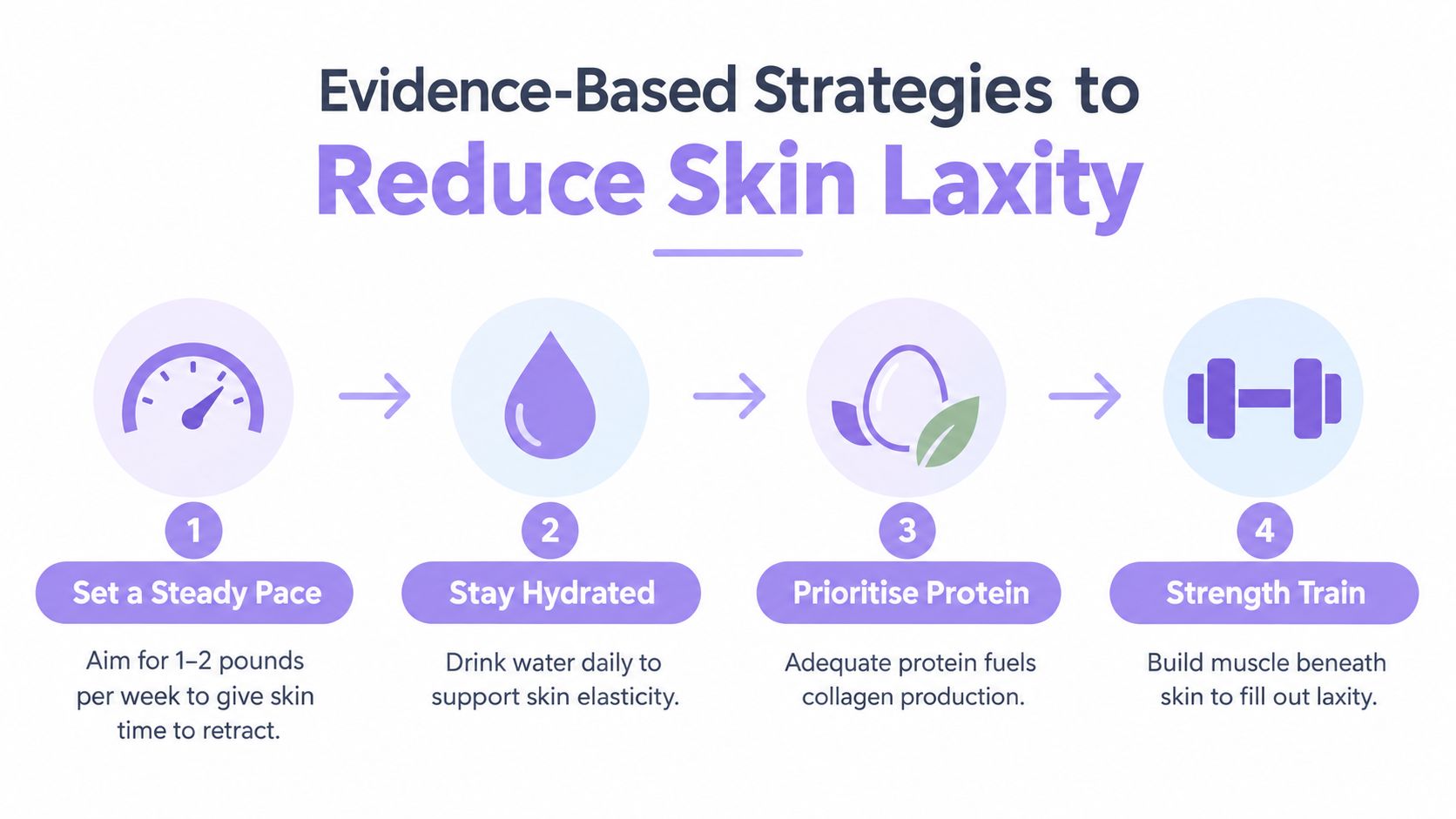
The most useful prevention framework begins on the first day of weight loss. UK clinical resources commonly cite a pace of roughly 1–2 lb (0.45–0.9 kg) per week, as explained by the British Dietetic Association's guidance on excess skin. This isn't a guarantee of tighter skin, but it avoids treating speed as the only measure of success.
A slower pace gives you more opportunity to maintain muscle, eat adequately, and establish habits you can continue. Faster loss may be medically appropriate in selected circumstances, particularly under clinical supervision, but self-directed crash dieting creates a greater risk of poor nutrition and visible changes in body volume before skin has adapted.
Build and protect the structure underneath
Resistance training is more valuable than endless cardio for body composition during weight loss. Squats, presses, rows, lunges, and other appropriately selected movements can help preserve or develop muscle, which may support a fuller contour beneath areas of laxity. Start at a level you can perform safely, and seek professional guidance if pain, long-term illness, or significant mobility limitations affect exercise.
Nutrition supports the same objective. Include a reliable protein source in meals, alongside vegetables, fruit, fibre, and sufficient overall energy for your clinical plan. Protein intake should be matched to your health, kidney function, age, activity, and whether you've had bariatric surgery. A dietitian can help prevent the common mistake of eating too little while taking a prescribed weight-loss treatment.
Support skin health without overselling it
Hydration supports normal skin function. Drink regularly according to thirst, activity, and medical advice, particularly if illness or medication affects fluid balance. Avoid smoking, because NHS-linked guidance on common conditions identifies smoking and related skin-fold problems as relevant to the practical management of excess skin.
These measures can reduce risk and improve comfort, but they won't make a large fold disappear. Treatments marketed as shortcuts should be judged against that limitation. If you're considering body-contouring options after your weight has stabilised, an independent overview of body contouring at 3D Aesthetics may help you understand the distinction between skin-quality treatments and surgery.
For exercise technique and general movement education, this video can provide useful background, but it shouldn't replace a personalised assessment:
Topical and Non-Surgical Skin Improvement Options
Topical products can improve how skin feels and looks at the surface, especially when dryness makes creping more noticeable. A moisturiser, such as a fragrance-free emollient, may reduce dryness and friction. It won't remove excess tissue or rebuild a stretched collagen and elastin framework.
That distinction matters because “firming” is often used as a marketing term rather than a clinical endpoint. Cocoa butter lotion may help moisturise, but readers should keep expectations realistic when reviewing cocoa butter and skin care. Sunscreen and gentle cleansing also support general skin health, although neither prevents substantial post-weight-loss folds.
Where non-surgical treatment may fit
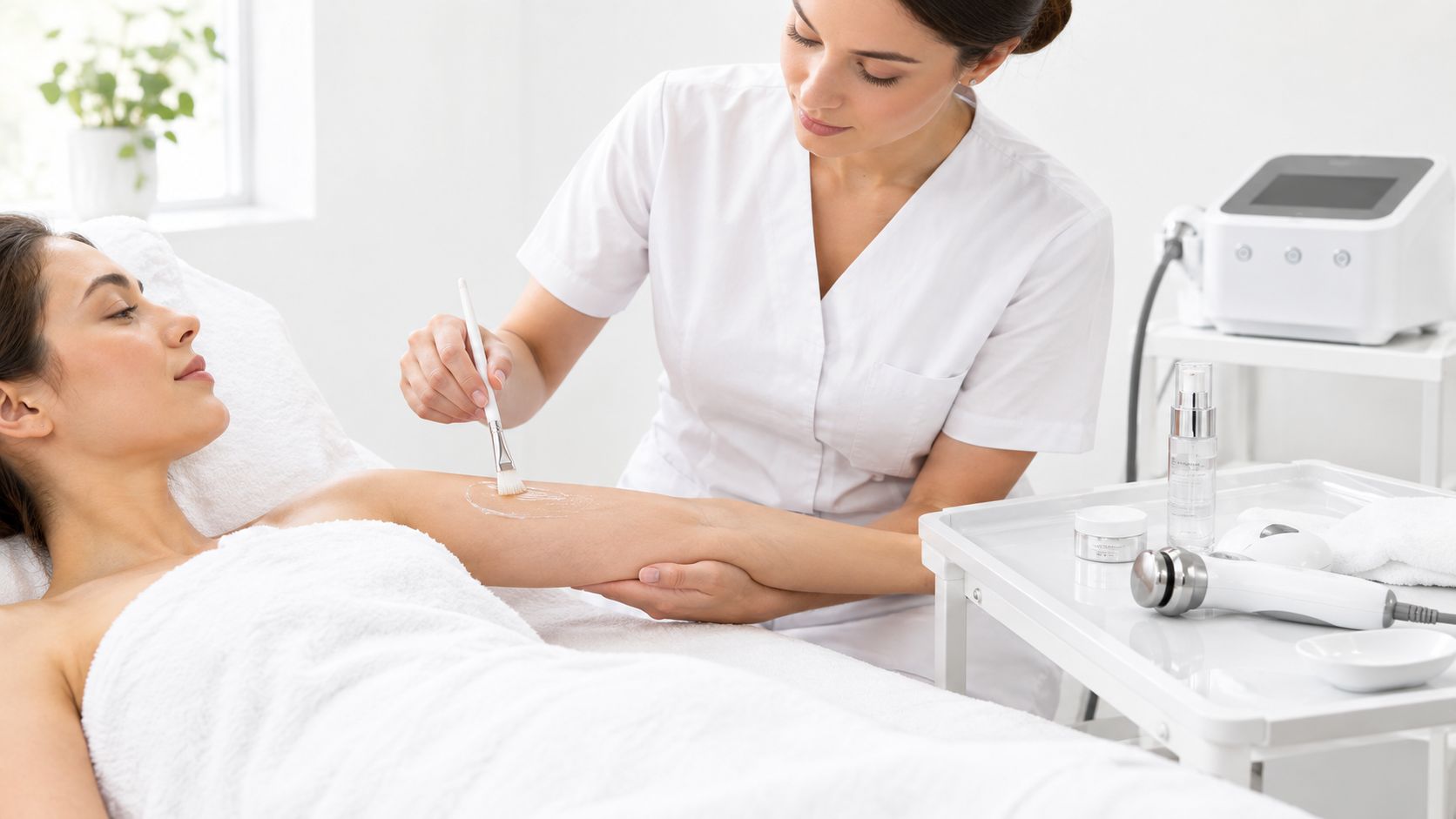
Radiofrequency, radiofrequency microneedling, ultrasound-based treatments, and selected laser procedures aim to improve mild skin laxity by delivering controlled energy to the skin and deeper tissues. Their potential benefit depends on the device, treatment area, skin quality, clinician training, and degree of laxity. They may improve texture or firmness in selected patients, but they can't reproduce the result of removing a hanging fold.
The same principle applies to injectable treatments. Skin boosters and biostimulatory products may improve hydration or skin quality in appropriate areas. They aren't substitutes for surgery when excess skin is substantial. An overview of non-surgical jawline laxity treatment is useful for understanding why treatment choice depends on the location and severity of laxity.
Choose a regulated setting
A consultation should cover medical history, medication, pregnancy status where relevant, allergies, skin conditions, expected outcomes, risks, aftercare, and whether the treatment is suitable at all. Botox, dermal fillers, skin boosters, and polynucleotides, sometimes marketed as salmon DNA, are not interchangeable with procedures designed to remove abdominal or arm skin.
A UK-registered pharmacy may supply prescribed medication only after an appropriate clinical assessment. Prescription-only treatment requires prescriber oversight, and an online pharmacy should be registered with the General Pharmaceutical Council, commonly referred to as the GPhC. Cosmetic procedures should also take place with qualified practitioners who explain limitations rather than promising a guaranteed tightening effect.
Medical Weight-Loss Pathways and Skin Outcomes
Weight-loss medication doesn't create a special type of skin. The relevant issue is the amount and pace of body-volume change, alongside whether the person maintains muscle and adequate nutrition. A prescribed treatment can support weight management, but it still needs to sit within dietary advice, physical activity, monitoring, and follow-up.
GLP-1 medicines and other prescription-only treatments must be supplied through a lawful clinical pathway. An online pharmacy may use a secure consultation, but that doesn't mean automatic access. A UK-registered prescriber should check eligibility, relevant medical history, current medicines, contraindications, and whether the requested treatment is appropriate.
Informed consent includes the possibility of excess skin
UK NHS policy documents make clear that people should be told before dietary advice, weight-loss medication, or bariatric surgery that excess skin may remain and that removal isn't routinely offered as an NHS service. That conversation is part of informed decision-making, not an optional warning added after treatment.
The BSW ICB policy on abdominoplasty, apronectomy and body contouring states this position directly in its pre-treatment counselling requirements. It means patients should consider how they'll manage possible skin folds before starting a major weight-loss pathway, including exercise, nutrition, skin-fold care, and realistic expectations about future surgery.
Medical supervision can also help identify problems early. Unintentional under-eating, persistent vomiting, dehydration, nutritional deficiency, or rapid changes in treatment may need review. If you're researching GLP-1 medication in the UK, focus on the consultation, prescribing safeguards, monitoring, and follow-up rather than the speed of weight loss alone.
XO Medical is one example of a UK-registered online pharmacy and telehealth service that uses clinician assessment before prescribed treatment. Any service you choose should make clear who prescribes, how the pharmacy is regulated by the GPhC, what follow-up is available, and when you should seek in-person care.
NHS Surgical Access and Eligibility Barriers
Many people assume that loose skin can be removed through the NHS if it becomes uncomfortable. In practice, access is highly restricted. Appearance alone usually isn't enough, and local commissioning policies often require documented functional problems such as recurrent rashes, trapped moisture, hygiene difficulty, or impaired mobility.
One NHS body-contouring policy requires either a starting BMI above 40, a current BMI below 25, and stable weight for at least 2 years, or a starting BMI above 50 with at least 20 BMI points lost or 50% of excess body weight lost, again followed by 2 years of weight stability. These are policy thresholds, not a universal promise of treatment.
Why local policy matters
Integrated care boards can apply different commissioning rules. A patient may meet one area's criteria but not another's, and referral doesn't guarantee approval. Clinical teams may also require evidence that the skin problem is persistent, medically significant, and not primarily cosmetic.
The scale of NHS provision is limited. An NHS source records that 752 abdominoplasties were carried out on the NHS in 2016/17, while NHS bosses stated that funding generally isn't available for surgery performed purely to improve appearance. That figure is historic, so it shouldn't be treated as a current annual service level, but it illustrates why post-weight-loss surgery can't be assumed.
Functional symptoms need documentation
If a fold causes repeated inflammation, infection, bleeding, restricted movement, or difficulty maintaining hygiene, speak to your GP or another qualified clinician. Record when symptoms occur, what treatment has been tried, and how the problem affects work, walking, exercise, sleep, or personal care.
A stable weight and a clear record of functional harm can be important parts of a clinical assessment, but they don't guarantee NHS funding.
Private surgery is a separate route and requires careful assessment of operative risk, scarring, recovery, future weight change, and cost. Patients should avoid treating surgery as an automatic safety net. The more realistic strategy is to reduce avoidable severity during weight loss and obtain early help when skin problems become medically significant.
Managing Loose Skin and When to Seek Professional Care
If loose skin is already present, management should focus first on comfort and skin integrity. Wash folds gently, dry them carefully, and change damp clothing promptly. Excess rubbing and trapped moisture can contribute to irritation, so breathable fabrics and well-fitting support garments may help during exercise or daily activity.
Don't apply strong antiseptics, steroid creams, antifungal products, or antibiotics repeatedly without clinical advice. The correct treatment depends on whether the problem is irritation, fungal infection, bacterial infection, eczema, or another skin condition. A pharmacist can advise on minor symptoms, while persistent or recurrent problems need assessment by a GP or qualified clinician.
Seek assessment for ongoing problems
Arrange medical review if you develop persistent rash, pain, broken skin, discharge, recurrent infection, bleeding, or an unpleasant odour that doesn't settle with careful hygiene. Seek advice if a fold restricts walking, exercise, work, washing, or other daily activities. Psychological distress also matters, particularly when it affects eating, relationships, sleep, or willingness to leave home.
A clinician can examine the affected area, review your weight history and medicines, assess nutritional risks, and discuss whether dermatology, dietetic, surgical, or psychological support is appropriate. Non-surgical treatment may be reasonable for mild laxity, while substantial hanging skin is a different clinical problem. A resource on the timing and risks of contouring can help you prepare questions, but it doesn't replace a UK consultation.
The practical answer to “how to avoid loose skin after losing weight” is measured and unglamorous. Lose weight steadily where clinically appropriate, maintain muscle, eat adequately, stay hydrated, avoid smoking, and protect irritated folds. Some loose skin may still remain, and that isn't evidence that you've failed.
This content is for informational purposes only and does not constitute medical advice. Always consult a qualified healthcare professional before starting or changing any treatment.
Reviewed by: Qualified healthcare professional
Review date: 27 September 2026
XO offers clinician-assessed weight-management pathways through its UK-registered online pharmacy, alongside in-person aesthetic consultations for treatments such as Botox, dermal fillers, skin boosters and polynucleotides. Visit XO to learn how regulated prescribing, clinical follow-up and skin-health support may fit into your weight-loss plan.


0 comments