


You may be dealing with period pain, dental pain, or an inflamed joint and wondering whether mefenamic acid tablets are suitable. You may also be comparing an online pharmacy with an appointment at your GP surgery. The important point is that this medicine isn't just a stronger version of an over-the-counter painkiller. It's a prescription NSAID that needs to be matched to your health history, other medicines, and the reason for your pain.
This guide explains how mefenamic acid works, when UK product information supports its use, how to take it safely, and why pregnancy, fertility, stomach problems, kidney disease, and medicine interactions need careful attention. It's educational information, not a substitute for an assessment by a prescriber or pharmacist.
Table of Contents
- Understanding Mefenamic Acid Tablets and UK Regulations
- How Mefenamic Acid Works in the Body
- Approved Conditions and Standard Dosing Guidelines
- Essential Safety Checks and Contraindications
- Navigating Pregnancy and Fertility Risks
- Medicine Interactions and Daily Precautions
- Accessing Prescription Pain Relief Safely Online
Understanding Mefenamic Acid Tablets and UK Regulations
Mefenamic acid is a non-steroidal anti-inflammatory drug, or NSAID. It has three main actions: analgesic, meaning pain-relieving; anti-inflammatory, meaning it reduces inflammation; and antipyretic, meaning it can reduce fever. UK product information supports its use for conditions such as rheumatoid arthritis, Still's disease, osteoarthritis, muscular and rheumatic pain, traumatic and dental pain, headaches, post-operative pain, post-partum pain, and primary dysmenorrhoea, or period pain. UK product information for mefenamic acid 500 mg tablets
“Prescription-only” means a UK-registered prescriber must decide that the medicine is suitable before a pharmacy supplies it. That decision should take account of the cause of your symptoms, your medical history, current medicines, and whether pregnancy or fertility may be relevant.
The detailed safety section below explains which patients may need to avoid NSAIDs or use a different treatment. The benefit depends on choosing the medicine for the right person, condition, and treatment period.
What a regulated prescription involves
A legitimate online pharmacy should not supply mefenamic acid only because payment has been made. A prescriber should review the information you provide, ask follow-up questions if anything is unclear, and issue a prescription only when the expected benefit justifies the possible harm.
For more detail about how an online consultation and prescription may work, read this guide to UK online doctor prescriptions. The same clinical principle applies whether the consultation is online, at a GP surgery, or with another qualified clinician.
Mefenamic acid tablets are therefore prescribed medication, rather than a general-purpose over-the-counter painkiller. Use them only for the condition and duration specified by your prescriber. A similar-sounding symptom does not make another person's tablets suitable for you.
How Mefenamic Acid Works in the Body
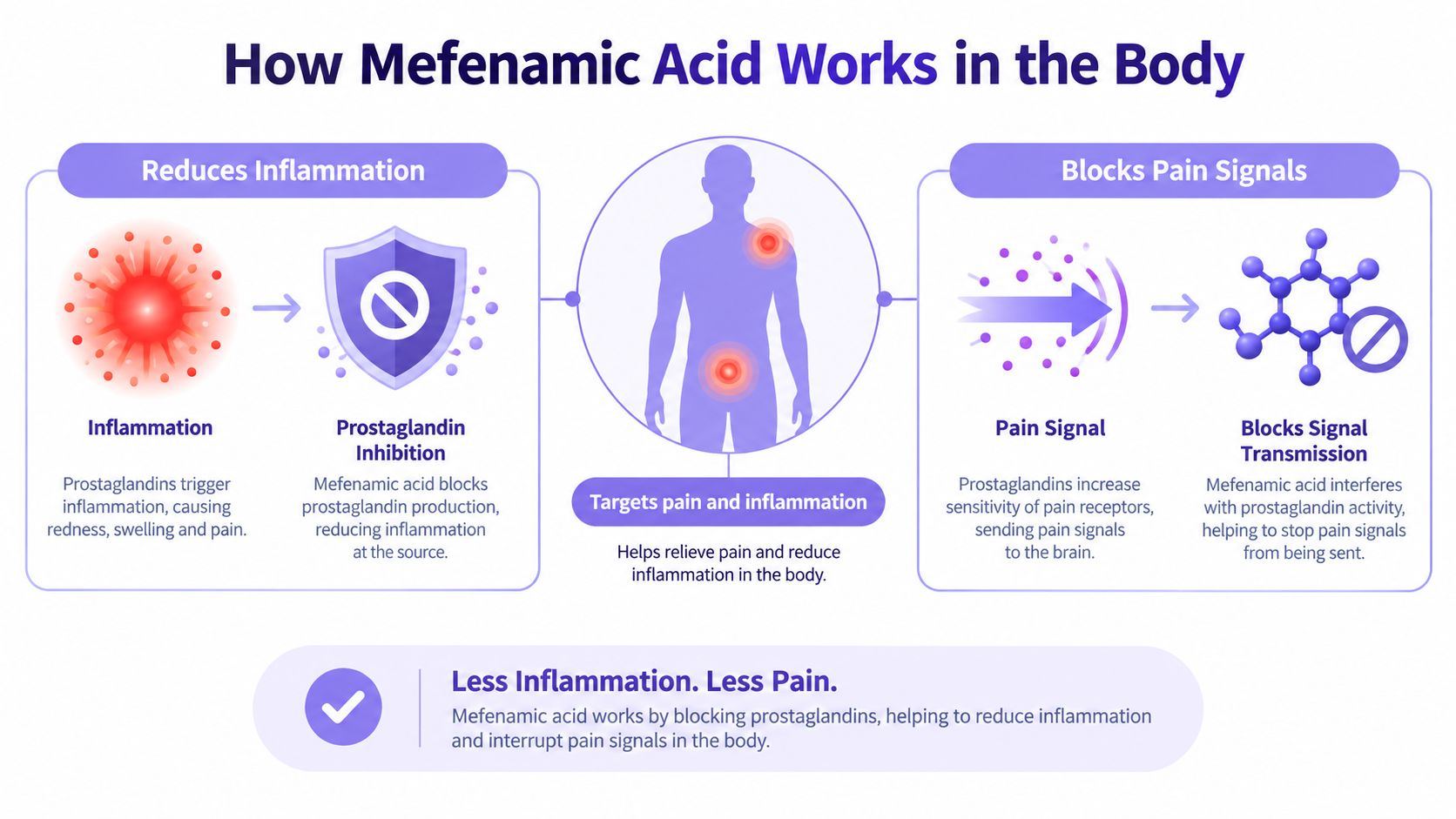
When tissue is irritated or injured, the body releases chemical messengers called prostaglandins. These substances make nearby nerves more sensitive to pain and contribute to inflammation and fever. Mefenamic acid inhibits cyclo-oxygenase enzymes, reducing the production of prostaglandins that help create pain, swelling, and tenderness. In simple terms, it turns down part of the chemical alarm system rather than merely masking the sensation.
That explains why mefenamic acid can help with inflammatory pain and some acute pain conditions. Its effect is linked to the activity of prostaglandins in the affected tissues, so symptoms may return as the medicine wears off. The tablet does not correct every underlying cause of pain, which is why persistent or worsening symptoms still need medical assessment.
Why the same mechanism creates safety concerns
Prostaglandins also perform useful jobs away from painful tissue. They help maintain the stomach's protective lining and support blood flow through the kidneys, particularly when someone is dehydrated or unwell. Reducing their production can therefore affect organs that were not the original reason for treatment.
The benefit and risk must be considered together. A tablet may ease period cramps or dental pain, while the same enzyme inhibition can worsen digestive problems or place additional strain on kidney function in susceptible people. This is why a prescriber needs to know about previous ulcers, kidney problems, dehydration, asthma reactions to NSAIDs, and other relevant health factors.
The mechanism differs from products intended to support general wellbeing. For background, how anti-inflammatory supplements work explains why supplements and prescription NSAIDs should not be treated as interchangeable. They may contain different ingredients, have different evidence and interactions, and follow different regulatory requirements.
For a visual explanation of the pathway, the following video provides additional context:
The practical lesson is simple: reducing prostaglandin activity can relieve symptoms, but it also creates risks that depend on your medical history, hydration, and other medicines.
Approved Conditions and Standard Dosing Guidelines
If period pain arrives every month, the safe question is not just, “How many tablets can I take?” The answer depends on the condition being treated, the prescribed strength, and how long treatment is intended to last. Mefenamic acid should be used for the licensed indications listed above, with the choice confirmed by a prescriber. Licensed UK indications for mefenamic acid tablets
The usual UK tablet strength is 500 mg per tablet. For adults, the standard regimen described in UK product information is one 500 mg tablet three times daily, giving a maximum routine daily dose of 1,500 mg when taken as prescribed. These figures are a dosing framework, not a target. Your prescription may differ because of your condition, age, other medicines, or kidney and liver health.
For primary dysmenorrhoea, treatment is generally limited to the painful part of the menstrual cycle. It should not continue indefinitely or become an automatic monthly routine without review. If symptoms last longer than expected, become more severe, or return despite treatment, arrange a clinical assessment rather than extending the course yourself.
Taking each tablet sensibly
Swallow tablets preferably with or after food. Food may make them easier on the stomach, but it does not remove the possibility of indigestion, ulceration, bleeding, or other NSAID-related harm. Take each dose at the prescribed interval, and do not take an extra tablet because relief has not arrived quickly.
Keep the packet away from children. UK patient information states that mefenamic acid tablets are not suitable for children under 12 years of age. UK patient information for mefenamic acid tablets
| Question | Safe approach |
|---|---|
| Can I take extra for severe pain? | No. Contact a clinician if the prescribed treatment is not enough. |
| Can I share tablets with a relative? | No. Prescription treatment is individual. |
| Should I take it on an empty stomach? | Preferably not. Take it with or after food as directed. |
| What if period pain keeps returning? | Arrange a review instead of repeatedly self-treating. |
People managing dysmenorrhoea may also explore natural menstrual cramp relief, while remembering that natural products can still be unsuitable or interact with medicines. Recording pain, bleeding, dose timing, and cycle dates gives a clinician useful context. This menstrual cycle tracking guide can help organise those details.
Essential Safety Checks and Contraindications
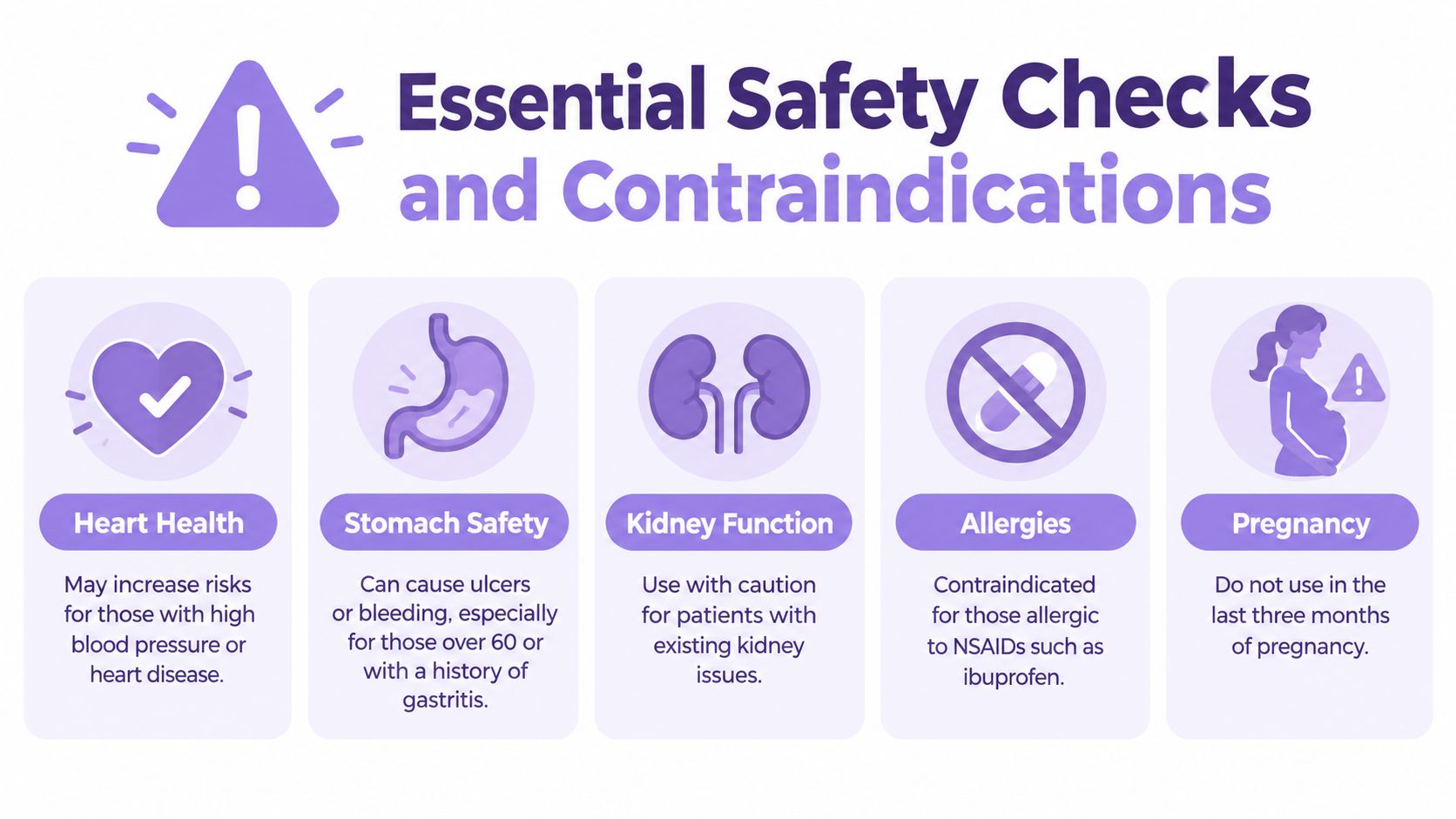
Short-term treatment can still be unsuitable for some people. Before prescribing mefenamic acid, a clinician should check your stomach and bowel history, kidney and liver function, heart health, circulation, immune reactions, and current medicines.
Stomach and bowel history
Mefenamic acid reduces prostaglandins, some of which help protect the digestive tract. Lower protection can contribute to indigestion, ulceration, bleeding, or perforation. UK product information lists previous NSAID-related gastrointestinal bleeding or perforation, inflammatory bowel disease, and active or recurrent peptic ulceration as contraindications. UK contraindications and gastrointestinal warnings
Tell the prescriber about a previous stomach ulcer, bleeding after ibuprofen or aspirin, persistent indigestion, black stools, vomiting blood, or inflammatory bowel disease. These details may mean another treatment is safer.
Kidney, heart, and liver considerations
The kidneys depend partly on prostaglandin-supported blood flow, especially during dehydration or illness. Mefenamic acid can worsen kidney function in vulnerable patients. The same UK product information lists severe renal, hepatic, and heart failure as contraindications.
Also mention cardiovascular disease, high blood pressure, fluid retention, or medicines that affect kidney function. UK patient information describes a small increased risk of heart attack or stroke, with greater risk associated with higher doses and longer treatment. Do not increase the dose or continue beyond the prescribed course without review.
Practical rule: Give the prescriber a complete list of diagnoses, previous medicine reactions, and everything you take, including non-prescription products.
Previous reactions to NSAIDs
Mefenamic acid may be unsuitable if aspirin, ibuprofen, diclofenac, or another NSAID previously caused asthma, bronchospasm, rhinitis, angioedema, or urticaria. These medicines can trigger cross-sensitivity, so a reaction to one may matter when another is considered.
Seek urgent medical help for breathing difficulty, swelling of the lips or face, widespread blistering or peeling skin, black stools, vomiting blood, or new chest pain. If a serious reaction develops, do not take another dose while waiting for medical advice.
Navigating Pregnancy and Fertility Risks
If you discover you are pregnant after taking mefenamic acid, do not panic or take extra doses to manage the situation yourself. The advice depends on the stage of pregnancy, the dose and duration used, and the reason the medicine was prescribed. Contact a GP, midwife, maternity service, pharmacist, or prescriber for personalised guidance.
UK product information advises avoiding mefenamic acid when trying to conceive because reducing prostaglandins may impair female fertility. If you have taken a dose before realising you were pregnant, an individual benefit and risk assessment is appropriate rather than an automatic assumption that harm has occurred. UK product information on pregnancy and fertility
The timing of exposure matters
From around 20 weeks, mefenamic acid may affect fetal kidney function and reduce amniotic fluid, known as oligohydramnios. It has also been associated with constriction of the fetal ductus arteriosus, a blood vessel needed before birth. Use during the final trimester is contraindicated. For practical advice on managing pregnancy aches safely, use a pregnancy-appropriate resource while arranging professional help.
Tell a healthcare professional promptly if you are pregnant, might be pregnant, trying to conceive, or have taken mefenamic acid during pregnancy. Do not stop a prescribed treatment abruptly without advice, but do not continue it or restart it on your own either.
| Situation | Sensible next step |
|---|---|
| Trying to conceive | Tell the prescriber before treatment starts and discuss suitable alternatives. |
| Possible early pregnancy | Contact a qualified professional for an individual benefit and risk assessment. |
| Exposure from around 20 weeks | Contact your maternity team or prescriber promptly, especially after several days of treatment. |
| Final trimester | Do not use unless a specialist clinician gives a specific, appropriate instruction. |
| Fertility treatment or emergency contraception | Give the clinician managing your care the complete list of medicines and treatments involved. |
Pain during pregnancy still needs proper treatment. The safest choice depends on your symptoms, pregnancy stage, medical history, and other medicines, so seek advice rather than relying on leftover tablets or self-treatment.
Medicine Interactions and Daily Precautions
The most useful interaction check starts with your complete medicines list, not just the name of your painkiller. Mefenamic acid can interact with prescribed medicines, pharmacy products, and remedies that seem unrelated to pain.
Combinations that need clinical review
| Medicine or group | Why it matters |
|---|---|
| Ibuprofen, diclofenac, and other NSAIDs | Combining NSAIDs can increase adverse-effect risk without being a safe way to strengthen pain relief. |
| Aspirin | It can add to gastrointestinal and other NSAID-related risks. |
| Warfarin or clopidogrel | These anticoagulant or antiplatelet medicines can increase concern about bleeding. |
| Corticosteroids | They can contribute to gastrointestinal harm when used with an NSAID. |
| SSRIs | They can materially affect gastrointestinal bleeding risk when combined with mefenamic acid. |
These interactions are highlighted in UK patient information, which also advises assessment for people with kidney, liver, or digestive-tract disease, previous painkiller-related stomach problems, bleeding disorders, or upcoming major surgery. UK patient leaflet on interactions and precautions
Everyday questions patients often ask
If you miss a dose, follow the instructions supplied with your prescription or ask a pharmacist. Don't double the next dose to compensate. If you aren't sure whether you took a tablet, check before taking more.
Avoid starting another NSAID, including an over-the-counter product, unless a qualified clinician or pharmacist confirms that it's appropriate. Check combination cold and pain remedies as well, since some products contain painkillers that may not be obvious from the front of the packet.
Stop and seek urgent help for signs of gastrointestinal bleeding, a serious allergic reaction, severe skin reaction, or new chest pain. If pain persists, worsens, or returns as soon as treatment ends, arrange a review rather than repeating courses independently.
Pain that doesn't settle needs assessment, not simply a longer supply of the same medicine.
Accessing Prescription Pain Relief Safely Online
A regulated online service should feel like a clinical consultation delivered digitally, not an automated checkout. Before prescribing mefenamic acid, a UK-registered prescriber should assess your symptoms, relevant medical history, pregnancy or fertility status, allergies, and current medicines.
Choose a UK-registered pharmacy and check that the service is regulated by the GPhC. The pharmacy should identify its responsible organisation and provide a clear route to contact a pharmacist. It should also explain what happens if the prescriber needs more information or decides that treatment isn't appropriate.
A proper consultation may ask about previous stomach bleeding, inflammatory bowel disease, kidney or heart problems, asthma after painkillers, anticoagulants, antidepressants, corticosteroids, pregnancy, and planned surgery. Answer accurately, even if a question feels unrelated to your pain. Those details help the prescriber choose safely between mefenamic acid, another treatment, or further medical assessment.
For practical information about choosing and using an online pharmacy in the UK, look for transparent clinical processes rather than promises of automatic access. A legitimate service won't encourage you to exceed the prescribed dose, combine NSAIDs, or continue treatment when red-flag symptoms appear.
This content is for informational purposes only and does not constitute medical advice. Always consult a qualified healthcare professional before starting or changing any treatment.
XO offers clinician-led online consultations through XO Medical, a UK-registered online pharmacy service, so adults can discuss whether prescription pain relief is clinically appropriate before treatment is supplied. Visit XO to learn more about regulated online healthcare and the clinical support available.


0 comments