


You may be waking after another night of sweating, struggling to concentrate at work, or wondering whether mood changes and irregular periods are connected. Search results often mix reliable NHS guidance with personal stories, overseas medicines and unregulated products, making it difficult to know which menopause treatment options are appropriate in the UK.
Treatment decisions should start with your symptoms, medical history and personal preferences. This guide explains how clinicians match symptoms to treatments, where HRT fits, what non-hormonal options can offer, and how to access prescription-only treatment safely through NHS or regulated private services.
Table of Contents
- Why Understanding Menopause Treatment Matters
- HRT as the Primary Treatment Option
- Non-Hormonal and Alternative Treatments
- Safety, Risks, and Side Effects
- How to Access Treatment in the UK
- Trends in Menopause Treatment Usage
Why Understanding Menopause Treatment Matters
A person may be coping with night sweats, poor sleep and difficulty concentrating, yet still be unsure whether these symptoms belong together. Another may be more affected by vaginal dryness, anxiety, low mood or irregular bleeding. Menopause can influence work, relationships, exercise and confidence, so identifying the pattern matters before choosing a treatment.
Searches for “best menopause tablets” can place prescription medicines beside supplements, compounded products and personal recommendations. Those options are not interchangeable. A treatment that helps one person may be unsuitable for someone with a history of cancer, blood clots or liver disease, or for someone taking medicines that interact with it.

Start with the symptom pattern
Clinical assessment looks at more than a single complaint. A prescriber considers symptom timing and severity, menstrual history, contraception, previous operations, existing conditions, family history and current medicines. Someone experiencing early or medically induced menopause may need a different assessment from someone reaching menopause at the expected stage of life.
Some symptoms can have other explanations. Palpitations, persistent fatigue, low mood and changes in bleeding may result from conditions unrelated to menopause. New, severe or unusual symptoms should be assessed rather than treated through trial and error.
Practical rule: Choose treatment by matching it to the symptom and checking that it fits the person's medical history and risk profile.
Evidence matters more than popularity
Evidence-based care does not mean giving every patient the same prescription. It means discussing likely benefits, limitations and risks, then checking whether the chosen approach is helping. Lifestyle changes, psychological support, non-hormonal medicines and local treatments may all be appropriate, depending on the symptom and the person's circumstances.
UK clinicians use the NICE guideline NG23 recommendations as a clinical benchmark. The specific HRT types and who they suit are detailed in the next section. For now, the key point is that treatment selection follows a process: identify the symptom, consider possible causes, review individual risks, and then choose an option that can be monitored safely.
HRT as the Primary Treatment Option
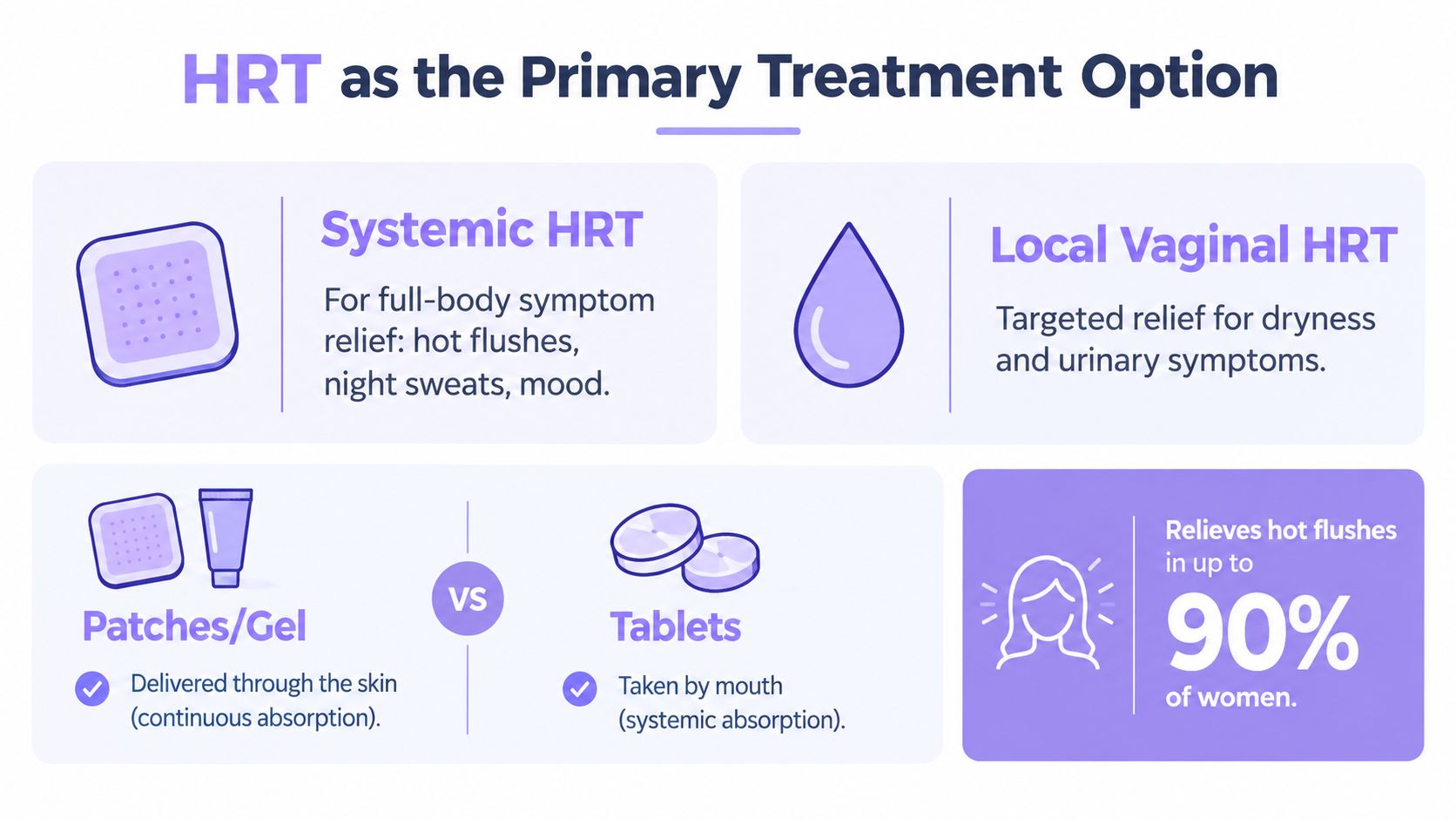
A person whose hot flushes disrupt work, sleep or concentration may discuss hormone replacement therapy, or HRT, with a clinician. HRT replaces hormones that fall during the menopause transition. Systemic HRT carries hormones through the bloodstream and can reduce vasomotor symptoms, especially hot flushes and night sweats. It may also improve other menopause-related symptoms, although the response varies between individuals.
HRT is a mainstream prescribed treatment, not a niche option. Resource-impact work for England estimated that many women in the relevant age group experienced vasomotor symptoms and that a substantial number received prescribed HRT. Those figures provide context for use of the treatment, but they should not be treated as an individual prediction of benefit or suitability.
Choosing between HRT types
The first clinical distinction is whether treatment requires oestrogen alone or oestrogen combined with a progestogen.
| HRT type | Typical clinical context |
|---|---|
| Combined HRT | Oestrogen with a progestogen for people who have a uterus |
| Oestrogen-only HRT | For people who have had a total hysterectomy, subject to clinical assessment |
| Systemic HRT | Tablets, patches, gels or other forms intended to relieve symptoms affecting the body |
| Local vaginal HRT | Low-dose treatment directed at vaginal or urinary symptoms |
The delivery method also changes how treatment is used. Patches and gels deliver oestrogen through the skin, while tablets are taken orally. Local vaginal preparations target symptoms such as dryness and discomfort. A clinician still needs to confirm that the chosen product suits the person's symptoms and medical history.
Licensed HRT is sometimes compared with pellet treatments promoted online. Information about ProMD Health Bel Air pellets explains how one pellet-based approach is presented. Anyone considering it in the UK should ask about licensing, monitoring, evidence and prescribing arrangements before making a decision.
A UK-focused explanation of assessment and treatment pathways is available in XO's educational guide to hormone replacement therapy in the UK. It can support preparation for an appointment, but it cannot replace an individual consultation.
Why reviews remain important
HRT is not suitable for everyone, and starting it does not create an automatic plan for indefinite use. The MHRA advises using HRT for menopausal symptoms that affect quality of life, with the lowest effective dose for the shortest duration, alongside regular reviews. The MHRA guidance on discussing HRT risks and benefits sets out the relevant UK regulatory context.
A clinician may seek specialist input where there is a history of certain cancers, thromboembolism, unexplained vaginal bleeding or other significant risk factors. A complex medical history does not automatically exclude every treatment, but it does require careful assessment, shared decision-making and follow-up.
Non-Hormonal and Alternative Treatments
Some people can't take HRT, while others prefer a non-hormonal approach. The alternatives aren't interchangeable, and their likely benefits depend on whether the main problem is flushing, sleep, mood, pain or another symptom.
UK guidance and the British Menopause Society consensus statement on non-hormonal treatments identify prescribable options with trial evidence, including SSRIs and SNRIs such as paroxetine, fluoxetine, citalopram, escitalopram, venlafaxine and desvenlafaxine. Gabapentin, pregabalin and clonidine may also be considered in appropriate circumstances.
Matching the medicine to the patient
SSRIs and SNRIs are medicines commonly associated with depression or anxiety, but some are prescribed for menopausal vasomotor symptoms. Gabapentin and pregabalin may be considered where sleep disturbance or related symptoms are part of the clinical picture. Clonidine is another option, although side effects and individual suitability need discussion.
These medicines can help some patients, but no non-hormonal treatment is as effective as oestrogen for vasomotor symptoms, according to the BMS statement. NICE and UK guidance have also historically considered SSRIs, SNRIs and gabapentin no better than placebo in some contexts. This is why a clinician shouldn't promise that an alternative will work in the same way as HRT.
Medication safety matters: People taking tamoxifen need particular care. Paroxetine and fluoxetine may reduce tamoxifen efficacy, so the prescribing decision should involve a clinician familiar with the interaction.
Lifestyle and behavioural approaches can sit alongside prescribed medication. Keeping the bedroom cool, identifying personal triggers, using structured sleep routines and considering psychological support may help some people, but these measures shouldn't be presented as a substitute for assessment when symptoms are severe.
Readers comparing self-care approaches may find this overview of treatments for hot flashes and night sweats useful as background. US terminology and treatment availability may differ from UK practice, so check any medicine or supplement with a UK clinician or pharmacist.
Vaginal symptoms require a separate conversation. A systemic medicine aimed at hot flushes may not provide sufficient local relief, while a local treatment may not address night sweats. The XO guide to menopause night sweats remedies offers further educational context, but persistent symptoms still warrant clinical review.
Safety, Risks, and Side Effects
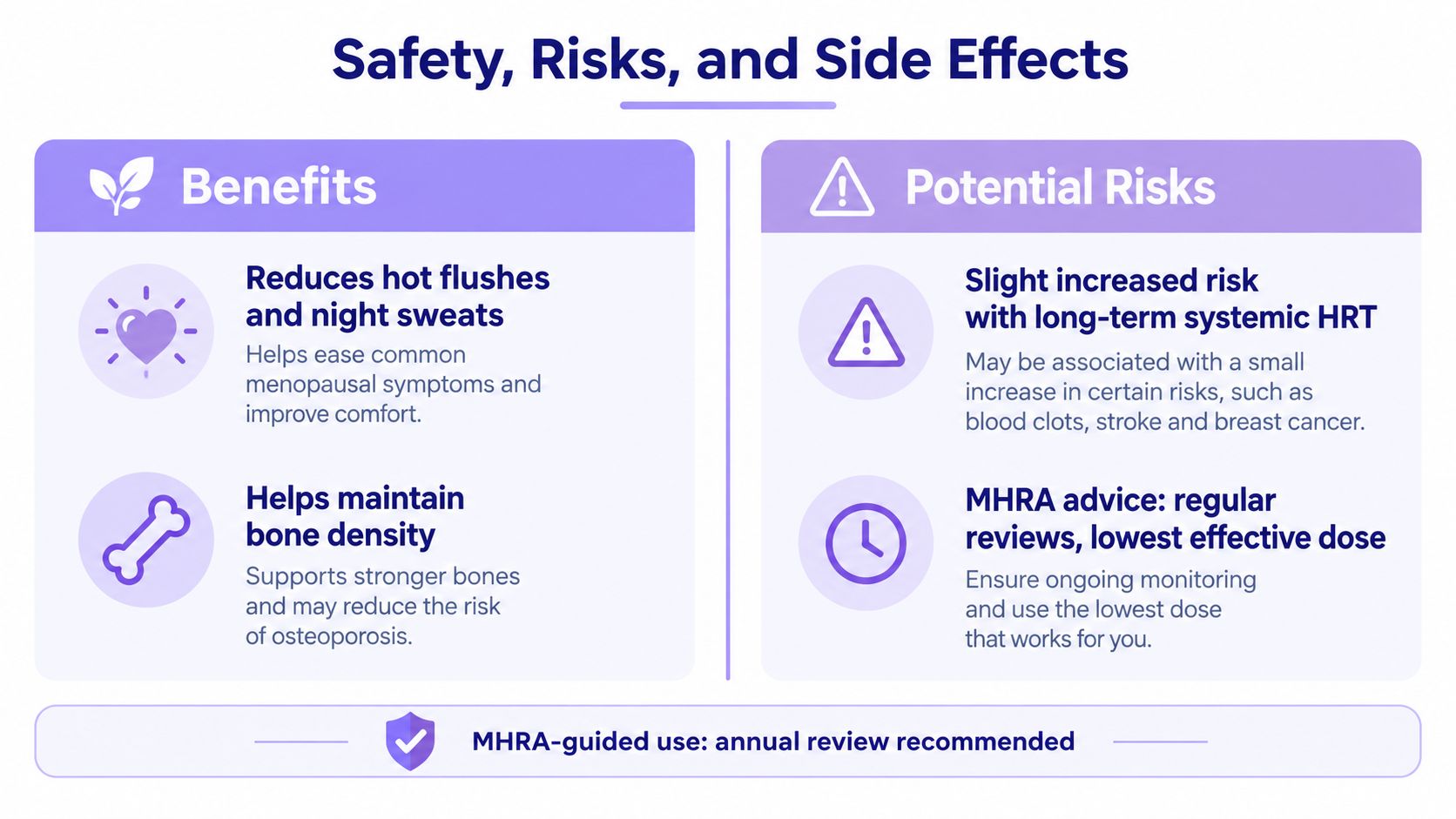
Every menopause treatment involves a benefit-risk decision. The relevant question isn't whether a medicine has risk in isolation, but whether its expected benefit for your symptoms justifies that risk given your health history, age, time since menopause and treatment route.
HRT can cause side effects, particularly when treatment starts or when the dose or preparation changes. These may include breast tenderness, bloating, headaches, skin reactions from patches or irregular bleeding. Unusual, heavy or persistent bleeding should be discussed with a clinician rather than assumed to be a normal adjustment.
What changes the risk discussion
The type of HRT matters. So do the dose, route, duration and whether treatment is systemic or local. A patient with a uterus generally needs the progestogen component alongside oestrogen, while someone who has had a total hysterectomy may be assessed for oestrogen-only treatment.
A prescriber will want to know about:
- Previous cancer: Certain cancers may require specialist advice before hormones are considered.
- Blood clots or thromboembolism: A personal history can alter whether HRT is suitable and which route might be discussed.
- Unexplained bleeding: This should be assessed before treatment is started.
- Current medicines: Interactions can affect both safety and effectiveness.
- Liver or cardiovascular concerns: These may require a more detailed review.
The MHRA recommends regular review and the lowest effective dose for the shortest duration. That guidance doesn't mean treatment must stop after an arbitrary period. It means the decision should be revisited as symptoms, health and preferences change.
Some readers also search for explanations of discomfort after local treatment. Background information about oestrogen cream and pelvic pain causes may help frame questions, but new or worsening pelvic pain needs assessment by a qualified healthcare professional.
A safe prescription is only one part of care. Follow-up is what checks whether the treatment remains appropriate.
If you have a complex medical history, don't rely on an online questionnaire alone. Ask whether you need a GP, menopause specialist, gynaecologist or another clinician with relevant expertise. Emergency symptoms, such as sudden chest pain, severe breathlessness or one-sided weakness, require urgent medical attention rather than routine menopause advice.
How to Access Treatment in the UK
HRT and other medical menopause treatments are prescription-only. Most HRT requires a prescription after consultation with a GP or menopause specialist, and NHS guidance states that a prescription is required for all medical HRT treatment options. The NHS-linked guide to HRT prescribing explains this requirement.

The usual care pathway
First, record the problem clearly. Note the symptoms affecting daily life, when they occur, menstrual changes, previous treatments and any relevant diagnoses. Include all medicines, including over-the-counter products and supplements.
Next, arrange a clinical assessment. This may be through your GP, an NHS menopause service or a private clinician. The consultation should review symptoms and medical history, explain options and identify situations requiring further investigation.
Then, agree a treatment plan. The prescriber may discuss systemic HRT, local vaginal treatment, a non-hormonal medicine, lifestyle support or referral. They should explain how to use the treatment, likely side effects and when to seek help.
Finally, attend follow-up. Review whether symptoms have improved, whether side effects are manageable and whether the dose remains suitable. Don't share prescribed medication or buy medicines from websites that don't provide a legitimate clinical assessment.
NHS and private routes
NHS care may begin with a GP consultation and can lead to specialist referral where appropriate. Private care can offer another route, including a UK-registered online pharmacy or telehealth service, but convenience doesn't remove the need for clinical governance.
Before using an online pharmacy, check that it is regulated by the GPhC, displays its registration details and provides access to UK-registered clinicians. A pharmacy should verify the prescription, protect your information and give clear instructions for delivery, use and follow-up.
XO's guide to getting a prescription through a UK online doctor explains the general process. XO Medical is a UK-registered online pharmacy and telehealth service where UK-registered clinicians assess symptoms and medical history before considering prescribed medication. XO Clinic is a separate in-person aesthetics clinic offering botox, dermal fillers, skin boosters and polynucleotides, also known as salmon DNA, so patients should distinguish aesthetic services from menopause prescribing.
Trends in Menopause Treatment Usage
Menopause treatment is receiving greater attention across NHS services, primary care and private healthcare. Prescribing data provides useful context, but it doesn't prove that every patient receives the right treatment or that rising use reflects identical needs across the population.
In England, NHS prescribing data recorded 13 million HRT items in 2023/24, a 22% increase from 2022/23, while 2.6 million identified patients received HRT, up from 2.3 million the year before, according to the NHS Business Services Authority prescribing report. The same source reports that HRT items rose to 7.80 million in 2021/22 after a 35.0% year-on-year increase, with 1.93 million identified patients receiving HRT that year.
What the figures can and can't tell us
The data indicate broader use and recognition of menopause treatment across England. They don't show whether an individual patient's symptoms improved, whether treatment was continued, or how prescribing varied by region, access route or clinical history.
A UK prescribing study reported that annual prescribing prevalence was 7.89 per 100 women in 2010 and 6.86 per 100 women in 2020, while the incidence rate of prescribing increased from 5.01 in 2010 to 18.16 per 1,000 person-years at risk in 2021. These figures suggest that new prescribing accelerated even though population-level prevalence changed more modestly over the decade. The finding is consistent with growing recognition of symptoms and wider use of treatment options, but it still doesn't replace individual assessment.
For patients, the practical lesson is straightforward. Increased availability doesn't mean HRT is automatically suitable, and choosing a non-hormonal option doesn't mean you're receiving inferior care when hormones are contraindicated or not preferred. The safest route remains a documented consultation, a regulated prescriber and planned review.
XO Medical provides UK menopause consultations in which a UK-registered clinician reviews symptoms and medical history before deciding whether HRT is clinically appropriate. Visit XO to learn about its regulated online pharmacy service and menopause support, and seek advice from a qualified healthcare professional before starting or changing treatment.
Reviewed by: Qualified healthcare professional
Review date: 26 September 2026
This content is for informational purposes only and does not constitute medical advice. Always consult a qualified healthcare professional before starting or changing any treatment.


0 comments