


You've searched for weight loss injections online, found familiar names such as Wegovy and Mounjaro, and then faced a more difficult question than expected: how can you tell whether an online service is legitimate in the UK? A professional-looking website isn't enough. Prescription-only treatment requires a proper clinical assessment, an accountable prescriber and dispensing through an appropriate pharmacy pathway.
Interest has grown while NHS access remains phased and restricted. NHS England's planned pathway for tirzepatide, marketed as Mounjaro, is expected to reach around 220,000 people over three years and about 3.4 million people over 12 years, subject to eligibility and rollout arrangements (BBC coverage of the NHS pathway). Private telehealth services therefore sit alongside, rather than replace, NHS care.
This guide explains what these medicines are, how they work, who may be considered, what a compliant online journey looks like and which warning signs should make you stop. It's educational information, not a diagnosis or recommendation. A qualified healthcare professional must decide whether a prescription-only treatment is suitable for you.
Table of Contents
- Introduction to Weight Loss Injections Online in the UK
- What Prescription Weight Loss Injections Are and How They Work
- Effectiveness Benefits and Limitations You Should Understand
- Safety Side Effects Eligibility and Who Should Not Use Them
- How Online Telehealth Consultations and Delivery Work in the UK
- UK Regulation Privacy and How to Spot Unsafe Providers
- Making an Informed Decision and Next Steps
Introduction to Weight Loss Injections Online in the UK
You may complete an online questionnaire, receive a prescription decision and still have important questions: who assessed you, which pharmacy dispensed the medicine, and what happens if treatment causes problems? Those answers distinguish a proper UK pathway from a website that promises quick access.
NHS eligibility, private prescribing and medicine availability are separate questions. NHS services follow phased local arrangements and may offer treatment to a narrower group. A private prescriber can assess people within the medicine's licensed criteria, but must still apply clinical judgement, check suitability and work within appropriate governance. Paying privately does not guarantee a prescription.
A legitimate online pharmacy should collect enough information to make a safe decision before dispensing. Expect questions about your medical history, current medicines, allergies, relevant conditions, pregnancy or breastfeeding, previous treatment and weight-related measurements. A clinician may request further details rather than approve treatment automatically.
The delivery process matters too. You should be told which pharmacy is supplying the medicine, how it will arrive, how to store it and whom to contact for follow-up. Vague answers, pressure to buy before assessment, unusually low prices or products offered without a prescription are warning signs.
Safety principle: Online access changes the route into care, not the standard of care required.
Check the pharmacy's registration and read its privacy information before submitting sensitive details. Keep an accurate list of medicines and health conditions, and ask how side effects, dose changes and missed follow-up will be handled. The sections ahead explain the medicines themselves, then examine eligibility, safety and the checks that support a compliant online journey.
What Prescription Weight Loss Injections Are and How They Work
A person researching weight loss injections online may encounter several familiar brand names and assume they work in the same way. They do not. These prescription medicines act on hormone pathways linked with appetite, digestion and glucose regulation. The main groups used in UK care are GLP-1 receptor agonists, such as semaglutide, and dual agonists, such as tirzepatide, which acts through GLP-1 and GIP pathways.
After eating, natural gut hormones send messages between the digestive system and the brain. The messages help regulate hunger, fullness and how the body handles glucose. The medicines copy or strengthen parts of these signals. They are not general stimulants or simple appetite suppressants.
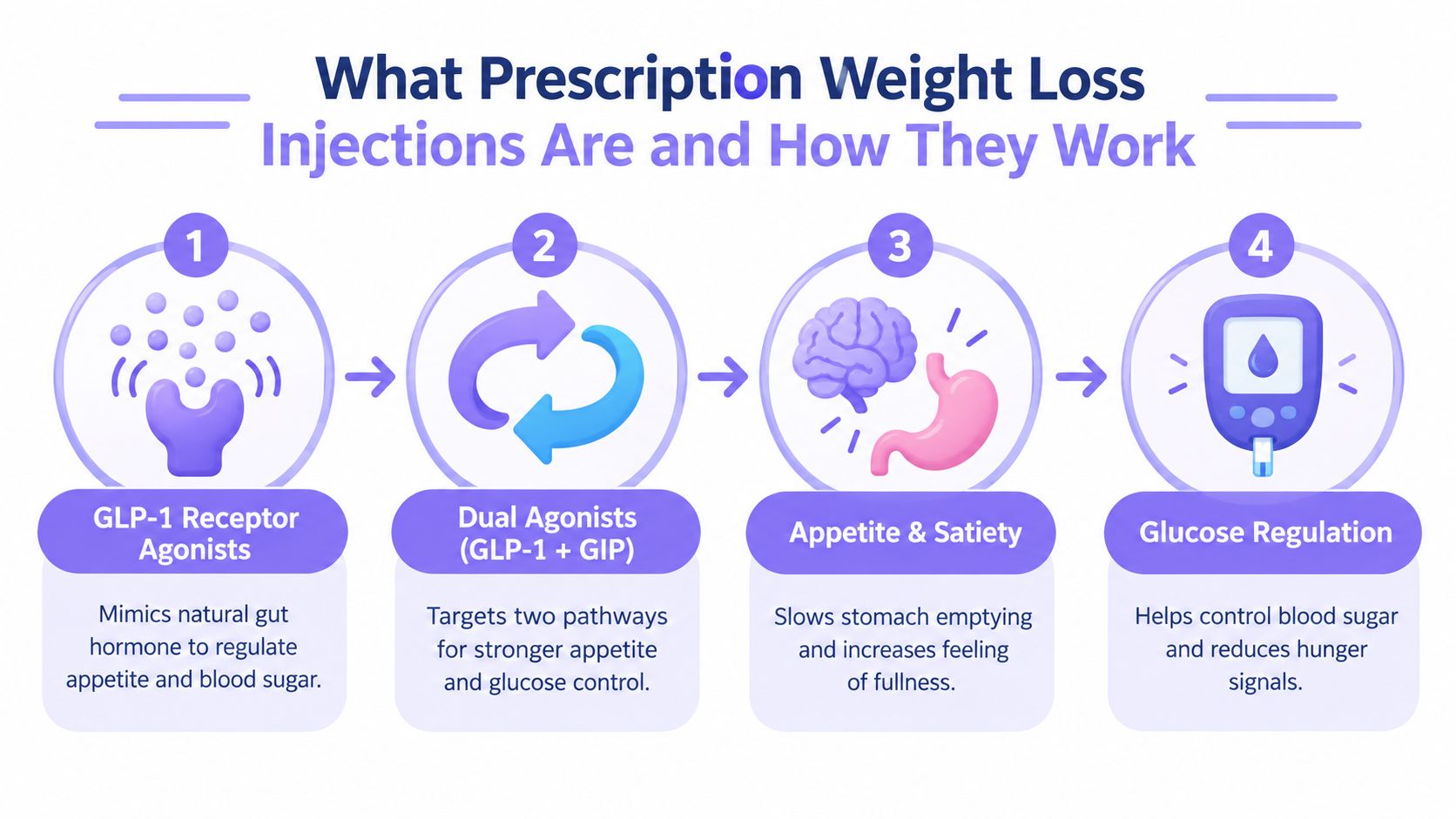
The medicines are not interchangeable
Semaglutide is used in Wegovy for weight management. Ozempic and Rybelsus also contain semaglutide, but UK Government guidance on GLP-1 medicines explains that these products are licensed for diabetes, rather than general weight management. A familiar brand name does not change its licensed indication.
Tirzepatide, marketed as Mounjaro, is licensed for diabetes and, within relevant UK guidance, for weight management in eligible patients. A prescriber must decide whether its use is clinically suitable and consistent with the medicine's licence and professional requirements.
These injections can increase feelings of fullness, reduce appetite and slow the movement of food through the stomach. They also influence glucose regulation. The practical effect is a possible change in hunger and eating patterns over time, not the act of taking an injection.
NHS England describes these medicines as self-injected once weekly, alongside diet and exercise for adults who meet clinical criteria (NHS England's weekly injection guidance). The prescriber or dispensing pharmacy should explain dose changes, injection technique and what to do after a missed dose.
For terminology and an overview of UK options, read this GLP-1 medication guide before discussing treatment with a clinician.
Effectiveness Benefits and Limitations You Should Understand
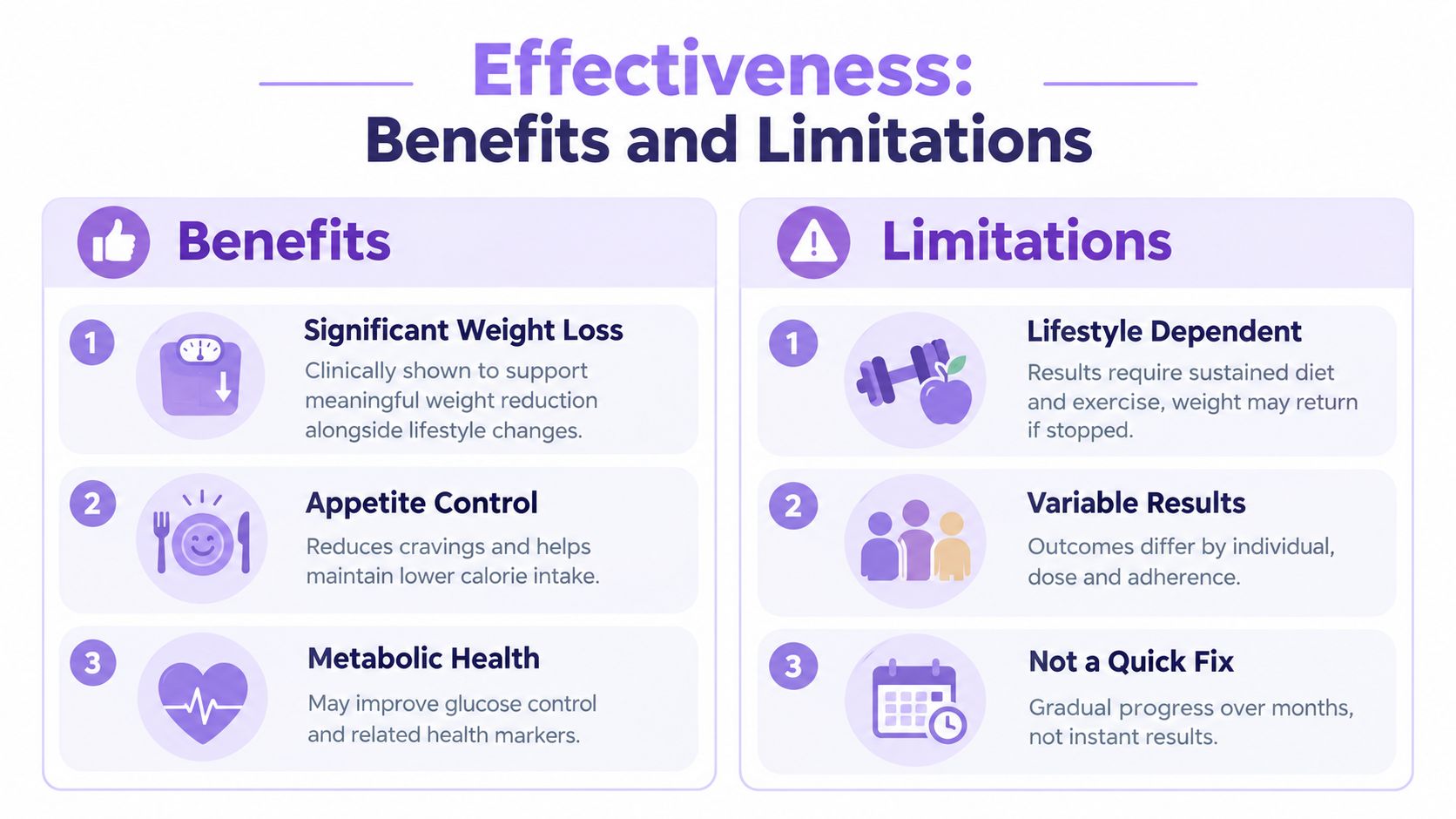
A person may begin treatment hoping for easier appetite control, then find that the test is whether the medicine can be tolerated and fitted into daily life. Weight loss injections can support weight reduction for suitable patients, but they are not cosmetic shortcuts. Results depend on clinical suitability, correct use, nutrition, physical activity, follow-up and individual response. A prescription cannot guarantee a particular outcome.
By increasing fullness and reducing appetite, treatment may help some people maintain a lower energy intake. That can support improvements in weight-related health, including glucose management. Others may experience limited benefit, troublesome effects or difficulty maintaining the wider plan.
What treatment can and cannot do
Potential benefits include:
- Appetite regulation: Hunger and cravings may become easier for some people to manage.
- Support with weight reduction: Treatment can sit within a structured weight-management plan.
- Health-focused care: A clinician can consider weight alongside relevant conditions, medicines and longer-term aims.
The limits matter just as much:
- Results differ: Response is affected by health, dose, adherence and tolerability.
- Lifestyle still matters: Food choices and physical activity remain part of the treatment pathway.
- Stopping can change the picture: Weight may return after treatment ends, so discontinuation should be discussed with a qualified professional.
- Monitoring is ongoing: The prescriber may review progress, side effects, dose and whether treatment remains appropriate.
- Progress is gradual: These medicines are not intended to produce instant changes.
UK guidance describes weight-management injections as an addition to diet and exercise, rather than a replacement for them. If you are adjusting food intake, you can calculate macros for fat loss to understand possible nutritional targets. A calculator is a planning aid, not a substitute for advice from a dietitian or clinician.
Safety Side Effects Eligibility and Who Should Not Use Them
A safe decision begins with the consultation, not the injection. The prescriber needs a clear account of your health, current medicines and previous treatment to decide whether the medicine is suitable, whether another option would be safer, and what monitoring you may need.
Common digestive effects include nausea, vomiting, constipation and diarrhoea. They can be more noticeable when treatment starts or the dose changes, but people respond differently. Persistent or severe symptoms need medical advice rather than being treated as an inconvenience.
Gallbladder problems and pancreatitis are less common, but they matter. Severe or persistent abdominal pain, especially pain that spreads to the back or comes with repeated vomiting, needs urgent medical assessment. Seek urgent help instead of waiting for an online provider to respond.
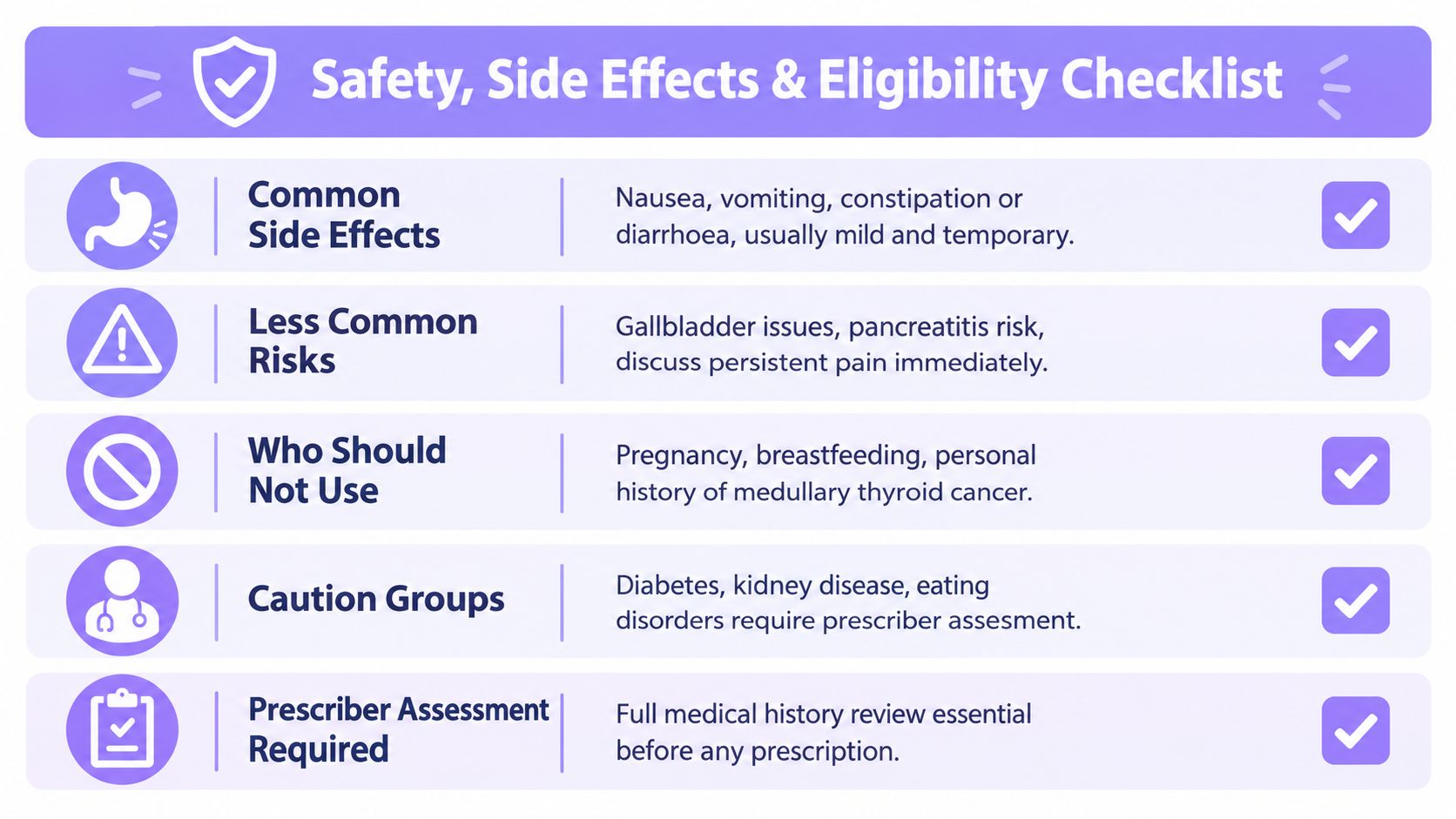
Eligibility is more than a number
BMI is one part of the assessment, not an automatic prescription. In the relevant NHS England pathway, adults may need a BMI of 35 to 39.9 alongside at least four qualifying conditions. Private services must still apply appropriate clinical criteria and check that prescribing fits the medicine's licensed indication.
Tell the clinician about diabetes, kidney disease, digestive problems, previous pancreatitis, an eating disorder or any other significant illness. Pregnancy and breastfeeding require specific medical advice. GLP-1 medicines should be used only within their licensed indications and under professional supervision, as set out in the official GLP-1 medicine guidance.
A legitimate online pharmacy should ask about prescribed medicines, over-the-counter products and supplements. It should check that your answers are detailed and consistent before a prescriber makes a decision. Approval after a few superficial questions is a warning sign, not efficient healthcare. A compliant provider may ask for clarification, recommend another route or decline treatment when the risks are too high.
How Online Telehealth Consultations and Delivery Work in the UK
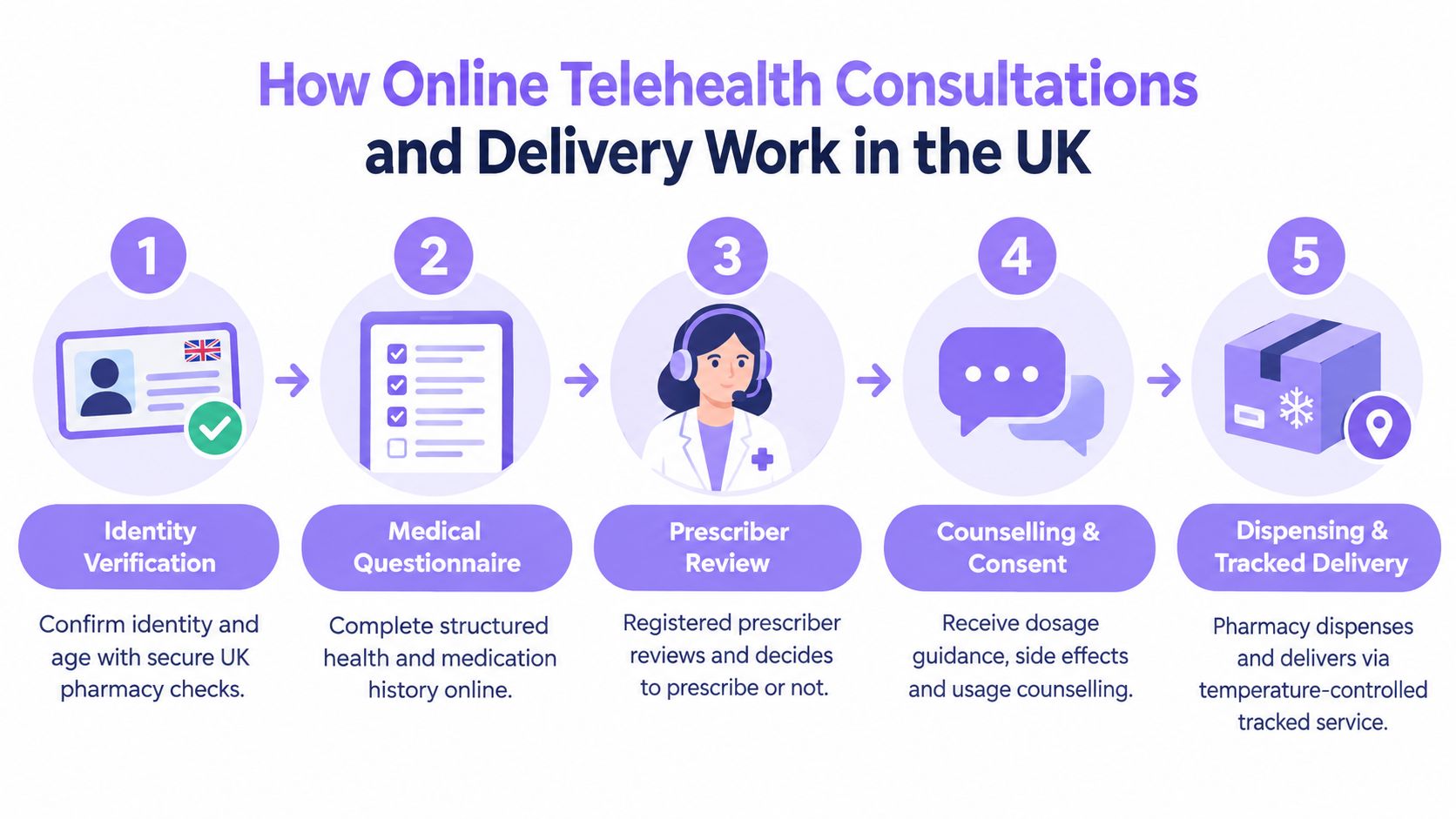
A safe online consultation follows a clinical pathway, not a shopping checkout. For example, a person seeking weight loss injections online should first prove who they are, answer health questions, receive a prescriber's assessment and only then arrange dispensing if treatment is suitable.
The usual patient pathway
- Identity verification: You confirm your identity and age. Secure checks help ensure that the consultation and prescription relate to you.
- Medical questionnaire: You provide your height, weight, health conditions, allergies, prescribed medicines, supplements and previous treatments. Accurate answers matter because missing information can change the safety decision.
- Prescriber review: A registered prescriber examines the information and decides whether treatment is appropriate. They may prescribe, request clarification, suggest another option or decline treatment. A provider that cannot refuse an unsuitable request is not offering a proper clinical assessment.
- Counselling and consent: Before supply, you should receive clear instructions on administration, dose changes, expected side effects, storage, missed doses and when to seek medical help. The service should also explain how to contact the clinical team after delivery.
- Dispensing and delivery: If treatment is prescribed, an appropriate pharmacy dispenses it. Products with temperature requirements need suitable handling, and the delivery arrangements should be explained before you order.
The questionnaire is only the front door. The prescriber's review is the clinical decision, while follow-up allows treatment to be monitored and adjusted when needed. This guide to a UK online doctor prescription provides further context on how online prescribing should work.
Some services use secure messaging, app-based tracking or scheduled reviews. These tools organise information, but they do not replace a clinician. Before treatment starts, ask what support is available if you develop persistent vomiting, severe abdominal pain or another concern outside normal hours.
The consultation process is also illustrated in this short video:
UK Regulation Privacy and How to Spot Unsafe Providers
In the UK, GLP-1 medicines used for weight loss are prescription-only medicines. They should be prescribed by a healthcare professional and supplied only against a valid prescription. Parliament states that supplying these medicines without a prescription is a criminal offence under the Human Medicines Regulations 2012 (Parliamentary information on prescription requirements).
A legitimate online pharmacy should identify the pharmacy responsible for dispensing and show registration information that can be checked independently. If it claims to be regulated by the GPhC, verify the details through the regulator rather than relying solely on a logo. The service should also explain how it handles personal and health data, who can access it and how to contact the organisation about privacy.
The MHRA warns that medicines obtained outside registered pharmacy channels may be counterfeit, contaminated, incorrectly dosed or contain undisclosed substances. It also identifies no-prescription offers, social-media sales and unusually low pricing as warning signs (MHRA guidance for GLP-1 prescribers and patients).
| Feature | Compliant UK Provider | Unsafe Red Flag |
|---|---|---|
| Prescription | Requires a valid prescription after clinical assessment | Offers treatment without a prescription |
| Clinical review | Collects relevant health and medicine information | Uses a superficial questionnaire or guarantees approval |
| Pharmacy identity | Names a UK-registered pharmacy and provides verifiable details | Hides the dispensing pharmacy or provides no registration information |
| Product handling | Explains dispensing, storage and delivery arrangements | Gives no clear information about storage or provenance |
| Support | Provides counselling and a route to follow-up care | Leaves you without clinical contact after payment |
| Marketing | Uses factual, restrained language | Uses social-media sales, pressure or unusually low prices |
The online pharmacy UK guide provides further context on what to check before using a digital pharmacy. Don't upload sensitive health information or pay for treatment until you can identify the responsible pharmacy and understand the assessment process.
Making an Informed Decision and Next Steps
A safe decision starts with questions, not a product choice. Ask whether the medicine is licensed for the proposed use, who will prescribe it, which pharmacy will dispense it, what information the assessment requires and how follow-up works if you have side effects.
Prepare an accurate list of your medicines and health conditions before completing an online consultation. Include previous reactions to treatment, relevant digestive or endocrine conditions, diabetes status, pregnancy or breastfeeding where applicable, and any history of disordered eating. Don't alter prescribed treatment without speaking to the clinician responsible for your care.
Availability and price can vary by product, dose and route to market. Recent UK reporting has described a shift from acute shortage concerns towards fragmented access and pricing pressure, while local stock gaps may still occur (July 2026 medicine availability update). That makes pharmacy verification more important, not less.
For tracking progress, a weight loss widget guide may help you organise measurements and habits, but tracking should support clinical review rather than replace it. NHS and NICE information can help you understand the wider treatment context, while your own clinician can interpret it alongside your health.
This content is for informational purposes only and does not constitute medical advice. Always consult a qualified healthcare professional before starting or changing any treatment.
XO Medical provides online consultations with UK-registered clinicians and prescription dispensing through its UK pharmacy pathway, while XO Clinic offers in-person aesthetics care, including botox, dermal fillers, skin boosters and polynucleotides (salmon DNA). To learn how XO approaches clinically supervised care and private healthcare access, visit XO.


0 comments