


Experiencing tiredness after starting Mounjaro (tirzepatide) is not uncommon. It is a recognised side effect, particularly during the initial phase of treatment.
As your body adapts to the medication, you may notice a feeling of fatigue. This often occurs when you first begin the treatment or after a dose is increased. For most individuals, this is a temporary response as their system adjusts to the metabolic changes initiated by the medicine.
Understanding Mounjaro and Fatigue
Starting a new prescription-only medicine like Mounjaro can raise questions about its potential impact on your daily life. A common query is, "Does Mounjaro make you tired?" While some people do report fatigue, understanding the physiological reasons behind it is the first step toward managing this side effect.
Tiredness is often a direct result of the significant metabolic changes Mounjaro initiates. The treatment works by altering how the body regulates appetite and blood glucose levels. As you adjust to these new biological signals—which typically include reduced food intake and different energy processing—it is understandable that you might feel fatigued. This is a normal part of the body's adjustment period.
Your Body's Adjustment Period
The initial fatigue can be viewed as an indication that the medication is beginning to exert its intended therapeutic effects. This feeling is usually mild and tends to be most noticeable during the first few weeks of treatment or immediately following a dose escalation, as directed by your prescriber.
Every patient's response is unique. Some individuals may not experience tiredness at all, while others might feel it more acutely. It is important to monitor your body's response and maintain open communication with your healthcare provider. A properly supervised treatment plan from a regulated UK pharmacy ensures you have expert clinical support throughout your journey.
To provide a clearer overview, the following summary outlines what to expect.
Mounjaro and Fatigue at a Glance
This table breaks down the key points about tiredness as a side effect, so you know what to look for during your treatment.
| Aspect | Typical Experience | Notes for UK Patients |
|---|---|---|
| Commonality | Fatigue is a recognised but not universal side effect. | It has been reported in clinical trials and by patients under supervised clinical care. |
| Timing | Most likely to occur during the first 4-8 weeks or after a dose increase. | This aligns with the standard dose-titration schedule overseen by UK prescribers. |
| Contributing Factors | Lower calorie intake, delayed digestion, and blood glucose stabilisation. | These are the intended therapeutic effects of this prescription-only treatment. |
| Duration | Usually temporary, subsiding as the body acclimatises to a stable dose. | If fatigue is severe or persistent, it is essential to speak with your clinician. |
While the possibility of feeling tired can be a concern, it is typically a short-term issue on the path to achieving long-term health benefits under medical supervision.
The Science Behind Mounjaro and Fatigue
To understand why a medication like Mounjaro (tirzepatide) might cause fatigue, it is necessary to examine its mechanism of action. Mounjaro is an MHRA-approved, prescription-only treatment that mimics two naturally occurring gut hormones: GIP (glucose-dependent insulinotropic polypeptide) and GLP-1 (glucagon-like peptide-1). These hormones are key regulators of appetite and blood glucose. The powerful effects they produce are what can sometimes lead to an initial feeling of tiredness.
If you experience fatigue, it is not necessarily a sign that something is wrong. In many cases, it indicates that your body is responding to the medication as expected. This lethargy can usually be attributed to three key physiological changes.
The Impact of a Caloric Deficit
The most direct cause of tiredness is a change in energy balance. Mounjaro is highly effective at reducing appetite, which naturally leads to a lower calorie intake. When your body receives less energy than it is accustomed to, it enters a caloric deficit.
Your metabolism adapts to conserve energy, a process you may experience as fatigue. This is a physiological adjustment to a new, lower energy supply.
Slower Digestion and Nutrient Absorption
Another primary function of Mounjaro is to slow down gastric emptying—the rate at which food leaves the stomach. This is beneficial for weight management as it promotes a feeling of fullness for a longer duration.
However, this delay also means that energy and nutrients from your food are absorbed more slowly into your bloodstream. This can result in a less immediate energy increase after meals, contributing to a feeling of sluggishness. Your body is still receiving the necessary nutrients, but over a more extended period.
Your Body's Blood Glucose Adjustment
Mounjaro is very effective at stabilising blood glucose levels, reducing the sharp increases and decreases that can occur after eating certain foods. While this is beneficial for long-term health, the initial transition period can be taxing.
Your body becomes accustomed to its previous patterns of blood glucose fluctuations. As it adapts to a new, more stable baseline, it can temporarily trigger feelings of fatigue. This is part of a necessary recalibration process that requires energy.
In the UK, where Mounjaro is an MHRA-approved treatment, tiredness is a frequently discussed side effect. Data from clinical practice shows that fatigue is a common experience, especially during the initial weeks as the body adjusts to changes in digestion and calorie intake.
This flowchart illustrates the typical patient journey with fatigue when starting Mounjaro.
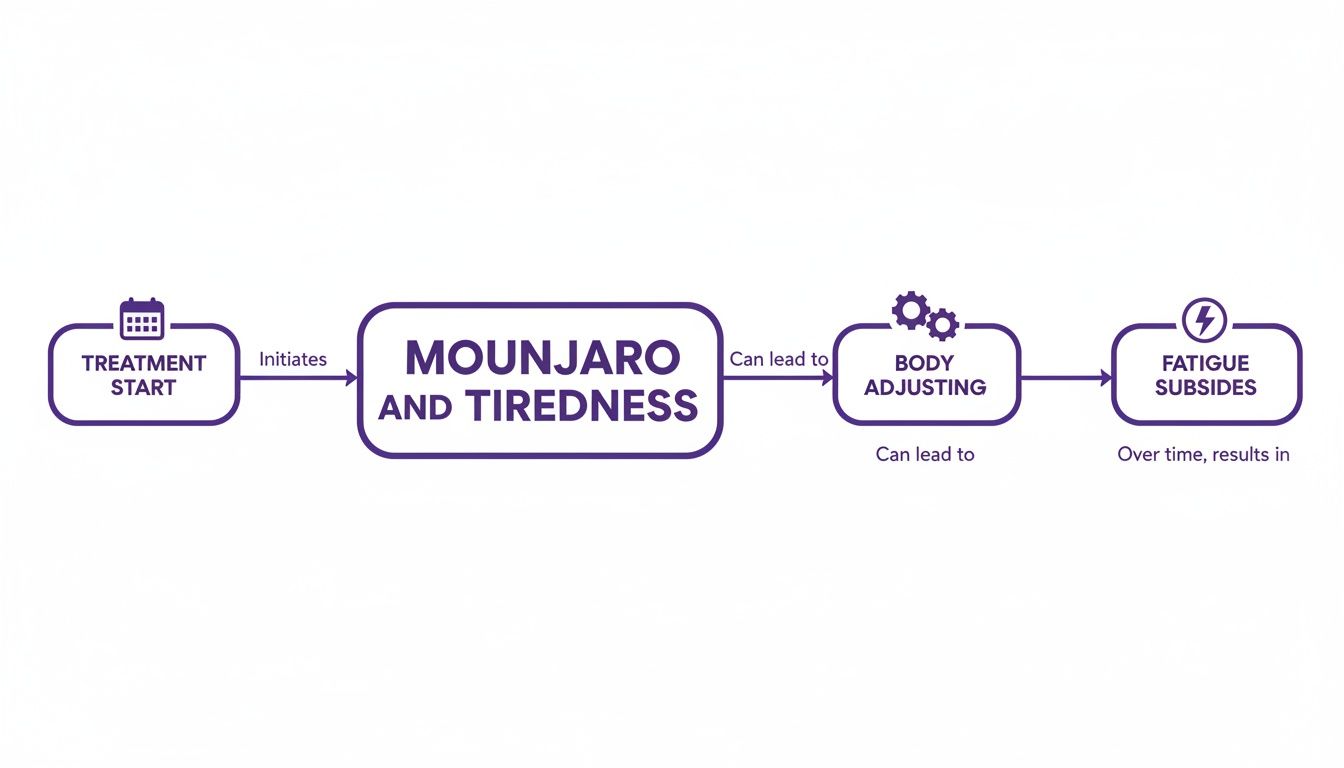
As shown, tiredness is usually most noticeable at the start of treatment, begins to ease as the body adapts, and typically resolves over time. While Mounjaro has a unique dual-action mechanism, some of its effects are similar to other GLP-1 treatments. You can read our guide comparing Ozempic vs Mounjaro to learn more about their differences and similarities.
How Common Is Fatigue with Mounjaro in the UK?
When starting any new medicine, it is sensible to be aware of potential side effects. With Mounjaro, a common question relates to the likelihood of experiencing fatigue.
Clinical trial data provides the clearest picture. In large-scale studies, a relatively small percentage of participants reported tiredness. The figures are approximately 5% to 7%, depending on the dosage. This means that the vast majority of people—over 90%—did not report this side effect. In medical terms, an effect reported in up to one in ten people is considered 'common', and Mounjaro-related fatigue falls within this category. It is important to remember that individual responses to medication can vary significantly.
The Typical Timeline for Tiredness
For the small percentage of people who do experience fatigue, it is rarely a long-term issue. The tiredness tends to manifest during two key phases of treatment:
- When you first start: The initial few weeks represent a significant adjustment period for your body.
- When your dose is increased: Each time your clinician follows the titration schedule and increases your dose, you might notice a brief return of fatigue.
This pattern is a normal physiological response as your body acclimatises to the medication. Once you are settled on a stable maintenance dose, this initial tiredness almost always subsides. This underscores the value of consistent support from a clinical team, who can guide you through these temporary adjustments safely.
For UK patients, it is important to understand that any fatigue from Mounjaro is usually temporary and manageable. It is often a sign that the medication is working and your body is responding to the changes in your metabolism.
Managing expectations is key. Knowing that you might feel tired at the beginning, but that this is typically mild and short-lived, can make starting an MHRA-approved treatment like Mounjaro feel less daunting. With appropriate clinical oversight from a UK-registered pharmacy, your progress can be monitored to ensure any side effects are managed correctly. If fatigue feels severe or does not improve, it is crucial to contact your prescriber.
Practical Strategies to Manage Mounjaro Fatigue

While tiredness associated with Mounjaro is often a transient phase, you do not have to simply endure it. Making small, manageable adjustments to your daily routine can make a significant difference, helping to combat fatigue and support your body as it adapts to the medication.
These are clinician-approved strategies that focus on providing your body with the resources it needs to maintain energy levels during your treatment.
Fuel Your Body with Nutrient-Dense Foods
A primary reason for fatigue is that Mounjaro effectively suppresses appetite, often leading to a reduced calorie intake. The objective is not to force yourself to eat, but to ensure that the food you do consume is nutritionally dense.
Focus on building meals around protein, fibre, and healthy fats. These nutrients provide sustained, slow-release energy, which can help you avoid the energy dips that often follow meals high in simple carbohydrates.
- Lean Proteins: Chicken breast, fish, eggs, and Greek yoghurt help maintain muscle mass and promote satiety and sustained energy.
- Complex Carbohydrates: Wholegrain bread, oats, and quinoa provide a steady supply of glucose to fuel your brain and body.
- Healthy Fats: Avocado, nuts, and seeds are beneficial for overall health and offer a concentrated source of energy.
Even with smaller portion sizes, prioritising these food groups ensures your body receives essential nutrients. For more specific guidance, our article on what to eat while taking Mounjaro offers practical tips.
Maintain Adequate Hydration
Dehydration is a common and often overlooked cause of fatigue. Mounjaro can sometimes cause side effects like nausea or diarrhoea, which can increase the risk of dehydration.
Aim to drink water consistently throughout the day, rather than waiting until you feel thirsty. Keeping a water bottle accessible can be an effective reminder. Herbal teas and clear broths also contribute to your overall fluid intake.
Embrace Gentle Movement
When you feel fatigued, exercise may be the last thing on your mind. However, light physical activity can be one of the most effective ways to counteract lethargy.
Gentle movement improves circulation, can elevate your mood, and helps to stabilise blood glucose, all of which contribute to increased energy levels. This does not require intensive exercise; a simple daily walk can be highly beneficial.
Clinician's Note: Start with a 10-15 minute walk each day. As you begin to feel better, you can gradually increase the duration. The goal is consistency, not intensity, particularly at the beginning of your treatment.
Prioritise Restorative Sleep
Adequate, high-quality sleep is fundamental to energy management. As your body adjusts to Mounjaro, establishing a consistent and relaxing bedtime routine becomes even more important. This allows your body the necessary time to rest and repair.
Making certain lifestyle adjustments can also be instrumental in combating tiredness. Learning how to improve sleep quality naturally can provide you with effective tools to support your energy levels throughout your Mounjaro treatment.
Adopting these practical steps is part of the holistic care you should expect from a regulated clinical service. By combining prescribed medication with supportive lifestyle advice, you are better equipped to manage potential side effects and achieve your health objectives.
When to Contact Your Clinician About Tiredness
While some tiredness during the adjustment phase of Mounjaro treatment can be normal, patient safety is the highest priority. It is essential to distinguish between manageable fatigue and symptoms that require a medical assessment from your UK-registered prescriber.
Ongoing clinical support is a critical component of your treatment. This ensures that any side effects are managed safely and effectively. You should not hesitate to contact your clinical team if you have concerns about how you are feeling.
Identifying Red Flag Symptoms
It is important to know when tiredness may indicate a more serious issue. Your clinical team must be informed if your fatigue begins to significantly interfere with your daily life. Contact your prescriber immediately if you notice any of the following:
- Severe fatigue: Tiredness that is so profound it prevents you from performing your usual daily activities, such as working, driving, or caring for your family.
- Dizziness or light-headedness: Feeling faint or unsteady on your feet could be a sign of low blood pressure or dehydration, both of which require medical evaluation.
- Signs of dehydration: Symptoms include a dry mouth, dark-coloured urine, infrequent urination, and persistent thirst. This can be exacerbated by gastrointestinal side effects like nausea, diarrhoea, or vomiting.
- Symptoms of hypoglycaemia (low blood sugar): Although less common in individuals without type 2 diabetes, it is important to be aware of the signs: shakiness, sweating, confusion, irritability, or a rapid heartbeat.
It is vital to remember that you are not alone on this journey. A key advantage of using a regulated service, such as a GPhC-registered online pharmacy, is having direct access to clinical experts for support whenever it is needed.
Your Safety and Clinical Oversight
Mounjaro is a potent, MHRA-approved medication that requires careful clinical management. Experiencing any of the red flag symptoms mentioned above is not a personal failure; it is a signal to seek the expert medical guidance you are entitled to.
Your prescriber is responsible for assessing your symptoms, ruling out other potential causes, and adjusting your treatment plan if necessary. This open communication ensures your treatment remains safe and effective. By understanding when to self-manage and when to seek professional advice, you can use this prescribed medication with confidence, knowing you have a dedicated clinical team providing support.
How XO Medical Supports Your Treatment Journey

Beginning a new treatment like Mounjaro is a significant step, and it is natural to have questions about side effects such as tiredness. This is why having the right clinical team is essential. At XO Medical, we prioritise patient safety, providing a supportive and secure environment from your initial online consultation and throughout your treatment.
We are a UK-registered pharmacy, fully regulated by the GPhC, ensuring our care adheres to the highest clinical standards. Our UK-based clinicians conduct comprehensive assessments to determine if a prescribed medication is appropriate for you. We manage your treatment with carefully planned dose-titration schedules to help your body adapt and minimise potential side effects.
Even with thorough planning, questions or concerns may arise. We provide continuous access to our clinical team. If you find that Mounjaro is making you tired, they are available to offer practical, evidence-based advice to help you manage it. This expert oversight is a crucial part of using a prescription-only treatment safely.
To ensure a seamless experience, we also offer discreet, next-day delivery and an intuitive digital platform. This is modern, regulated healthcare designed around your needs. You can learn more about our process by reading about our UK online doctor consultation, which ensures you feel confident and supported from the start.
Frequently Asked Questions
Here are answers to some of the most common questions from UK patients regarding Mounjaro and tiredness.
Will the Tiredness From Mounjaro Go Away on Its Own?
For the vast majority of individuals, yes. Any fatigue experienced with Mounjaro is typically most noticeable at the beginning of treatment or immediately following a dose increase. This is considered an adjustment period. Over several weeks, as your body acclimatises to the medication and its metabolic effects, this initial tiredness usually subsides. If it is severe or does not improve, it is very important to consult your prescribing clinician.
Is It Safe to Drive if Mounjaro Makes Me Tired?
It is always advisable to exercise caution. If you are feeling tired, dizzy, or notice any other symptom that might impair your reaction time, you should avoid driving or operating heavy machinery. Allow yourself time to understand how this MHRA-approved medication affects you personally. If you find that tiredness interferes with your ability to drive or work safely, you must contact your healthcare provider for advice immediately.
Can Other Mounjaro Side Effects Make Tiredness Worse?
Yes. Other common side effects, particularly nausea, vomiting, or diarrhoea, can exacerbate feelings of fatigue. These gastrointestinal issues can lead to dehydration or malabsorption of nutrients, both of which can significantly deplete energy levels. Managing these side effects by maintaining adequate fluid intake and consuming smaller, regular meals can often help to improve your energy levels.
It is crucial to report any side effects that are severe or persistent to your clinician. A regulated UK-registered pharmacy provides the ongoing support needed to manage your treatment safely.
At XO Medical, our UK-based clinical team is here to support you at every stage of your treatment, making your safety and well-being our top priority. Learn more about our regulated weight management services.
This content is for informational purposes only and does not constitute medical advice. Always consult a qualified healthcare professional before starting or changing any treatment.


0 comments